Pilates Articles

Dead butt syndrome: when your glutes go on strike

Dead butt syndrome: when your glutes go on strike

And yes, it can happen even if you run every day

You’ve probably heard the phrase “sitting is the new smoking.” Well, your glutes would agree. Dead butt syndrome — or gluteal amnesia, if you want the technical term — is exactly what it sounds like: your butt muscles have literally forgotten how to fire.

Here’s the kicker: this isn’t just a problem for desk workers. Even runners who clock serious kilometres can suffer from it. How? Because running alone doesn’t necessarily wake up sleepy glutes, especially if the rest of your day is spent seated.


What exactly is dead butt syndrome?

Your gluteal muscles — the gluteus maximus, medius and minimus — are meant to be the powerhouse of your lower body. They stabilise your pelvis, propel you forward, and protect your knees and lower back.

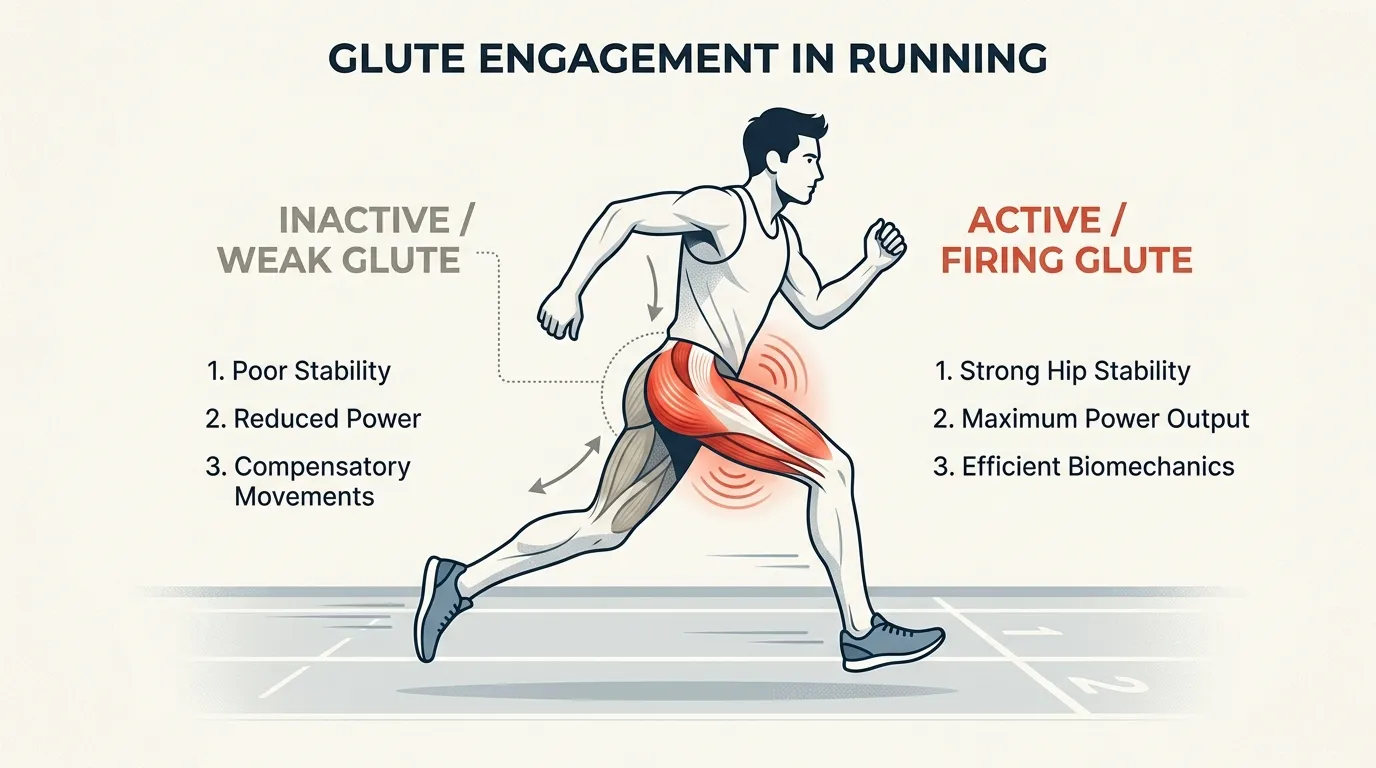
When you sit for extended periods (hello, 9-to-5), your glutes are essentially switched off. Hip flexors tighten. Hamstrings take over. And eventually, your brain stops sending signals to activate your glutes altogether — even when you stand up, walk, or run.

The result? Other muscles compensate. Your hamstrings and lower back pick up the slack. Over time, this leads to:


The runner’s paradox

You might be thinking: “I run 40km a week. My glutes must be strong.”

Not necessarily. Running is repetitive and sagittal — you move forward in one plane. Your gluteus medius (hip stabiliser) and gluteus maximus (power generator) need lateral and rotational work to stay fully awake.

If your glutes aren’t firing during your runs, your quads and calves work overtime. You might notice your knees cave inward, your hips drop with each step, or you finish runs with tight calves and a sore back instead of glute fatigue.


The simple test

Want to check if your glutes have checked out?

Try a single-leg glute bridge. Lie on your back, knees bent, feet flat. Lift one foot off the ground and push your hips toward the ceiling.

  • If your hamstring cramps immediately, your glutes aren’t participating.
  • If your hips sag or rotate, your gluteus medius is asleep on the job.
  • If you feel it burning in your butt, not the back of your thigh — congratulations, your glutes are awake.

Waking up your glutes: the fix

The good news? Dead butt syndrome is reversible. The bad news? It requires consistency, not just one Pilates class.

Activation with Pilates-style exercises

Before you load up with heavy squats, you need to remind your brain that glutes exist. These Pilates and physio-based exercises wake up the neural pathways. Focus on the squeeze, not the speed.


Clam (Clamshell) — Gluteus Medius Activation

Clam exercise for gluteus medius activation

Lie on your side with knees bent at 45 degrees, heels together. Keeping your feet touching, lift your top knee like a clamshell opening. Do not roll your hips — keep your core engaged and pelvis stable. Hold for 2 seconds at the top.

  • Start with: 3 sets of 12 per side
  • Progression: Add resistance band above knees

Glute Bridge — Gluteus Maximus Activation

Glute bridge exercise for gluteus maximus activation

Lie on your back, knees bent, feet hip-width apart and flat on the floor. Push through your heels and lift your hips until your body forms a straight line from shoulders to knees. Squeeze your glutes hard at the top. Lower with control.

  • Start with: 3 sets of 15
  • Progression: Hold top position 5 seconds

Single Leg Glute Bridge — Advanced Progression

Single leg glute bridge for advanced glute activation

Same starting position as above, but extend one leg toward the ceiling. Push through your supporting heel and lift your hips. This targets gluteus medius stability on the working side.

  • Start with: 3 sets of 10 per side
  • Watch for: Hip dropping on one side = medius weakness

Lateral Band Walks — Gluteus Medius Strength

Lateral band walks for gluteus medius strength

Place a resistance band just above your ankles. Stand in a slight squat position, then step sideways while keeping tension on the band. Do not let your knees cave inward. Small, controlled steps.

  • Start with: 2 sets of 10 steps each direction
  • Progression: Lower band toward feet (harder)

Functional strength progression

Once you’ve activated your glutes with the exercises above, add these functional movements:

  • Single-leg squats and step-downs
  • Walking lunges with focus on hip extension at the top
  • Single-leg deadlifts (bodyweight to start)

Break up the sitting

Set a timer. Stand up every 45 minutes. Walk to the kitchen. Do five bodyweight squats at your desk. Your future running self will thank you.


The bottom line

Your glutes are the biggest muscle group in your body. When they go on strike, everything else suffers — your back, your knees, your times.

Whether you’re a desk worker training for your first half-marathon or a seasoned runner wondering why your hamstrings always feel tight, check in with your glutes. Are they actually working, or just along for the ride?

For more on building hip stability through targeted exercises, see Pilates and Hip Stability. If you’re dealing with lower back pain, waking up your glutes is often the first step.

Wake them up. Your running — and your back — depends on it.


A brief history of Pilates

A brief history of Pilates

Pilates, an increasingly popular exercise regimen is known for its focus on strength, flexibility, and body awareness. You can find studios and gyms in almost all suburbs these days. But did you know that it has a rich history that traces back to the early 20th century?

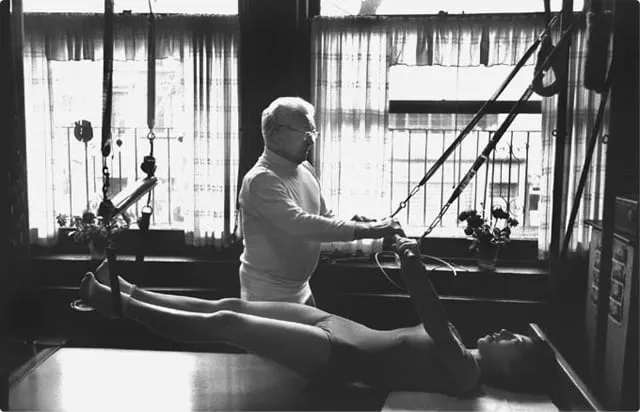
The Pilates method was developed by Joseph Pilates, a German physical trainer, born in 1883. During World War I, he devised a system of exercises to help rehabilitate the bed-bound wounded soldiers, using springs attached to hospital beds to provide resistance. This laid the foundation for the equipment-based (reformer, barrel) Pilates exercises we see today.

Pilates believed in the inter-connectedness of physical and mental health, emphasizing the importance of proper breathing, alignment, and controlled movements. In the 1920s, he immigrated to the United States and opened a studio in New York City with his wife, Clara. The method gained popularity among the New York dancers and performers due to its ability to enhance strength and grace. It is known that the Pilates method of exercise builds elongated, yet strong muscles, unlike the shorter and strong muscles of lifting weights. Perfect for ballet and dance, where strength is required in very long levered movement of the body.

Pilates continued to refine his approach, developing a comprehensive system of exercises that targeted core muscles while promoting overall body balance. After his death in 1967, his disciples and followers continued to spread his teachings, evolving and adapting the method to suit modern fitness trends.

Today, Pilates is practiced worldwide, offering a holistic approach to physical fitness, rehabilitation, and stress reduction. Its longevity and enduring popularity stand as a testament to its effectiveness and the vision of its innovative creator.


It's in: Lower your blood pressure with planks and wall sits!

A brand new research paper form the British Journal of Sports Medicine (fresh off the press in July 2023) rates the plank and the wall sit. I can hear you all groaning!

So, what does this paper have to say about these 2 exercises?

The research paper looked at how different types of exercise can help lower our blood pressure. Dissecting the results of 270 different trials where people did exercises, conclusions were drawn on what types of exercise lowered blood pressure. This is called anti-hypertensive exercise. In total, they looked at information from about 15,800 people, over several differing exercise such as running, weights, isometrics, and high intensity.

The results showed that all kinds of exercise can indeed lower blood pressure. For example, when people did aerobic exercises like jogging, both blood pressure numbers ( systolic and diastolic) went down. Lifting weights and high-intensity workouts were also effective at lowering blood pressure.

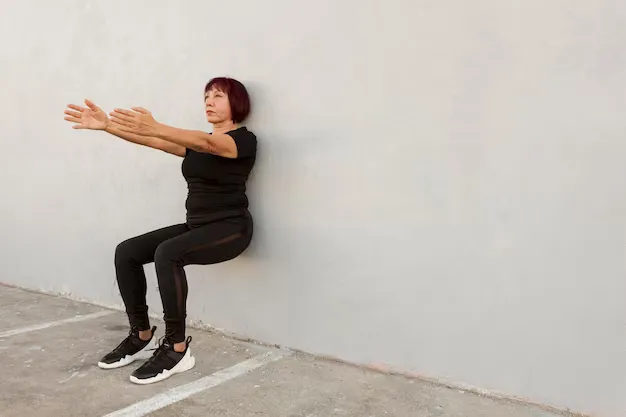
However, the researchers found that the exercise where you hold still, like the plank and wall sits, were the best at reducing blood pressure.These isometric-style exercises lowered both systolic and diastolic blood pressures greater than the other styles of exercise. 

There you go!

Reference: Edwards JJ, Deenmamode AHP, Griffiths M, Arnold O, Coooper N, Wiles, JD, O’Driscoll JM (2023). Exercise training and resting blood pressure: a large scale pairwise and network meta-analysis of randomised controlled trials. BMJ /BJSports 106503
Image by Freepik


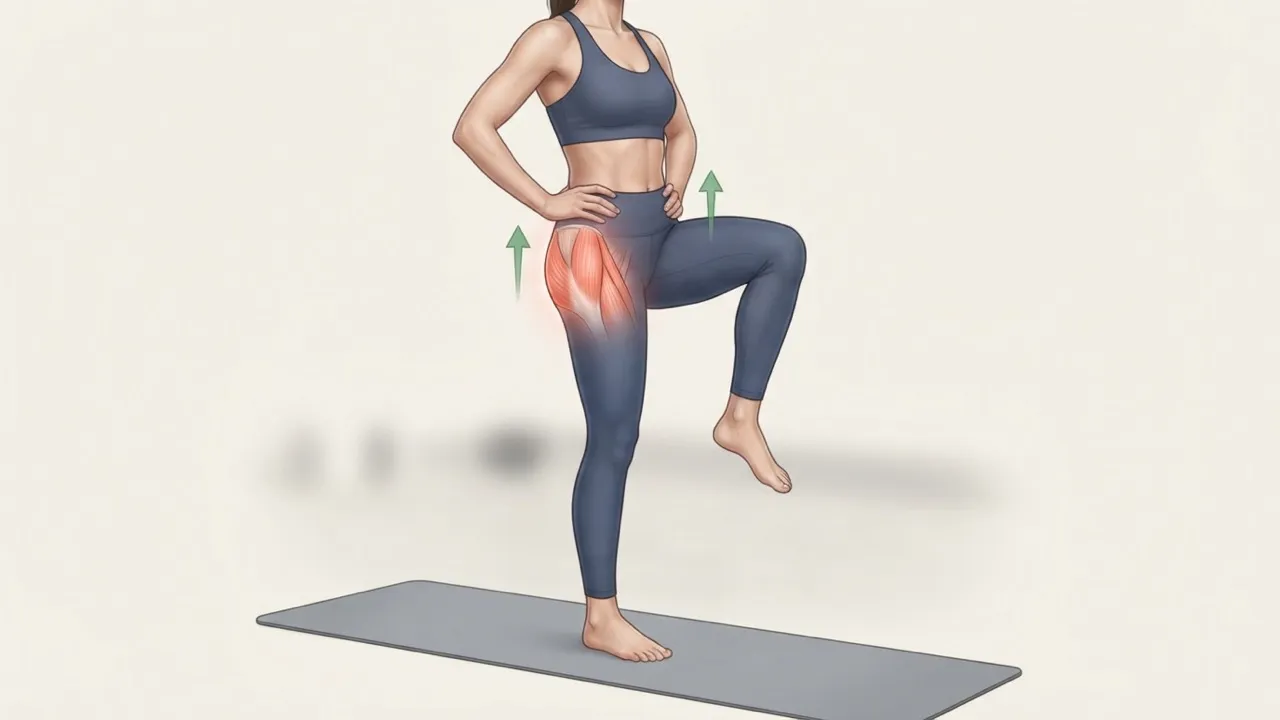
Gluteus medius and pelvic stability

Controlling the pelvic ‘dump’

The gluteus medius is a crucial muscle located in the buttocks. It plays a significant role in stabilizing and controlling the movement of the pelvis and hips. The muscle is responsible for abduction of the hip joint, which is the movement of lifting the leg out to the side, away from the midline of the body. This action is particularly important during activities like walking, running, and maintaining balance.

More importantly, the gluteus medius prevents the opposite hip from dropping when the leg is lifted, ensuring the pelvis remains level during single-leg weight-bearing activities. This stabilization is vital for maintaining proper alignment and reducing the risk of injuries, such as those related to overuse or improper movement patterns. It is the primary controller preventing ‘dumping of the pelvis.’ The ‘dumped pelvis’, which we all know, creates a very unstable foundation for your trunk (spine) and hip joints.  

Weakness or dysfunction of the gluteus medius can lead to issues like hip pain, lower back pain, and altered gait patterns.

Strengthening the gluteus medius is best achieved through functional upright exercises, where your body weight ( and any additional weight you wish to add). These can include:

  • squatting and spit squatting
  • lunges
  • single leg balance and squat work, such as pistol squats
  • butt bands.

From a day to day perspective, you can also be looking after your pelvic foundation and hip health with good postures that ask your gluteus medius to always be at work. These can include:

  • standing without hanging on your hip
  • keeping your pelvis level across your hip bones with activities like stair climbing
  • controlling your hips and preventing that side to side swayed walking style (you can keep your modelling to the catwalk!) 

So look after your gluteus medius with these simple postural strategies and gluteus medius will look after you!


The nerve's protector

The nerve's protector

Meet the dura, and the reason we need to slide, glide and floss our nerves

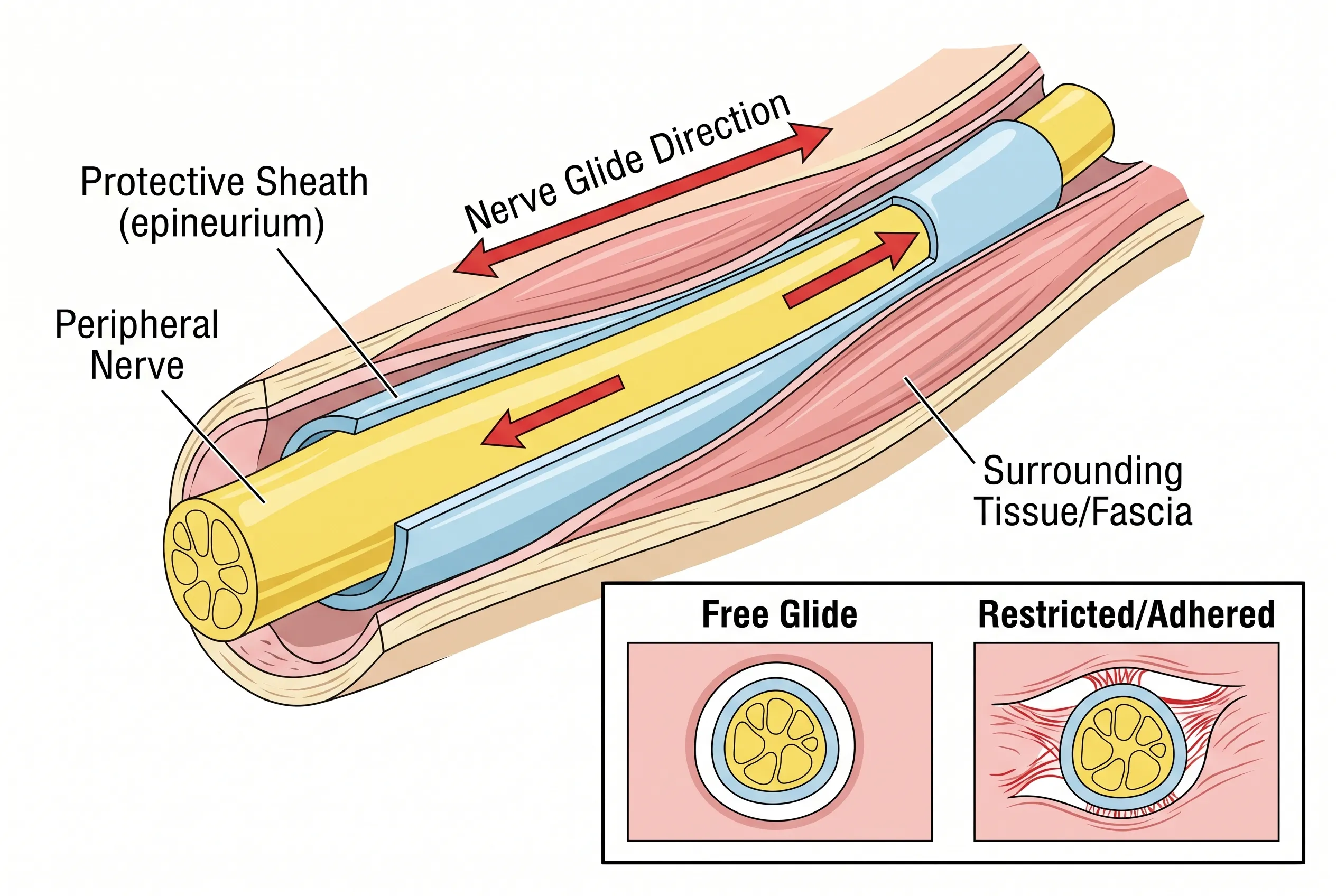
The dura mater is a tough and protective membrane that surrounds and supports the nerves in the body, particularly in the central nervous system, which includes the brain and spinal cord. Think of it like a strong and flexible “wrapper” that covers and shields the delicate nerves from potential harm. It helps to keep the nerves safe from injuries and impacts, providing an extra layer of defense. It also plays a role in maintaining the proper tension and position of the nerves within the body. Nerves need to move and stretch as our body moves. The dura mater helps to control and regulate this movement by providing a supportive structure. It’s a bit like a protective sleeve that allows the nerves to glide and shift without getting compressed or overly strained, ensuring that they can function properly even as we move and bend. This is important for preventing discomfort and maintaining the health of the nerves.

When things get stuck

The dura can sometimes become “stuck” or restricted due to various reasons. This condition is often referred to as dural tension or neural tension. Neural tension occurs when the dura and the nerves it surrounds experience limitations in their ability to move and stretch properly. This can lead to discomfort, pain, and even altered nerve function.

There are a few ways this can happen:

  • Physical Stress or Trauma: Injuries or traumas to the body, such as falls, accidents, or surgeries, can cause the dura mater to become stuck to surrounding tissues. This can restrict its normal movement and lead to neural tension.

  • Poor Posture: Maintaining poor posture for extended periods can cause the dura and nerves to be subjected to unnatural positions, potentially leading to restrictions and tension. Think here of slumped spinal postures, rounded tight shoulders or tucked bottoms. 

  • Muscle Imbalances: Imbalances in muscle strength or flexibility can cause the dura to become compressed or tethered, limiting its ability to glide smoothly and causing tension on the nerves. Piriformis Syndrome is a perfect example of this where deep buttock muscles compress and irritate the sciatic nerve. 

  • Inflammation or Scar Tissue: Inflammation or the formation of scar tissue around the dura and nerves can restrict their movement and lead to neural tension. This could occur after surgery. 

So when you are next told to ‘floss’ or ‘glide’ your nerves, you now know what structures you are actually targeting. A nerve and its protector ( the dura or sheath), like all other tissues in your body love movement. Remember, motion is the lotion!


Feldenkrais v Pilates: same same but different.

The Feldenkrais Method is a holistic approach to movement and body awareness that aims to improve physical functioning. Developed by Moshe Feldenkrais, an Israeli engineer and physicist, the method is grounded in principles of neuroscience, biomechanics, and psychology. It consists of two main components - Awareness Through Movement (ATM) and Functional Integration (FI).

Awareness Through Movement

ATM involves guided movement sequences designed to increase self-awareness, improve posture, and enhance flexibility. These sessions often take the form of verbally instructed group classes, where participants explore different movements to develop a deeper understanding of their own body mechanics.

In these classes, you might walk, stand, or sit in a chair, although usually, you will lie on the floor in a variety of comfortable positions. The teacher guides students through a sequence of movements, encouraging them to move with gentle attention within a comfortable range. Students can become more aware of unexpected and interesting connections within and between the movements, with often improving quality of movement, and the release of unnecessary muscular tensions throughout the body.

Functional Integration

FI, on the other hand, is a one-on-one approach where a Feldenkrais practitioner uses gentle touch and skilled manipulation to guide an individual’s movements. This personalized approach helps clients release tension, correct imbalances, and discover more efficient ways of moving.

Feldenkrais v Pilates

While both the Feldenkrais Method and Pilates are approaches that focus on improving movement and body awareness, they have distinct differences in terms of their principles, techniques, and goals.

The Feldenkrais Method emphasizes subtle and mindful exploration of movement. It encourages individuals to become more aware of their body sensations, habits, and limitations. The emphasis is on cultivating a deep understanding of one’s own body mechanics and finding more efficient ways of moving.

Pilates, on the other hand, is a structured exercise system focussing on building core strength, flexibility, and overall body conditioning through precise movements. Pilates exercises are often more dynamic and physically demanding than Feldenkrais movements. The primary goal of Pilates is to strengthen muscles, improve posture, and enhance physical fitness.

Photo by Bruce Mars on Unsplash


What is myofascia?

The magic of our fabulous fascia

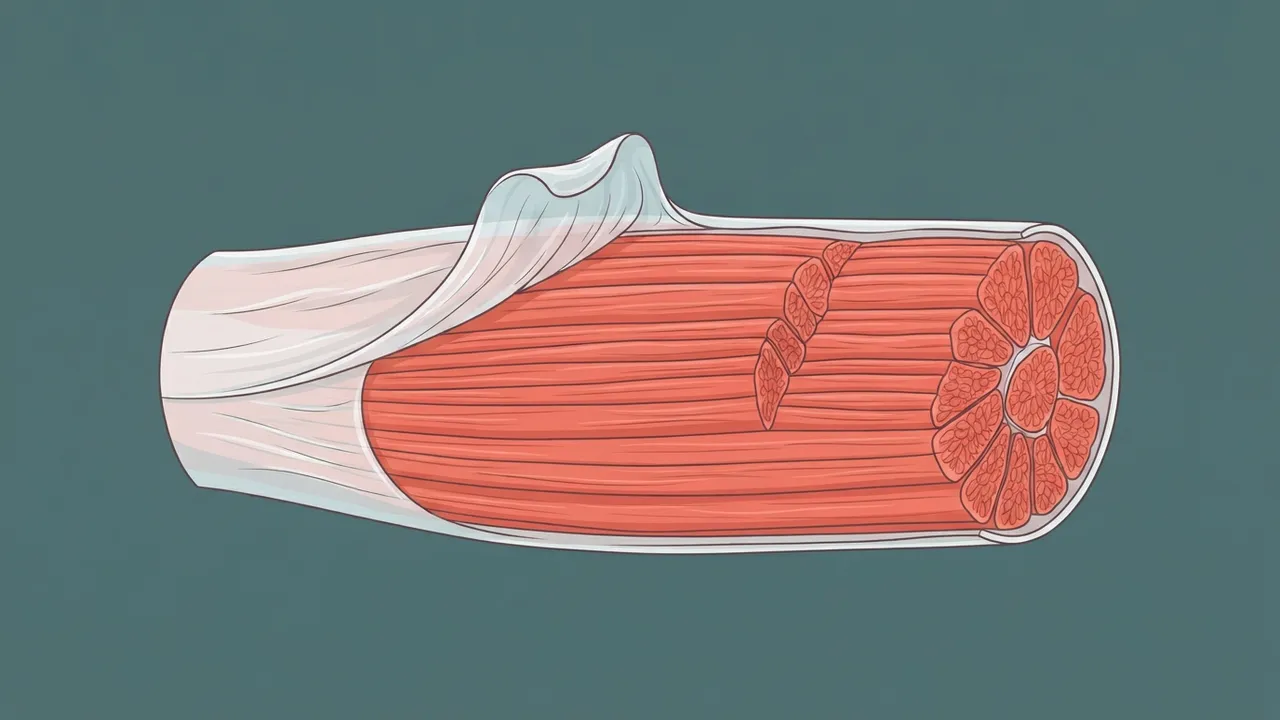
Muscle fascia, also known as fascia or myofascia, refers to a type of connective tissue that surrounds and separates muscles and other structures in the body. It is a fibrous, sheet-like structure composed primarily of collagen, a strong protein that provides support and structure to tissues. It forms a continuous network throughout the body, enveloping muscles, tendons, ligaments, bones, and organs, creating a unified system. Did you know that every single muscle, blood vessel and organ has its own wrap of fascia holding it in place? There is heaps of this stuff in our bodies.  

When we move, our myofascia has to move too. Fascia can become restricted due to various factors like trauma, repetitive stress, inflammation, or poor posture. These restrictions may lead to pain, reduced flexibility, and movement dysfunction. It can be considered that your fascia needs to be flexible and free, for you and your movements to feel flexible and free.

So, why do we have fascia?

  • Structural, joint and postural support. Fascia provides structural integrity to the body, helping to maintain the shape and alignment of muscle, joints and other tissues. You can think of myofascial ‘slings’ that link parts of your body and offer support. A well known one is the posterior sling that connects your lats ( back of your shoulder joints) to the lower back and glutes. 

  • Force transmission. Fascia acts as a conduit for transmitting forces generated by muscles to other parts of the body, allowing coordinated movement.

  • Protection. Fascia protects underlying structures, such as muscles,organs, blood vessels, and nerves, from external impact and friction by wrapping around them.

Techniques like myofascial release ( a specialised modality of massage), massage, and stretching are commonly used to address fascial restrictions and restore optimal tissue function.


Visualising the sacro-iliac joint


The sacroiliac joint is a vital component of the human skeletal system, connecting the sacrum (the triangular bone at the base of the spine) to the ilium (part of the pelvic bone). It is often referred to as the SIJ ( sacroiliac joint). It serves a crucial role in transferring forces between the upper body and lower extremities, providing stability and facilitating movement. It is a complex joint, and can create issues in us all, from women in pregnancy and post natal days, sportsmen and women, runners, and those with lower back or lumbar issues. IT has been reported that up to 70% of those suffering from persistent lower back pain will have some element of their pain stemming additionally from the SIJ.  

As the SIJ is a huge weight transfer ‘station’ for loads passing  from our lower extremities to our trunks, the joint is reinforced by many strong ligaments and surrounded by muscles that help support the pelvis and spine.

These reinforcements give the joint incredible stability to cope with the transmission of upper body weight and forces from the spine to the lower extremities during activities such as walking, running, and lifting. It absorbs shock and redistributes forces, ensuring efficient movement and minimizing stress on other joints.

Despite this stability, the SIJ is prone to dysfunction and pain. Injuries, arthritis, pregnancy, or imbalances in the surrounding muscles can lead to dysfunction of this joint, causing pain in the lower back, buttocks, or legs. Diagnosis and treatment of SIJ issues often involve a combination of physiotherapy and exercise. Long rehabilitation programs are often required to improve the muscular support and stability of this very important joint. These programs need to be sport specific, or tailored to each individual’s needs and can include core stability, pelvic alignment exercises, postural stability and gluteal strength.


Pilates 101: Visualising the sacrum

“Anchor through your tailbone when you are on the mat”

This Pilates cue is a common one when it comes to ensuring your alignment and control of your ‘pelvis and spinal neutral’ postures in class. This is especially so when testing your deep abdominal strength in exercises such as table top. But what does this ‘tailbone’ actually look like? It is anatomically called the sacrum and may not look like what you imagine.

I often get asked about the coccyx with reference to this Pilates cue. When you study this image, you can see that your coccyx is just the tiny bone on the end of the sacrum. it is not through this that you find or control your ‘pelvis neutral’ of ‘heavy tailbone.’   

The sacrum articulates with the iliums of the pelvis on each side. These 2 joints are called the sacro-iliac joints ( you have a left one and a right one), and these are crucial role in providing stability, transmitting forces, and facilitating movement between the upper body and lower extremities.


Osteoarthritis : a normal process of aging

Osteoarthritis is commonly considered a normal part of the aging process due to several reasons. Why? And why are some of us more prone to this process?

  • Firstly, the prevalence of osteoarthritis increases with age. As we grow older, the wear and tear on our joints accumulate over time, leading to the degeneration of the cartilage that cushions the joints. This gradual breakdown is a natural consequence of the stresses and strains our bodies experience throughout a lifetime of movement. Put simply, the thinning and wearing of the cartilage is a sign of a well used joint, and not much else. (Like my big toe joint from flexing to it get to the ground to correct my Pilates students!)

  • Secondly, the molecular and cellular mechanisms involved in osteoarthritis development align with the aging process. The ability of cartilage to repair itself diminishes with age, as the production of new cartilage cells slows down, and the existing cells become less efficient at maintaining the structural integrity of the joint.

  • Other factors such as genetics, obesity, joint injuries, and certain occupations can contribute to the development of osteoarthritis. These factors tend to accumulate over time, making the likelihood of osteoarthritis higher as individuals age.

If osteoarthritis is a normal part of aging, why are we all affected differently?

While osteoarthritis is considered a normal part of aging, it does not mean that everyone will experience it or that its impact cannot be managed. It comes down to our lifestyles and our genes. Lifestyle modifications, exercise, weight management, and appropriate medical interventions can help alleviate symptoms and slow down the progression of the disease.


Showing 10 of 138 articles. View all blog posts.

Fix News