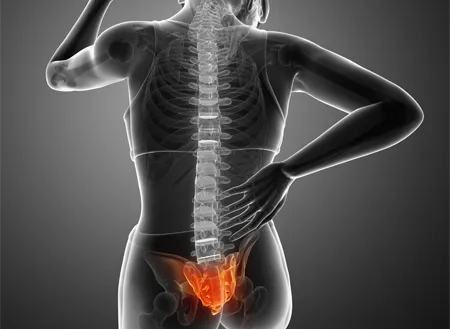
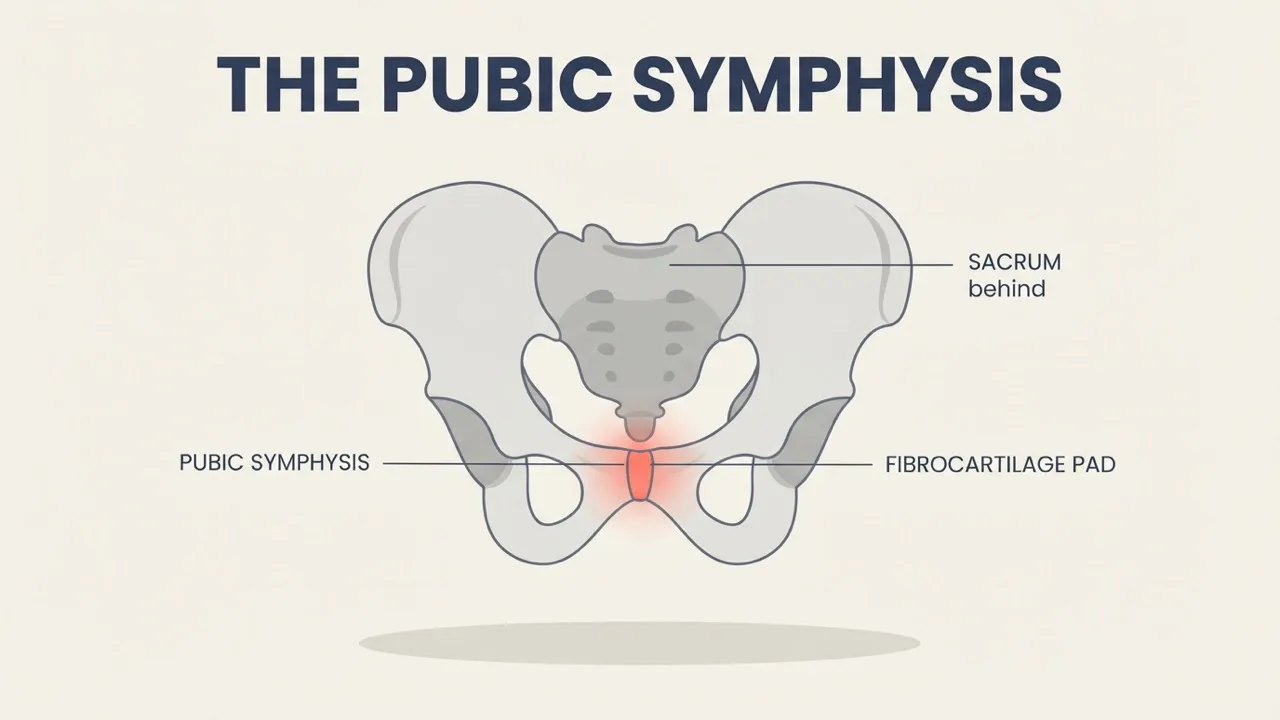
The pubic symphysis joint is a specialised joint located in the pelvis, specifically between the left and right pubic bones. It connects the 2 halves of the pelvis. The joint is composed of fibrocartilage, which provides strength and stability while allowing slight movement.
The pubic bone itself is a thick, flat bone that forms the lower part of the front of the pelvis. It serves as an attachment site for various muscles, including the adductor (groin) muscles of the inner thigh, the abdominal muscles and the pelvic floor muscles. (You could think of the pubic symphysis and the coccyx as the 2 fixed ends of your pelvic floor ‘hammock’.) Together, the pubic symphysis joint, along with the surrounding pelvic floor muscles, play a crucial role in maintaining pelvic stability and supporting the pelvic organs. During activities such as walking, running, and standing, these structures work together to provide strength and control to the pelvis.
What does the pubic symphysis do?
A symphysis is a joint where two bones are joined by a pad of tough cartilage rather than a fluid-filled capsule — so the pubic symphysis is built for stability with a hint of give, not movement. Its fibrocartilage disc resists the shear and separation forces that walking, lifting and single-leg exercise place on the front of the pelvis, while letting the pelvis subtly adapt as you move.
Three things it does for you every day:
- Joins the two halves of the pelvis so they can transfer load from leg to leg instead of collapsing apart
- Absorbs shock at the front of the pelvis — the fibrocartilage pad cushions each stride, squat and step
- Anchors your sling — it is the front fixed point for the pelvic floor muscles (the sacrum and coccyx form the back anchor), so the whole support system tensions between them
The joint is supported above by the hip flexors and abdominal muscles, below and behind by the adductors and pelvic floor, and its surfaces are normally separated by a 2–3 mm gap of fibrocartilage. That gap can widen in pregnancy under the influence of the hormone relaxin — a normal adaptation that makes the joint slightly more mobile for birth, but also the reason pelvic girdle pain is so common in the third trimester.
When the pubic symphysis hurts
Because the joint is built to be still, it lets you know when it is overloaded. Pain at the very front of the pelvis — often sharp with rolling over in bed, stairs, standing on one leg, or getting out of a car — usually points at the symphysis itself or the ligaments holding it. Clinically this cluster is called symphysis pubis dysfunction (SPD), or pelvic girdle pain when the sacroiliac joints at the back of the pelvis are involved.
You’ll notice it when:
- Rolling over in bed or getting out of the car
- Climbing stairs or stepping sideways
- Standing on one leg (dressing, getting into bath)
- Lifting one leg at a time — the joint hates being loaded asymmetrically
- Sometimes: a clicking or grinding at the front of the pelvis
In pregnancy it is especially common: relaxin softens the joint precisely when the front-to-back load on it grows. The good news — this is one of the most treatable causes of pelvic pain, and physiotherapy is the first-line treatment. Symptom relief usually starts with symmetry: keeping the legs together for rolling, stairs and transfers, a stability belt if the joint needs external support, and retraining the muscles that offload the joint.
How physiotherapy helps
A physio assessment will work out whether the symphysis, the SI joints, or the muscles around them are driving your pain, then treat accordingly:
- Symmetry first. Small technique changes — rolling over with legs together, sitting to dress, stepping up with the whole leg — take the shear off the joint immediately.
- Offloading muscles. The adductors, deep abdominals and pelvic floor all tug on the pubic bones; releasing and retraining them changes the forces the joint experiences every step.
- Support where needed. A pelvic compression belt or shorts can genuinely settle things down, especially in pregnancy.
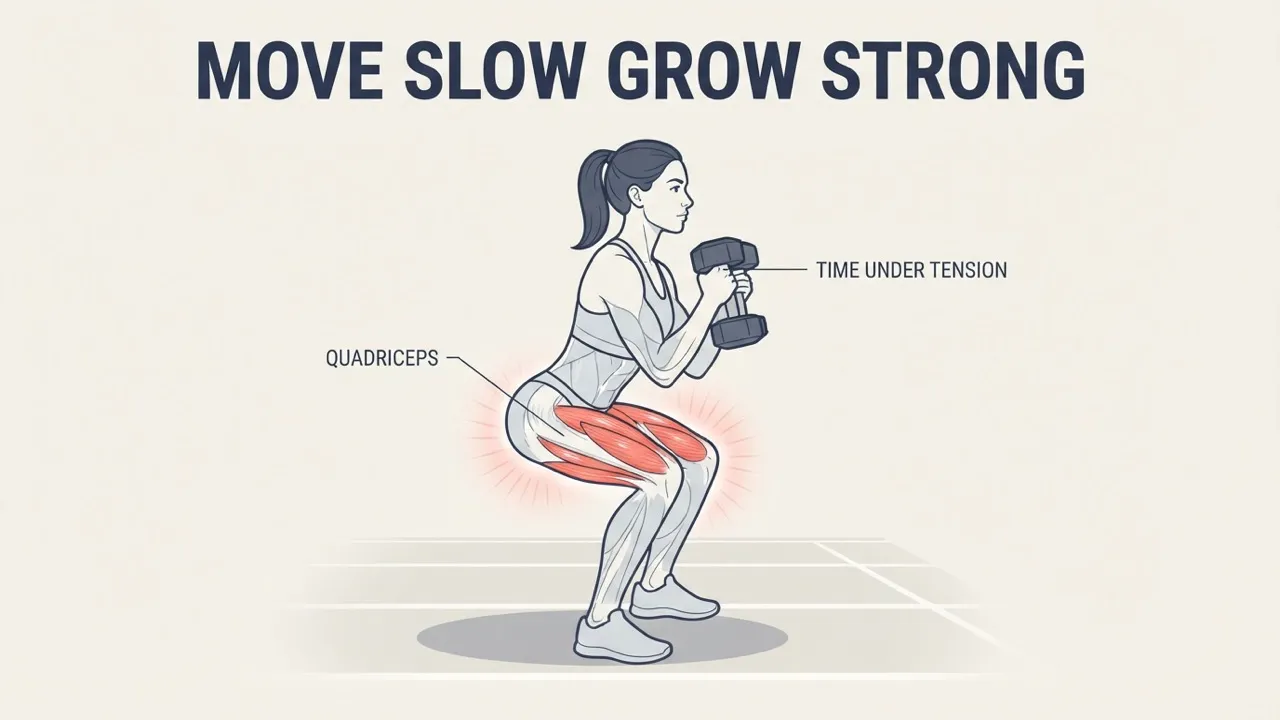
- Graded return to load. Once the pain settles, progressive strength work rebuilds the joint’s tolerance — including the deep core and pelvic floor work that keeps it stable long-term.
When you are ready for that graded return to load, our Pilates Fundamentals for Pregnancy tutorials rebuild deep core and pelvic floor support at a pace the joint can tolerate — physio-led, and safe through every trimester.
If front-of-pelvis pain is limiting your walking, sleep or exercise — in pregnancy or otherwise — book an assessment. You can book a physiotherapy consultation at our Sydney CBD studio, and our pregnancy physiotherapy team treats pelvic girdle pain every day.