Katrina Tarrant Articles

Barefoot and Minimalist Running Part 2

In part 1 of our opinion on barefoot running we took a look at the scientific and anecdotal evidence that is floating about on both minimalist and shod running. As you may have read, there is no real conclusive evidence on what works best for your body.

This edition we will explore the implications of the research on your running - if you are a runner. But I would say the same could be said if you are a walker too.

So, here are my personal feelings on the topic. I am married to an avid runner, so I can’t help but soak up his excited feelings for the barefoot stance. It does make some sense that we were born to run without shoes and that the evidence for the wearing of shoes has shown little greater benefit as far as injury reduction is  concerned over the past 4 decades. But of course, being a physio and therefore a scientist of sorts, I can’t help but trawl trough the evidence to feel confident in giving
advice based around the research on this subject.

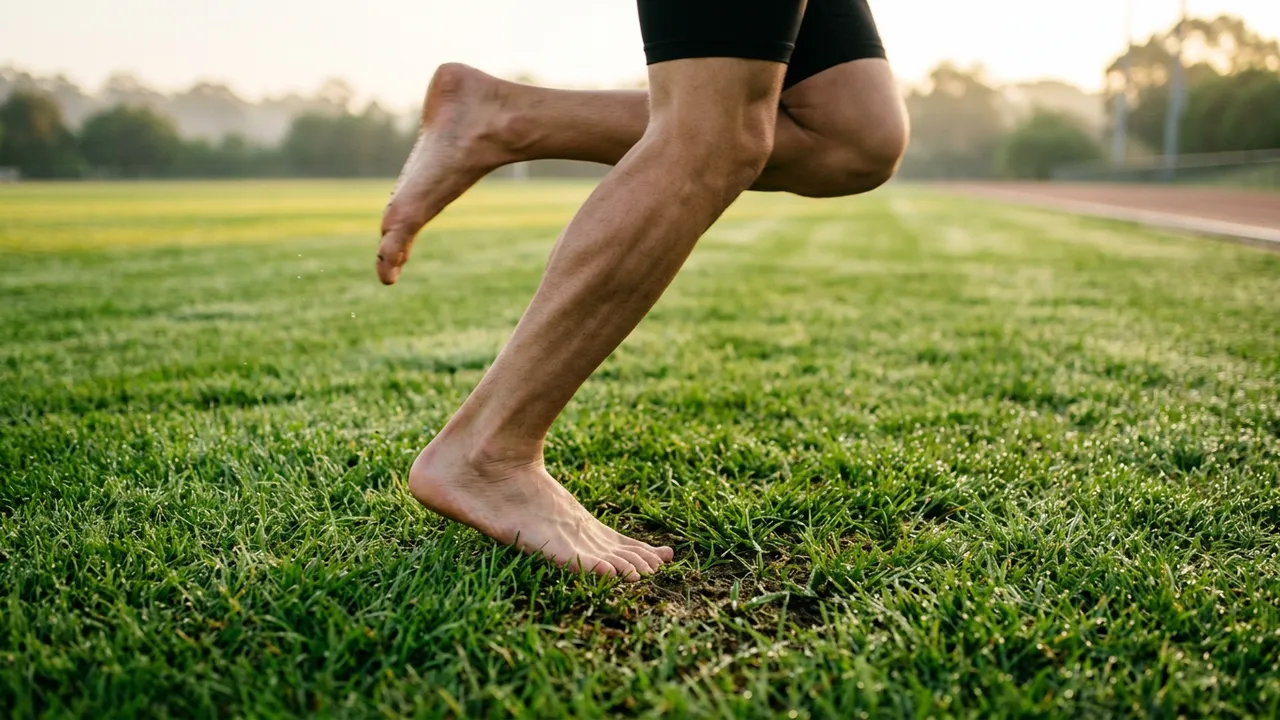
However, as I dabble in running, not long ago I found myself at a local oval, taking off my shoes and socks and running barefoot! This wasn’t my intention, but then, here I was with my shoes off running laps around the oval. And what a feeling! I felt amazing- that feeling of the cool grass between my toes, feeling the natural  spring in my stride and legs working hard as I picked up the pace on those few laps. I could even say that I was ‘buzzing’ after the experience.

Perhaps this is why some runners are so absorbed and passionate by barefoot and minimalist running. I guess in that small experience, I understood the passion better. And, without the OK from the ‘scientific evidence!’  Why don’t you give it a try? Remember, small amounts of exposure to begin, such as 1 or 2 laps of
an oval. Enjoy the sensations of the earth between your toes and notice the changes in your running style and muscle activations as you do.

These changes in running style felt with running barefoot, such as shorter stride lengths, faster cadence, mid to forefoot ground striking can all be applied to your running styles when wearing shoes. Why not become aware of your own running biomechanics and try the following changes on your next jog?

1. Cadence.
This is defined as your strides or steps per minute. A higher cadence will shorten your stride length, encouraging a mid to forefoot strike pattern on the ground and improve running efficiency. It will also improve your body’s natural shock absorption patterns and muscle strength in the lower limbs as outlined in part 1. Aim for a cadence of 90- 92 steps per minute. If counting is the last thing you feel like doing, why not count your number of steps in 15 seconds and times by 4? Much like taking your pulse rate.

2. Mid- to fore-foot ground strike.
Running to a higher cadence will do this for you, but there are other tricks to help you to achieve this. Imagine that you are running quietly, or running on a slippery ground surface such as ice. This will bring your ground strike forward on the foot and encourage strengthening of the small intrinsic foot muscles in your arch, the plantar fascia and other muscles across the lower leg. Again, do this slowly with small graduations in exposure, so that your muscle and other connective tissues have a chance to adapt and not inflame.

And what about for the walkers of you? There is no reason why walking barefoot around the oval or on the sand of a beach would not have the same effects for strengthening and balance in your feet and legs.

Give it a try!

Read More

Barefoot and Minimalist Running

Arguments for running sans shoes

Advocates of minimalist running claim barefoot running is better for the bones and joints of the body, allowing you to run the way nature intended. After all, humans have been running for millions of years as a matter of sheer survival and, without shoes! It has only been over the past 40-50 years that the big brand athletic shoe companies have sold the idea well for wearing shoes with cushioning, motion control and all the other gimmicks. This period of time has demonstrated no significant decline in running-related injuries despite the footwear. Barefoot advocates hypothesize that modern running shoes are an abnormal addition to our own human design.

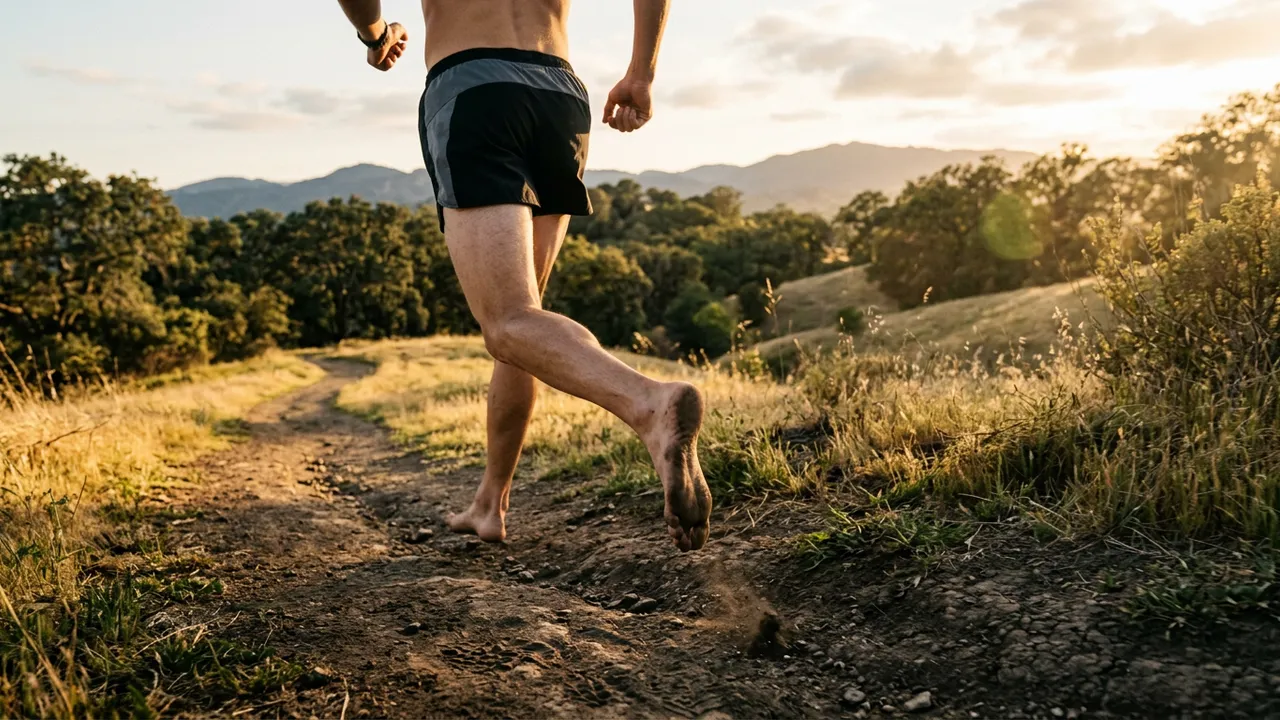
Barefoot running and shod running show a difference in running mechanics and style. Barefoot runners use a forefoot-to-midfoot type of strike instead of the heel-to-forefoot strike that is seen with runners who wear shoes. This forefoot striking pattern works the muscles in the foot and the lower leg differently to try to cushion the foot strike. It also shortens the stride, which affects the stress from impact with the ground. This increase in intrinsic supportive muscles use of the foot and arch, better absorbs the impact of each strike to the ground, decreasing the impact on joints higher up the chain- the knees, hamstrings, hips and backs.

Other claimed benefits of barefoot running are increased proprioception, better balance and increased efficiency over running the same distance as shod running. This included less oxygen consumption, lower heart rates and reported feelings of tiredness amongst the athletes within the research trial.

Arguments for running with shoes

The jury is still out on the medical community’s stance in the barefoot running discussions. For instance, the American Podiatric Association is still undecided on their position, but do emphasise the risks.

Barefoot or minimalist running is so new that there are no studies on long-term effects such as trauma to soft tissue in the lower limbs, trauma to nerves, the impact on sensory issues in the feet and muscles. Transitioning from having worn shoes to barefoot has many concerns. These are due to the dramatic changes in biomechanics of the foot and lower limb as already discussed and include the incidence of stress fractures in the feet, tendinitis such as plantar fasciitis and Achilles tendonitis and skin lesions.

The beauty of running in shoes is that shoes can be matched to your foot type. Orthotics can be prescribed to successfully aid a better foot motion and assist with pre-existing knee, hip and back niggles. This has been seen time and time again with athletes over the years. Shoe advocates argue that if you have been running without injury, why change what isn’t broken?

Where can I read more on this topic?

There are countless news articles, research papers and books springing up regarding minimalist running. This list below is just a few.

Born to Run: Arguably the book that started it all and a great read.

http://www.nytimes.com/2011/11/06/magazine/running-christopher-mcdougall.html?pagewanted=all

Next edition we will explore the implications of this movement on running technique and how this can help you with your performance as a runner.

Read More

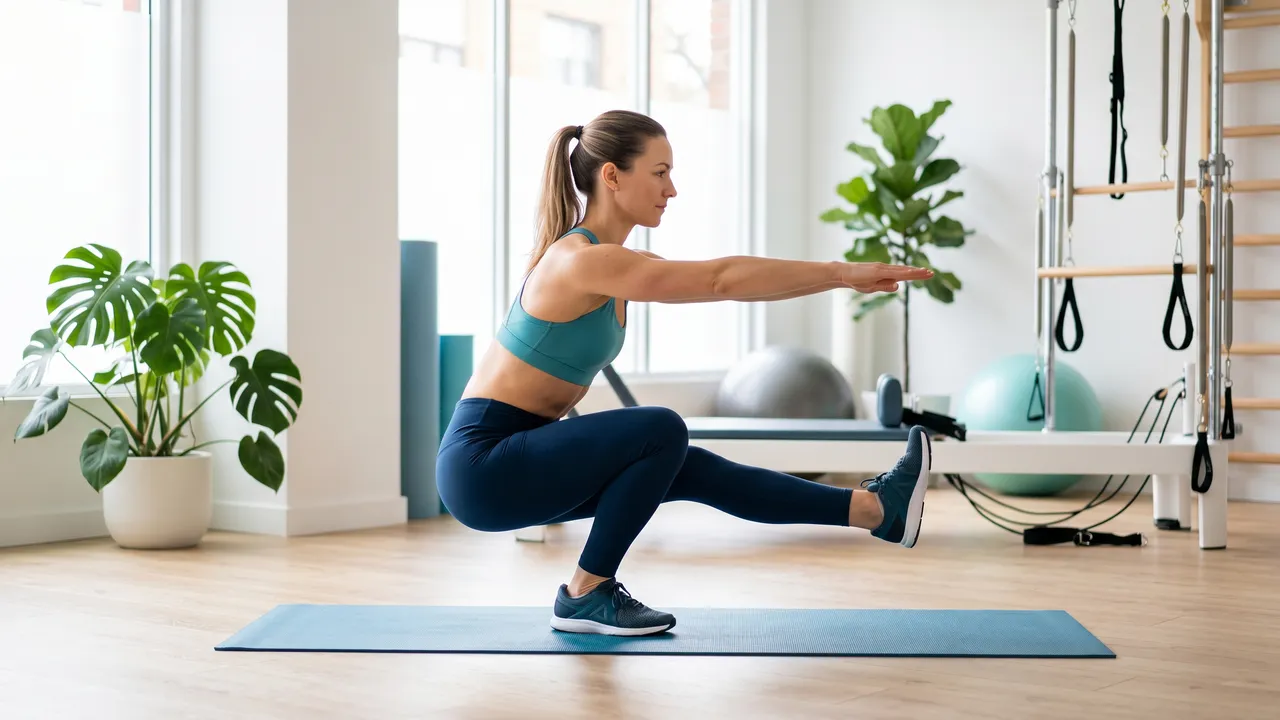
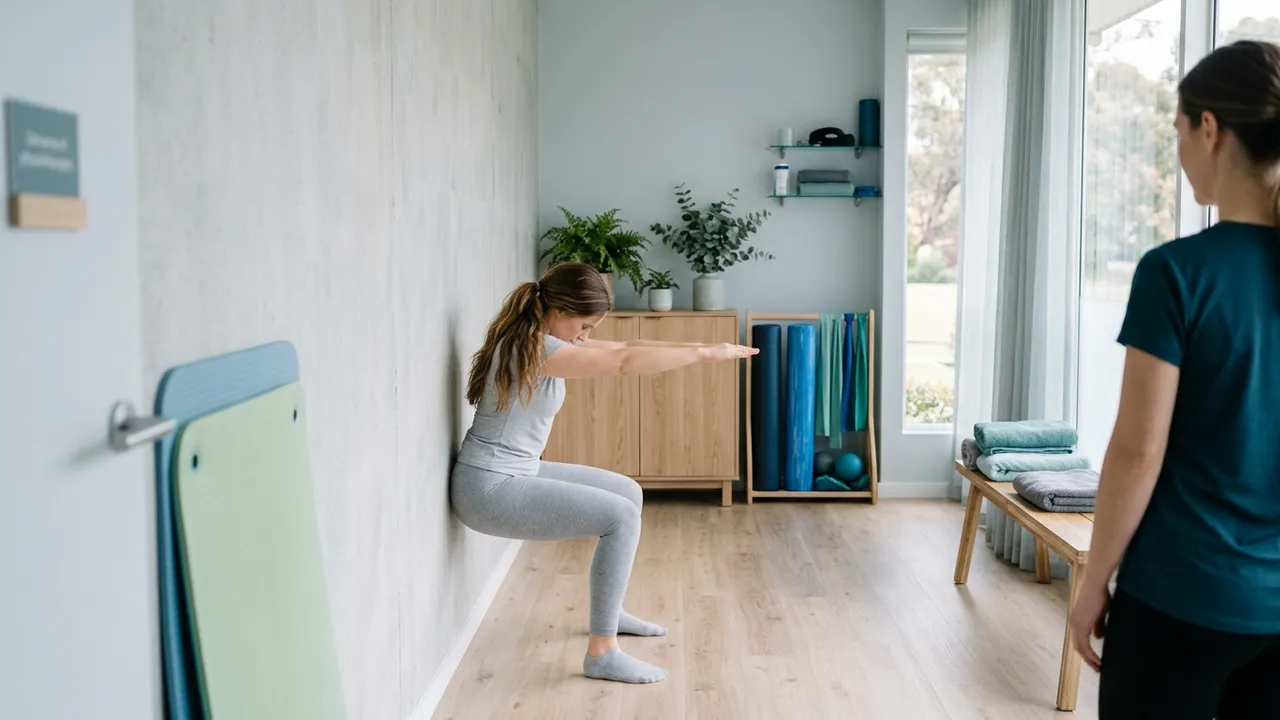
Static seated wall squat with trunk twists

Leg strength, trunk control and endurance for the snow, winter sports and running seasons. Work on your postural awareness and control while using your legs.

For this exercise, find a wall and weights if you have them.

1. Stand with your feet hip width apart and approximately 30-40 cm from the wall.

2. As you stand with your back against the wall and with tall waists, notice the feeling of your tail bone flat on the wall, the neutral concave curve of your lumbar spine and the flatness of your upper back on the wall. This is your correct spinal and pelvic alignment and you should strive for this in your squatted sit and twist also.

3. Breathe in deeply to prepare and as you exhale, gently lift your pelvic floor and deepen your navel, then slide down the wall into a seated position.

4. Take care of your knees with their alignment directly over the ankles and knee caps in line with your second toe.

5. Take your arms (with or without weight) up to the front, bringing them together at the middle at shoulder height. Be mindful of your relaxed tall neck and wide, soft shoulders.

6. As you breathe in, turn your upper trunk (with arms out in front) to the right no more than 45 degrees and as you exhale turn back to the centre. Repeat to the left.

Do this 4-6 times each side and in time with your deep breathing.

7. Try to focus on the following:

- keep your pelvis stable with flat heavy tailbone on the wall and no twisting trough the hips

- turn your trunk with long waists

- keep your shoulders open and soft

- maintain a gentle pelvic floor and deep abdominal activation throughout the set.

8. You will really feel this in the thighs and across the trunk. It will build endurance in your large leg muscles, oblique abdominal and deep postural core muscles.

9. Try this for 2-3 sets and follow with quads stretches and the wall twist or table stretch.

Read More

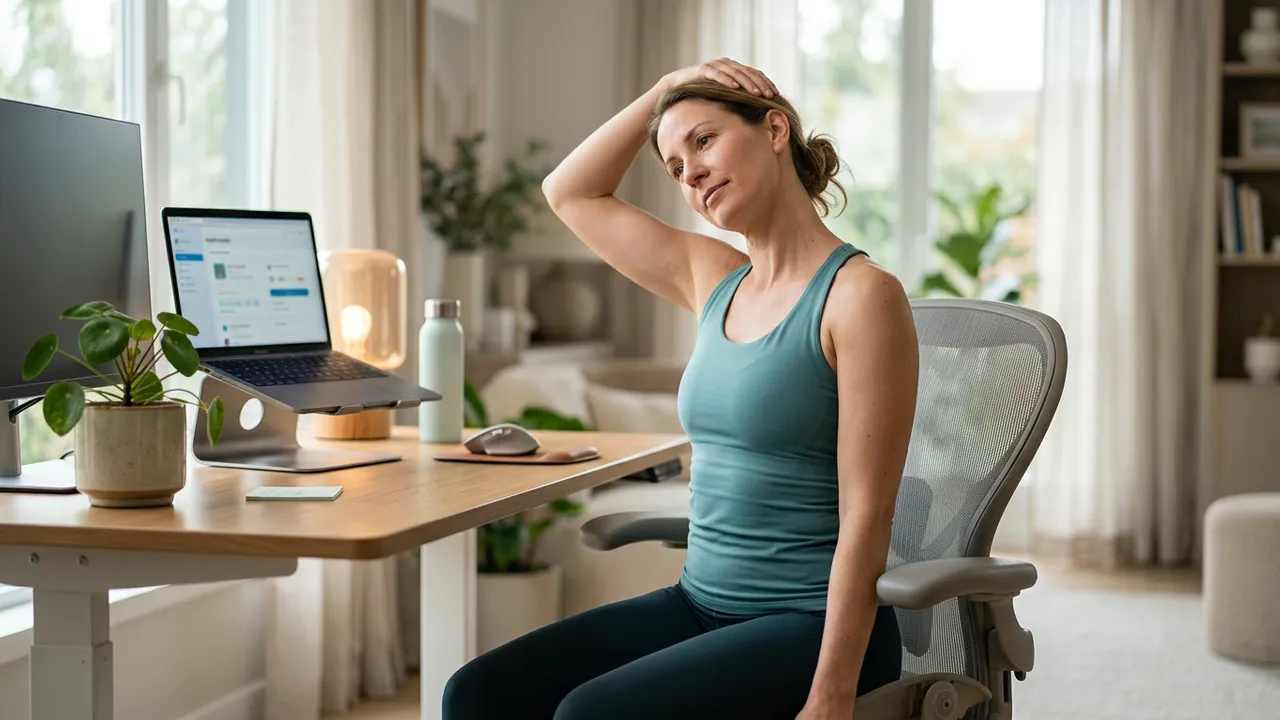
Exercise of the Month - Reduce Arm Aches and Neck Tension

Healthy neuro-dynamics for your upper trunk and arm nerve pathways. 

Reduce arm tightness, aches and neck tension while building your spinal and postural muscle endurance.

Scoop sand while sitting at your desk.

1. Sitting supported in your chair, ‘grow tall’ through your waists and gently lift your breastbone.

2. Lengthen gently through the back of your neck, lifting the base of your skull away from your shoulders.

3. Now imaging a full bucket of sand by your hip. Scoop deeply into your bucket for a handful of sand, bringing it up to your shoulder and then pushing it away from you to your side.

4. Move slowly, working on your tall posture. Keep your shoulders soft and down.

5. Return to your bucket for another scoop and repeat 5 times on each side.

6. Visualise your nerve pathways gliding and sliding up and down in your arm.

Meandering around your muscles and joints all the way up into your neck where they originate. Your nerves are quite cream in colour and in your arm, about the thickness on a piece of twine. The nerves are actually coated by a tube of protective proteins called the neural tube and there are many branches breaking away from each other like a river and its tributaries.

7. For those of you who are interested, why not google ‘brachial plexus’ for some images of your upper limb nerve pathways.

8. Don’t be afraid of your nerves! They are lovely and stretchy and adore being gently mobilised.

Read More

Recent thoughts on warming up and cooling down.

A proper warm up can increase the blood flow to the working muscle which results in decreased muscle stiffness, less risk of injury and improved performance.

Additional benefits of warming up include physiological and psychological preparation. Recently there has been a shift in thinking and scientific evidence from the ‘traditional’ warm up consisting of a light jog and then 10-15minutes of static ‘long hold ‘stretching after.

Research work by McNair (2000) [1] and Knudson (2001) [2] suggests that the use of dynamic stretches - slow controlled movements through the full range of motion - are the most appropriate exercises for the warm up, and by contrast, static stretches are more appropriate for the cool down.

Here are some ideas on how to warm up before your run or game:

1. Gradually increasing the intensity of your specific sport is always a good start. If about to play soccer, rugby or go for a run, begin with a light jog and then add a few faster paced run throughs. Focus on smooth controlled movements with ‘drive’ and not necessarily at full flat out pace.

2. Movements that are specific to your sport. These could include step lunges or running low and zigzag for netball, soccer and rugby. Short 5-10 meter sprints while changing direction, or swinging/pumping movements of the arms while skipping to warm up the upper body. Sprints and dropping down to touch the sidelines. Use your imagination here. Think of all the drills you may practice at training and use them as your ‘calisthenic-like’ warm up to prepare your muscles for your sport.

3. The ‘Skip with a Twist’ exercise. A simple warm up exercise for the muscles of the core, upper body and legs.

Read more at http://sportsmedicine.about.com/od/sampleworkouts/qt/SkipTwist.htm

Cooling down after your game should consist of a light 5 minutes jog or walk to decrease body temperature and remove waste products from the working muscles such as lactic acid. Follow this up with 5 to 10 minutes static stretching exercises. Static stretches are more appropriate to the cool down as they help muscles to relax, realign muscle fibres and re-establish their normal range of movement.

These stretches should be held for approximately 10 - 30 seconds. Stretching after your game not only has benefits in the physiological state of your muscles and joints, but it also just feels great!

1.MCNAIR, P.J. et al. (2000) Stretching at the ankle joint: viscoelastic responses to holds and continuous passive motion. Medicine & Science in Sport and Exercise, 33 (3), p. 354-358

2.KNUDSON, D et al. (2001) Acute Effects of Stretching Are Not Evident in the Kinematics of the Vertical Jump, Journal of Strength & Conditioning Research, 15 (1), p. 98-101

Read More

5 Easy Strategies for Exercising at work!

As we spend so much of our time sitting at our desk mostly staring at a computer screen it is very easy to become stiff and sore. Here are 5 easy ways to exercise while at work to reduce your stiffness and pain:

1. Seated Twisting: Move forward so you are sitting on the edge of your chair and sit up tall. Reach around towards the back of the chair with your right hand and place your left hand on the back of your right knee. Staying up tall, hold here for 20 seconds to feel a stretch around the middle of your back. Repeat to the left side.

2. Neck rotations: Your neck joints like to be moved to try and avoid stiffness. Sitting up tall turn your head to the left, like you are looking over your shoulder hold for 1 second then look to the right. Repeat 5 times to each side.

3. Wrist stretching: Straightening your right arm out in front of you towards your screen with your palm facing the ceiling. Gently let your fingers fall towards your desk and pull towards you with your left hand to give an extra stretch. Hold for 20 seconds and repeat on the left. This can help stretch the wrists especially if you are using the mouse for long periods of time.

4. Hamstring stretch: Standing up beside your chair. Place your right foot on the chair, making sure your hips and your left foot are facing the chair. Hold your body up tall and fold at your hips bringing your chest towards your knee. If you have your body tall you will not need to bend forward as much before feeling the stretch in the back of the thigh. Keep both legs straight and try not to reach for your toes. Hold for 20 seconds and repeat on the left. There is a high correlation with tight hamstrings and back pain so it is always great for your body to do hamstring stretches.

5. Move: Moving every hour is the best exercise you can do for your body at work. Go and get a drink or put your printer further away so you can walk and move for a few minutes every hour. Our bodies were not designed to sit for 8 hours straight.

Melanie Platt

B.App.Sc(Sports Studies), M.Phty

Principal Physiotherapist for The Fix Program.

Read More

Term Dates 2012

Here are the term dates for your diaries for next year.

Term 1

Monday 30th January - Thursday 5th April (10 weeks)

Term 2

Monday 23rd April - Friday 29th June (10 weeks)

Anzac Holiday 26th April

Term 3

Monday 16th July - Friday 21st September (10 weeks)

Term 4

Monday 8th October - Friday 21st December (11 weeks)

Read More

Interested in Real Time Ultrasound to check your Deep pelvic contractions?

As some of you are aware, an invaluable tool in muscle and “brain” (motor control) retraining now available to physiotherapists is the RTUS. Our colleagues at Castlereagh Physiotherapy Clinic have one on site and most of you would find a session with it most helpful. From the beginnings of your rehabilitation to checking your progress,  the RTUS has great benefit. 

It provides us with capability similar to ultrasound machines used for diagnosis and viewing foetal pictures during pregnancy. The Castlereagh physios have been trained on using this machine to show you in real time (i.e. during the actual exercise) which muscles you are contracting.  By watching the muscles move relative to each other, you can fine control your contraction to involve those deep abdominals, pelvic floor and buttock muscles and know you are doing it correctly.  Once you’re certain you’ve got it right,your confidence that you are doing it right in fix classes will grow.

Research has shown that the core muscles (deep abdominals and pelvic floor muscles), loose their postural tone after lower back pain and this contributes to recurrent exacerbations.  Returning these muscles to their original strength and control greatly enhances your full recovery.

Patients with poor core stability may also suffer hip, knee, ankle or neck pain and so your physio may suggest some RTUS for your treatment program.

Sessions with the Castlereagh Clinic for RTUS cost $90 and can be claimed as an “Initial assessment” with your private health cover. Call them on 9264 7974 for an appointment.

Read More

2011 Staff Changes at Fix CBD

As most of you will be aware, Katrina will be heading off at the end of January to have another baby. This has meant a re-shuffle of the physio staff to cover all classes. There will be minimal change to the term timetable and classes offered. The changes include:

  • Alla will teach 2 full days from her usual 1, and will now instruct Mondays and Wednesdays;
  • Sue will increase her hours and teach Tuesday lunch and all Thursday lunch and evening classes; 
  • Christine will increase her hours teaching to include Tuesday evening and Friday lunch classes. 

Melanie who now teaches on a Monday will be sadly leaving us as she heads off on her own entrenpreneurial pursuits. She is opening her own private physiotherapy practice, which will offer physiotherapy, dietetics and The Fix Program! So, although we may lose her at the CBD branch, we will still have her in the Fix Program family. We all wish her all the good luck and fortune.

Read More

Showing 10 of 293 articles by Katrina Tarrant

Fix News