The Fix Program Blog

18 Sept 2009 BY Katrina Tarrant POSTED IN Sydney CBD

The Fix Program Equipment Prices 2009

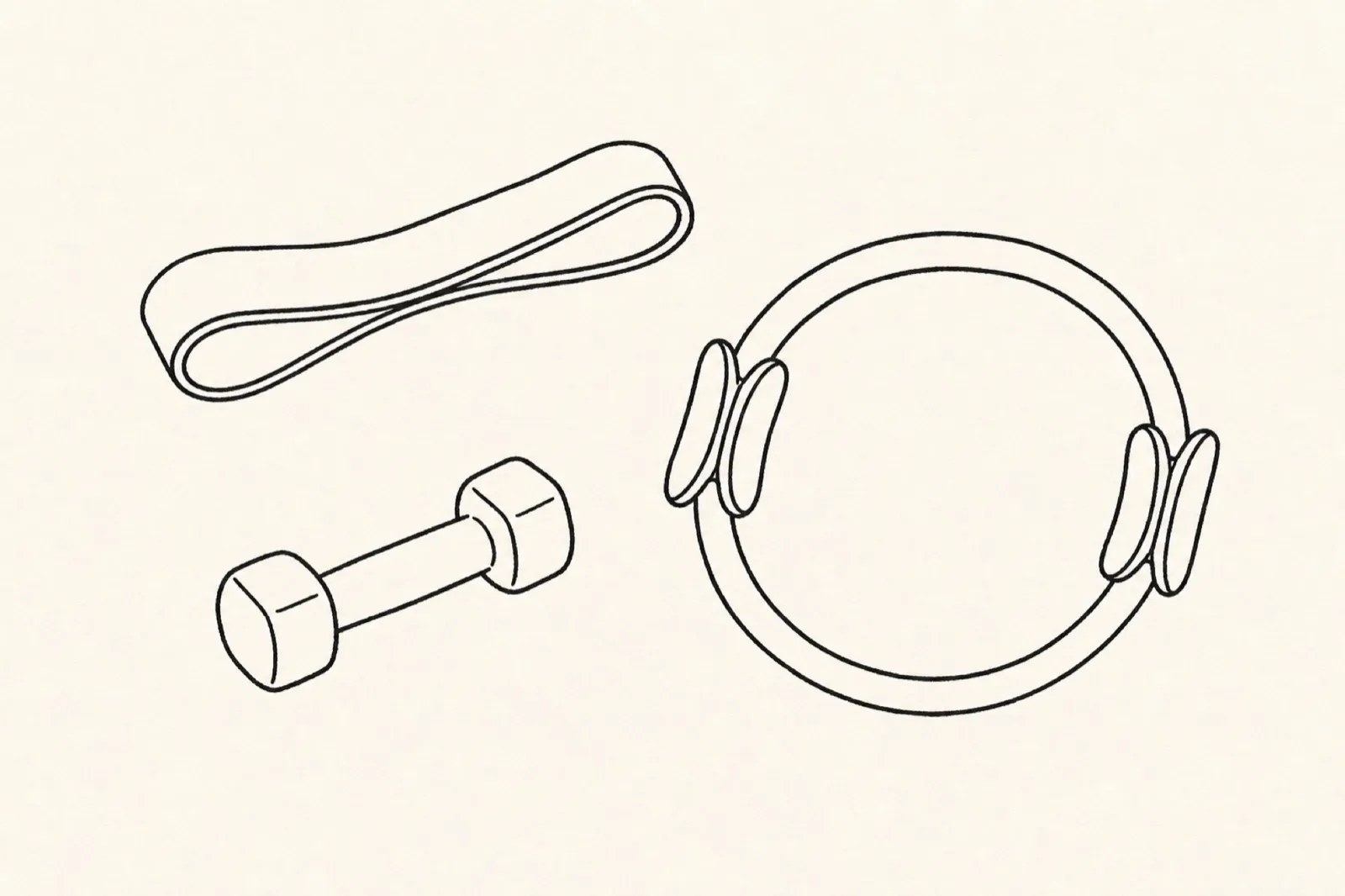
The following exercise equipment is available for sale from the Fix CBD office*. Talk to your instructor or call the office if you are intertested in any of the items.

Budget Pilates Mat ( 4.5 mm thick)    $25

Ribbed Pilates Mat (10mm thick)   $60

Red Pilates Mat (10mm thick)   $110

Swissballs   $60

Yoga Blocks   $15

Small Stability Balls   $15

Yoga Straps   $15

Theraband (1m)   $5

The Fix Manual (beginners)   $36

*Add 10% GST for all equpiment


16 Sept 2009 BY Katrina Tarrant POSTED IN Exercise

Is Exercising the "core" doing more harm than good for your spine?

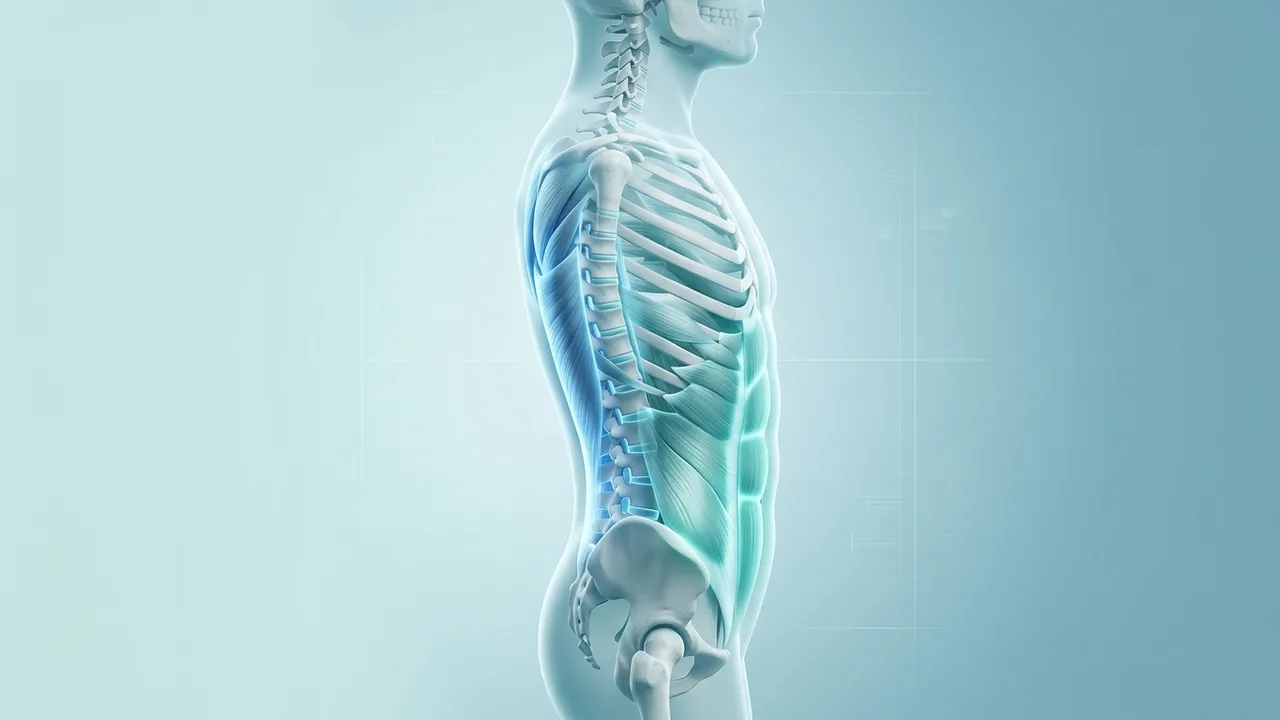
Here is an interesting read from the New York Times Health pages very kindly brought to my attention by Jan M. The article challenges the current trend to “deepen the navel to your spine” or “hollow the tummy” as an isolated strengthening exercise to increase spinal support, stability and therefore pain.

I agree on the notion that “a core exercise program should emphasise all the muscles the girdle the spine, including but not only concentrating on the abs” as put forward by Canadian Spinal Mechanics Professor, Stuart McGill. There should be a balance about the lumbo-pelvic and shoulder girdles of all supporting musculature, rather than highly isolated deep abdominal activation. These muscluar support systems should also be strengthened and challenged in functional postures and within normal movements to maximise the spinal stability in everyday activities.

I do feel however that time spent teaching isolated activation of the pelvic floor sling, deep abdominal muscle (transversus abdominus) and diaphragm needs to be established and ensured early in a core stability program. This allows for efficient and more importantly, appropriate trunk stabilisation when exercising, elimintaing all of those mal-adaptive postures and compensations we develop when in pain, or with poor postural habits. This is the role of your physiotherapist or fix instructor, and something I feel we do very successfully in our Beginners program and beyond.

Enjoy the read.

http://well.blogs.nytimes.com/2009/06/17/core-myths/?em


4 Sept 2009 BY Katrina Tarrant POSTED IN Sydney CBD

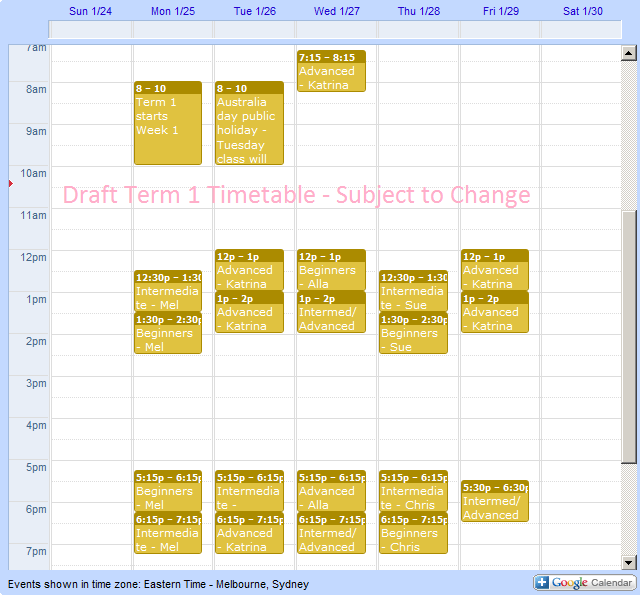
Term 4, 2009 is Fast Approaching

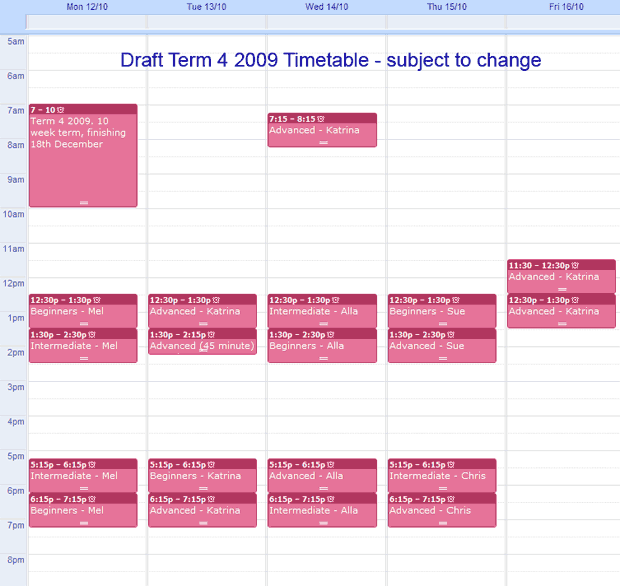
Term 4 will commence on  Monday 12th October and finish Friday 18th December. Please note that we are starting this term after only 1 week break instead of the usual 2. This means for all of you with school kids, that the October school holidays will be in their second week as we start up again. If this poses a problem, discuss this with your instructor as we near fourth term start date.


7 Aug 2009 BY Katrina Tarrant POSTED IN Back Pain

Preferences in Exercise for Lower Back Pain sufferers

People with non-specific chronic low back pain who have participated in exercise programs have preferences about exercise: a qualitative study.

Slade, Molloy and Keating, 2009 from Monash University.

This study examined people’s preferences for exercise programs for lower back pain. Alla has summarised the findings from this study.

From this research, it appears that people look for primarily in a class is:

  • Well equipped space with appropriate exercise tools

  • A motivational instructor, who emphasises health promotion

  • Exercise groups where people are matched appropriately for their level of skill and experience

  • Close monitoring in small groups to allow for individualisation of exercise programs and adequate supervision.

  • An instructor who demonstrates exercises, observes client practice, gives feedback and correction of technique. This helps to give a sense of mastery of the technique, and build confidence for independent practice.

  • Explanation on the purpose of each exercise, what it is strengthening and how it will help

  • Emphasis on assertiveness & self-management techniques, as well as discipline

  • Help with setting short and long term goals, and recognition of progress

  • A set weekly routine, with timetable flexibility to assist with regular attendance

  • Using outcome measures to gauge progress e.g. questionnaires

  • Diagrams and written instructions to aid learning

  • Integration of exercises learnt into everyday activities

  • Most people prefer the camaraderie and motivation of group exercise, some prefer one-on-one or independent exercise.

At FIX, our physiotherapists/instructors strive to deliver individualised, safely progressed exercise routines. This is coupled with neurophysiology and anatomy education, and tips on integrating the exercises into daily life to improve function. New exercises are always demonstrated first, practiced, and then corrected and re-practiced with hands-on feedback. A beginner’s book is available to help with a visual & written guide for home practice.

Do you agree with the outcomes form this study? Do you feel that we could deliver our classes any differently to meet your needs and expectations of an exercise class?

Thanks to Alla for this literature review from the Australian Physiotherapy Journal Volume 55 No 2, 2009.


29 Jun 2009 BY Katrina Tarrant POSTED IN Women's Health

Sitting postures and your Pelvic Floor.

I recently read the results of an interesting study conducted by Queensland physios, and thought to share it with you. The article was printed in the Australian Journal of Physiotherapy in 2006 and authored by physiotherapists Sapsford, Richardson and Stanton.

This simple study looked at the pelvic floor activity in 6 healthy women in 3 different seated postures- slumped supported sitting, upright unsupported sitting and “very tall” unsupported sitting (much the same as Fix’s “active sitting” that you all know). 

As you know, the pelvic floor is the sling that supports your abdominal and pelvic organs, contributing to continence, anti-gravity support of the organs, sexual function and lumbo-pelvic stability. 

This study showed that the pelvic floor activity significantly increases with more upright postures. The mean pelvic floor muscular activity was recorded at 7% of the maximum voluntary contraction (MVC) for the slumped supported sit, 12%MVC for the unsupported upright sit and 24%MVC in the “active sit”.

So everybody - sit tall “actively” in neutral twice per day for up to 10 minutes and your pelvic floor will only be getting stronger for each and every one of its very important functions. And without you even having to think too much about it!   

I thought that this would be a great opportunity to show an image of the pelvic floor for you to visualise what things really look like “down there.” Remember that each sex looks a little different, but this image below is a fantastic one viewed from above and looking into the pelvic cavity. You will notice the pubic bone at the fore of  the image and the sacrum/tailbone at the rear. Note the “sling-like” appearance of the pelvic floor musculature and now understand how, if toned and strong, offers support to your back, pelvis and pelvic organs in an upward direction.


9 Jun 2009 BY Katrina Tarrant POSTED IN Sydney CBD

Who are the Fix CBD team?

Katrina Tarrant has been the owner and head physiotherapist of The Fix Program CBD studios since early 2005. She worked as a clinical manual therapist, interested in sports and lumbo-pelvic pain at Castlereagh Physiotherapy Clinic for 6 years prior to that. Since graduating in 1993 from Sydney University, she has worked in both private clinic and the public health sectors in both Sydney and London, gravitating towards spinal health and rehabilitation in the latter years or private practice. Katrina is interested in sports, currently enjoying a return to squash. She otherwise loves the busy balancing act between Fix and recent motherhood.    

Melanie Platt is a new member to the Fix team this year. She completed a Bachelor of Applied Science (Sports Studies) in 2003 and completed a Master of Physiotherapy from Sydney University in 2006. She currently works in a private practice focusing on Musculoskeletal and Sports injuries. Melanie also works with the Barker Old Boys Rugby Union Football Club on weekends working with preventing injuries and attending to their on-field injuries. Melanie is thoroughly enjoying being a Fix instructor and enjoys seeing the results of clients achieving their goals and progressing with decreases in their pain. Melanie has just returned from a 6 week holiday in Europe where she had some amazing experiences but is happy to be home and back at work. Her interests include traveling, volleyball, history and relaxing.

Alla Melman completed her studies in Physiotherapy (Bachelor of Applied Science) at the University of Sydney in 2005. Since then she has completed a certificate in Hatha yoga teaching to complement her interest in therapeutic exercise.  She is currently working in physiotherapy private practice, with a focus on musculoskeletal and sports injuries. She enjoys swimming, bushwalking and a regular yoga practice.
Alla is enjoying teaching beginner & intermediate classes at Fix, watching people progress and improve week by week.


11 Mar 2009 BY Katrina Tarrant POSTED IN Exercise

Relaxation - a wonderful tool!

The power of relaxation.

Over your recent weeks at Fix, you have probably encountered “relaxation time” on the mats as a part of the class - incorporating diaphragmatic breathing, body focus and muscle relaxation.

We know that relaxation can bring about pain relief, but how? First we must understand stress to understand relaxation.

Threatening inputs to the brain, memories and circumstances can also lead to a stress response, which may in turn worsen your pain.

We’ve all heard the expression ‘fight or flight’. This is how the body has evolved to respond to any threatening situation. In times of stress, the body uses a hormone called cortisol. Cortisol turns on process we need for survival and switches off process that are not needed for survival.

What do you need if a tiger is chasing you? (Muscles – to fight or run away, your brain – for quick thinking). What don’t you need if a tiger is chasing you? (Reproduction and digestion. Healing can probably also be put on hold.)

So as you can see, this stress response is great in an emergency, but what if that tiger follows you around for a year and you’re stressed all the time? Prolonged elevated cortisol levels have been linked to depression, mood swings, memory changes, poor healing, weight gain and immune problems.

So you can see that if your pain is making you anxious and stressed, your stress can make things much worse, including the pain itself.

On the flip side, when you’re relaxed and feeling good, your body produces ‘happy hormones’ such as such as opioids and serotonin that block danger messages travelling up the nerves to your brain. These naturally occurring hormones are many times more powerful than the strongest pain-relieving drug on the market.

Which brings us to this weeks tip: relaxation brings pain relief.

So how do you de-stress. For a start, stop worrying about the pain. This makes a lot of sense now you know that worrying about your pain is scientifically proven to make it worse.

Yoga, relaxation, meditation and breathing techniques have also been proven to reduce the level of circulating stress hormones and increase your level of happy hormones.

Try going for a walk, listening to relaxing music, or just clearing your mind for twenty minutes every day.

Another technique is to set aside ‘worry time’. Rather than worrying about things constantly (and keeping your Cortisol levels elevated) make a specific time every week when you think about your worries. If a worry enters your head at another time, like when you’re trying to fall asleep, set it aside for your ‘worry time’.

So remember this week’s tip; relax and feel less pain.


5 Mar 2009 BY Katrina Tarrant POSTED IN Pilates

A different view to home exercise practice!

Some of you may find this amusing!

Thanks to Catarina for sharing this with the staff at Fix.


14 Sept 2008 BY Katrina Tarrant POSTED IN Sydney CBD

Term 4 2008 Approaches

Well yet again we find ourselves at the end of another Fix term for the year and another fast approaching- this the last for 2008.

The team at Fix are now getting the classes and timetable ready for our fourth term for the year. This term will commence on Monday 13th October and finish up in the week prior to Christmas. The term 4 timetable will be posted up in the studio for you to reserve your class places from next week. Your instructors, Katrina, Chris and Sue can assist you with any timetable and class-related questions you may have.

Thank you to all of those who have recently given us great feedback about the 45 minute lunchtime classes which were introduced this past term. They have been successful and will therefore remain for coming terms as an alternative to the hour-long classes. Look for them across the week’s lunchtime timetable, or let your instructors know if you are keen to enroll in one of these. They are a faster format class are available for Intermediate and Advanced levels only. They cost $270 for the usual term of 10 classes.

Remember that we have just restocked our equipment that is available for sale at Fix. There is a mix of thin and thick Pilates mats, small stability balls and swissballs, yoga straps and lengths of theraband. Also in stock now are non-slip sports socks for safe practice of your exercises on the floor- use them at home or in class. Contact Katrina in the office, or ask your instructors for prices or to purchase what you need.

Thinking of referring a friend to Fix? Look for the “friend-introduce-friend” flyer in the Fix studio for you to both receive 2 free classes off your term fees!

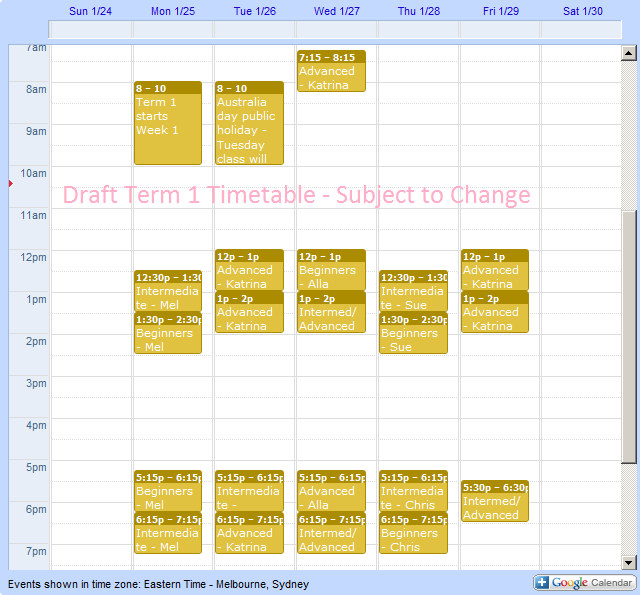
As this will be the final Fixnews for 2008, here are some dates for your diaries for next year. Term 1 2009 will commence on the 27th January. For those of you who are back at work throughout the month of January and would like to get a jump on your exercise prior to term 1, “Summer Fix” will again run this holiday season. It will be a short 3 week term of exercises and will start on the 5th January. Classes will cost $29 each and will be a mix of Intermediate/Advanced in difficulty. Your instructors will talk to you about “Summer Fix” towards the end of Term 4. If you are not attending term 4 but would like to enroll for either “Summer Fix” or term 1 2009, please contact Katrina for your name to go down on the waiting list.

Until next time, enjoy the remaining of 2008, and have a fun, but safe Christmas period.


17 Jun 2008 BY Katrina Tarrant POSTED IN Sydney CBD

45 minute classes at lunchtime

Well, you could definitely say that the winter is now upon us.

We at Fix are now getting ready for our third term for the year. This term will commence on Monday 21st July and finish up  in the final week of September. The new timetable will now be up in the studio for you to reserve your class places.

As another alternative for those of you returning to Intermediate and Advanced levels, we are pleased to now offer 45 minute classes at lunchtime. These faster- format classes will allow you to still feel that you have had your workout, but have not spent too long away from the desk. These classes will cost $270 for the term. Watch for the mix of these 45 minute and the usual 60 minute lunch classes scheduled on the timetable. The choice is yours.

We have just restocked our equipment that is available for sale at Fix. There is a mix of thin and thick Pilates mats, small stability balls and Swissballs, yoga straps and lengths of Theraband. Contact Katrina in the office for prices, or to arrange a time to purchase what you need to encourage more of that home practice.

Thinking of referring a friend to Fix? Look for the “friend-introduce-friend” flyer in the Fix studio for you to both receive 2 free classes off your term fees!


Fix News