
Katrina Tarrant Articles

Ladies, the hot 6 Tips to Train for Your Hormone Cycle

by Samah Elomari,  Women’s health physiotherapist 

We women, with our moods and energy levels will often find ourselves blaming our menstrual cycle for most things! At the same time, driving our housemates or partners mad!

Ladies, let’s turn it all around and use our changing hormone levels every month for the better! Here are women’s health physiotherapist Samah’s top 6 tips for exercising and training throughout your month.

Tip 1. At the end of your period and the week after, you are building more and faster muscle mass. This is due to the rise in oestrogen. Use these weeks to work on your strength training and lifting.

Tip 2. Around ovulation, your testosterone levels go up. Testosterone makes you feel competitive, powerful and energetic. This is perfect for competition day and running. At this time, you also have better coordination and faster reaction times – great for if you’re trying to learn dance or gymnastics routines. Book those dance classes and attend  Zumba classes at this time i the middle of your cycle. Find your feet if you are usually tripping over them!

**Tip 3.**If looking to lose fat, you’ll burn up to 30% more fat during aerobic exercise in those 7 days after ovulation. This is due to the rising combination of estrogen and progesterone, which fires up your body’s ability to burn fat.

Tip 4. If you exercise according to heart rate zones, expect higher heart rates to be more of a challenge to reach during your period. Try shorter workouts or shorter runs and swims during this time too, because you’re more likely to experience a drop in endurance. Leave you endurance workouts alone during your period.

 **Tip 5.**When training at higher intensities, you might experience more of a challenge during those 7-10 days after ovulation. Your heart is working slightly harder than normal, especially if you’re training in hotter climates…so you’ll reach a higher heart rate more quickly. Go back to those  dance and Zumba classes perhaps!

Tip 6. Here is comes, the most important tip.  Listen to your body and please  be kind to yourself. Only you know how your body is feeling. If you’re experiencing premenstrual syndrome (PMS) – that irritability, fatigue and a down mood – maybe what you need is some R&R, meditation and Yoga. Leave that big weights session or run to another day.

Read More

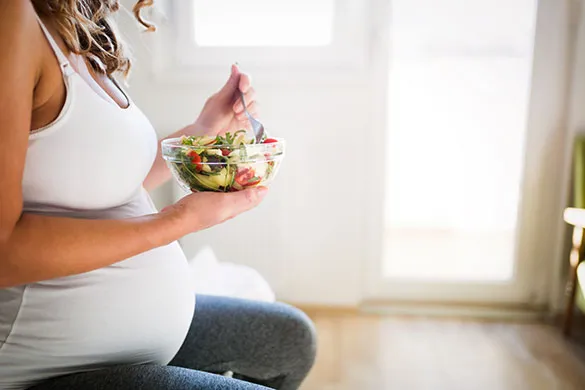
Eating for 2?

How true is the beloved old myth that when you are pregnant, you can eat for 2?

Jennifer May, Nutritionist and owner of Sydney City Nutritionist cannot disagree more. While pregnancy may make you feel that hungry, you cannot double your food intake each day. You may, however, may wish to double your nutrient intake with healthy eating habits.

If you put on too much weight during pregnancy, you increase your risk of gestational diabetes, backache, higher blood pressures, and C-section birth. Conversely, gaining too little weight during pregnancy can lead to low birth weight, premature delivery, and, later, developmental delays, or chronic health problems in your baby.

Here’s Jennifer’s guide throughout pregnancy when it comes to calorie intake:

  • During the first trimester of pregnancy no additional calories are needed, however you may feel hungrier due to the high requirement of nutrients.
  • In the second trimester an extra 334 calories on average are needed.
  • In the third trimester an extra 475 calories are needed per day.
  • It is important to meet those needs with foods that are highly nutritious and which promote optimum health and balanced blood sugar such as healthy protein, healthy fats and high fibre carbohydrates.

If you need further guidance on healthy eating habits and menus for pregnancy, contact Jennifer She would love to help and can consult with you through telehealth or face to face!

Read More

Introducing Jennifer May, Nutritionist

Jennifer is a wonderful CBD based nutritionist and mum too. She is passionate about nutritional medicine and working with other health practitioners for that holistic wellness in all she meets.

I love her approach to nutritional health. She loves:

  • helping patients to enjoy balanced healthy eating - to help all to achieve their goals without restriction, which evens allows for celebrating, rebelling and enjoying treats.
  • improving the understanding of how to maintain a healthy approach in the long term to nutrition, moving away from ‘on a diet, off a diet’ approach.
  • to utilise the therapeutic use of certain foods, supplements and nutrients. A large focus of her treatment approach is the therapeutic effect of foods - rather than just their calorie or macro content.
  • to live by her own teachings that when we eat well, we then have the energy to work towards our other life goals. 

**Being a woman, she enjoys the work she does in pregnancy and women’s health arenas, including:
**

  • Preconception care and fertility
  • Complications of pregnancy (fatigue, morning sickness, constipation etc.)
  • Post birth recovery - managing prolapse (bowel health + laxation), energy recovery, sleep support, emotional support, breastfeeding nutrition etc. 
  • Hormonal imbalances - assessment, nutritional planning, supplemental support. 

Jennifer offers the following nutritional medicine services:

  • Consultations face to face in York Street, Sydney
  • Virtual consultations Monday-Thursdays.
  • Food intolerance testing
  • Range of blood testing - nutritional bloods, vitals, hormones, thyroid, diabetes etc
  • Stool testing
  • Salivary hormones (mostly adrenals, otherwise usually refer for bloods)
  • Food intolerance recovery (digestive repair)
  • Eating disorder recovery (digestive repair and retraining) 

Contact her at info@sydneycitynutritionist.com

Website: www.sydneycitynutritionist.com

Facebook: www.facebook.com/sydneycitynutritionist

Instagram: www.instagram.com/sydneycitynutritionist

Read More

Sharp, stabbing abdominal pain during pregnancy?

The ‘round ligament’ could be to blame!


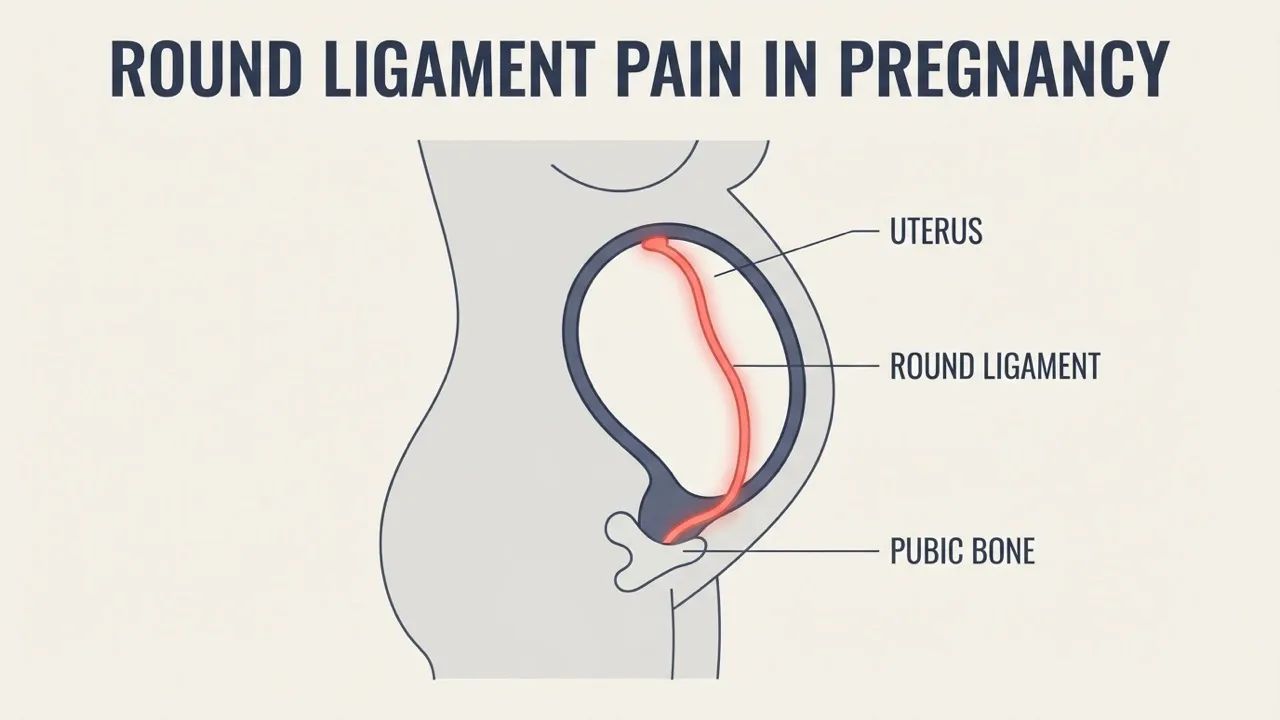
Each woman has two round ligaments, one found on either side of the uterus. They extend from the uterus to attach to the pubic area or groin. When a woman is not pregnant, the round ligaments just sit there, without much to do.

During pregnancy however, the uterus enlarges and becomes heavy with your baby and the life giver to baby, your placenta. It becomes more sensitive to sudden movements made by mum. This is because as the uterus is so much heavier, the ligaments are on more of a stretch and the heavy uterus has more momentum. That’s where the round ligaments come in: they maintain the uterus position during movement and support the growing uterus.

So, why do the ligaments cause pain?

During sudden or fast movement, the round ligaments can often pull and cramp as they both work together to hold the uterus in the centre of your pelvis and abdomen, thus causing pain. Those movements might include coughing, sneezing, laughing, rapidly standing or walking, rolling in bed and sudden directional changes.

What does round ligament pain feel like?

Occasionally the pain is described as a dull ache as the round ligaments are always pulling tight in that lengthened new position. The most common complaint however, is a sudden, sharp, stabbing or ‘cramp-like’ pain in the groin and/or lower abdomen. Most commonly, it presents in the right round ligament, but can occur on the left side or on both sides too.

Is there anything that can be done to help with this pain while I am pregnant?

The most important thing to understand is that round ligament pain is a normal part of pregnancy. Most of the time, the pain will go away on its own. Here are some things you can do to help manage pain:

  • Moving slower so as to avoid sudden movements.
  • Lying on your side, with a pillow between your bent knees and another under your growing bub.
  • Abdominal bracing during aggravating movements. Simply engage your belly by imagining drawing in the navel before you need to move suddenly, cough or sneeze.
  • Abdominal support garments to offload pressure on the ligaments.
  • Tilting your pelvis backwards during spasms (imagine tucking your bottom under, or flattening though the spine). Imagine here you are effectively shortening the 2 round ligaments at the front of your belly to take away that lengthened pulled tightness and pain.
  • Belly taping can be applied by your physiotherapist.

Read more here.

Read More

Muscle mass builds immunity

Another great reason to strengthen those muscles!

What a great read about yet another benefit of resistance exercise in us all. We can easily find many a research paper or magazine article  about the health benefits of regular exercise- cardio vascular health, mental health, even the steering away from cancers, dementia and decreasing bone density.

How about the added effects of stronger muscles and greater muscle bulk? Did you know that:

  • healthy muscle mass is involved in the production of greater reserves of amino acids used in the immune system? The bigger the muscle, the more of these in your muscle cells and the better you can quickly fight infection and disease! 
  • muscles keep low level inflammatory responses that we all posses at a lower controlled level? This in turn decreases the risks of many chronic diseases that arise from ongoing mild inflammations present in our bodies.
  • the quality of exercised muscle may prevent some cancers? The fatty deposits found in a weak unused muscle look to be a cancer risk for some cancers.
  • exercise and fitness actually improves the effectiveness of vaccinations? It has been shown that exercising immediately before or after a jab helpds boost the immune system to develop immunity for the disease you were being vaccinated for.

So, get ready for that hopeful arrival of the COVID-19 vaccine! Get those muscles challenged and stronger to boost your immunity.

Read more at https://www.smh.com.au/lifestyle/health-and-wellness/how-muscle-helps-to-build-a-healthy-immune-system-20200706-p559ec.html

Read More

Abdominal separation: The truth about exercise after baby

Diastasis is not such a dirty word

by Samah Elomari ( women’s health physiotherapist)


The belly separation dilemma

So you’ve just given birth, and one of the midwives or in house hospital physios comes in to assess you for ‘abdominal separation’. That’s already got you a little worried. Then, you’re told you have a ‘significant’ abdominal separation. There’s a panic that sets in…it really is scary to hear. But you’ve got so many other things to worry about, and YOU aren’t at the top of your own list of priorities.

The physiotherapist tells you to do this exercise which involves drawing your tummy in about 50 times all day, every day. You may even get a handout telling you not to pick up heavy loads (uh…hello, I’ve just given birth to a 3+ kilogram baby), to change the way sit and stand, the way you get out of bed and even how you do your housecleaning. She’s lost you at ‘exercise’, and she knows it.

The belly separation solution

Don’t panic! Abdominal separation is normal and there is easier, more effective and efficient ways of getting the results you want. Although you may have a separation, measured by fingers wide, it is actually the gentle tension that you can generate across this gap that will help healing of these tissues and encourage 

  • Great postural awareness is the best way to be always working on your belly healing. Sitting all slumped over, hips pushed forward when you stand or even butt tucking in standing all discourage the gentle abdominal activity that correct posture would other wise promote. Simply think of taller waists, a un-tucked butt and stacked ribs, feeling the gentle tension running across your belly that these simple strategies bring. It is as if you have ‘zipped up’ your mid-line zipper! Think of this as you sit to feed, or as you settle your babe in arms, or carrier them in your carrier out front.
  • Breathing well and pelvic floor activation  will also help. To breathe deeply, you will get your ribs moving and abdominal muscles contracting and relaxing as they do with natural breath. Spend a minute or 2 in your good posture when feeding or standing, and focus on mindful deep wide breaths.
  • You can do small abdominal crunches to assist with belly mid-line healing also, with an excellent research paper from 2015* to support this claim. Ab crunches always face a bad rap when it comes to post natal rehab, however, done correctly, they can actually improve the abdominal narrowing significantly according to the significant results in this study. A visit to your wonderful women’s health and pregnancy physio to teach you here would be highly recommended, as the ab crunch can be performed optimally and safely with great awareness or breath, pelvic floor and deep abdominal ‘corset’ too. Yes! All at once!

If you think you have an abdominal separation or have been told so, please don’t hesitate to give us a call. There’s a lot that can be said on this topic, and it can often be scary when reading all the mother’s online forums or Dr Google. Physios are here for you.

This is part 2 of a two-part series. ‘Abdominal separation: what’s normal during pregnancy?’ to read part one.

  • *Mota P, Pascoal AG, Carita AI, Bø K. The Immediate Effects on Inter-rectus Distance of Abdominal Crunch and Drawing-in Exercises During Pregnancy and the Postpartum Period. J Orthop Sports Phys Ther. 2015;45(10):781-788. doi:10.2519/jospt.2015.5459

Read More

Draft Broadway term 3 2020 for Pilates classes

Draft ‘term 3 2020’ Pilates timetable is subject to change.

These classes will run for 10 WEEKS in our BROADWAY clinic.

Classes will commence from Monday 20th July and end Friday 25th September 2020. We are continuing to run these classes COVID-safe with only 4 maximum in each group to allow for social distancing. We also have strict cleaning of mats and equipment, minimal equipment use and no circuits to avoid the sharing of equipment and props within class.

Classes for this term at our BROADWAY clinic are recommended and scheduled for Mums&Bubs classes only at this stage.

Read More

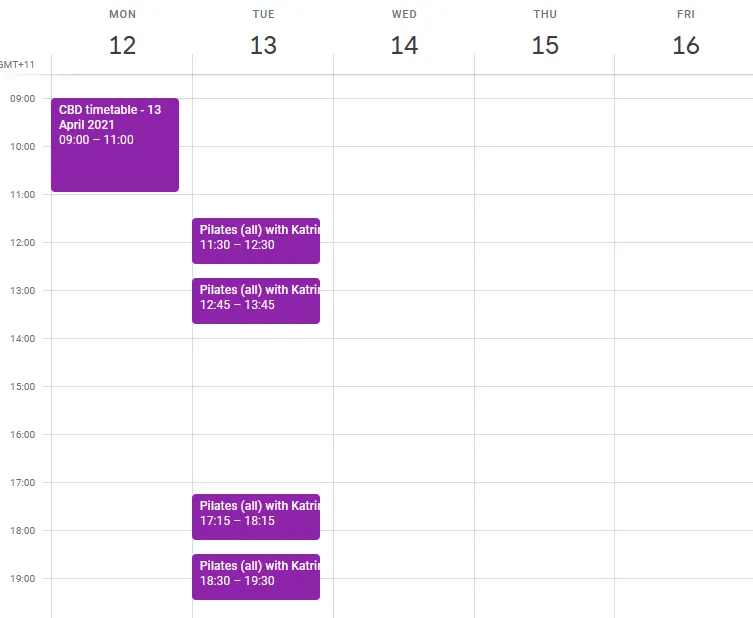
Draft CBD Term 3 2020 Pilates Timetable

Draft ‘term 3 2020’ Pilates timetable is subject to change.

These classes will run for 10 WEEKS in our YORK STREET CBD clinic.

Classes will commence from Monday 20th July and end Friday 25th September 2020. We are continuing to run these classes COVID-safe with only 4 maximum in each group to allow for social distancing. We also have strict cleaning of mats and equipment, minimal equipment use and no circuits to avoid the sharing of equipment and props within class.

Classes for this term at our York Street CBD clinic are recommended and scheduled for:


Read More

Abdominal Separation: What's normal in pregnancy?

by Samah Elomari, women’s health physiotherapist

Abdominal separation or DRAM (diastasis of rectus abdominis muscle) is such as hot topic at the moment! It’s so exciting seeing so much more awareness both online and within the health community. Unfortunately though, with that comes a whole lot of misinformation…especially when it comes to what we define as a ‘normal’ separation.

First, you need to know a little about your rectus abdominis, otherwise known as the ‘six pack’ or ‘abs muscle’. Your abs (yes, they’re there even if they’re not visible yet!) extend from the rib cage and travel vertically to attach into your pubic bone. The two strips of the rectus abdominis muscle are connected via the linea alba, a thick structure of connective tissue. This connective tissue is like bands of elastic fibres running down the midline of the entire abdomen.

**The linea alba stretches in every woman during pregnancy! This is a normal phenomenon and in fact why the linea alba exists!
**

The linea alba is a firm structure. During pregnancy however, its fibres relax and soften. That means that as your baby grows, the uterus pushes against the abdominal wall and cause the linea alba to stretch. New mums will often ask about the distance between the abdominal muscles where this stretching has taken place. It is still common practice to have a physio in hospital come around, measure this and exclaim “wow, your separation is only 3 cm wide ( or insert any other number)”. This can invoke fear or that something has gone wrong throughout the pregnancy, but really it has not. Remember, the linea alba has served its purpose here to give your growing baby room to grow.   

So how wide is the linea alba normally?

A study was carried out on 150 women between the ages of 20 to 45 years who’d never been pregnant. They found that the normal width of the linea alba in this population was:

  • up to a 1.5cm at the breast bone
  • up to 2.2cm at 3 cm above the belly button and
  • up to 1.6cm at 2cm below the belly button

The linea alba has a width to it for everybody, even women who are not pregnant, and men too. Which means that even if there is a small separation postnatally, the softening of its fibres means you will feel that separation on assessment. With all the misinformation out there, it can be scary to think something _ab_normal is going on.

If you’re concerned about an abdominal separation during pregnancy or after having your baby, come in for a postnatal check-up with one of our women’s health physiotherapists. We can help to train all of your belly layers, and talk through the correct strategies with breath and postural muscle control to assist with healing of the linea alba and your belly separation! This is an important step early on before jumping in on back to your regular exercise routines.

Reference: Beer, G. M., Schuster, A., Seifert, B., Manestar, M., Mihic‐Probst, D. and Weber, S. A. (2009), The normal width of the linea alba in nulliparous women. Clin. Anat., 22: 706-711. doi:10.1002/ca.20836

Read More

You can return to the gyms by mitigating the risks

How will returning back to the gym stay safe for all?

How do you feel about returning to the gym, as the restrictions across Australia start to lift and gyms can begin to open their doors? OK, there will be a few strict rules around numbers allowed in the gym space, and cleaning of all surfaces, but do you feel it will be enough?

By nature, gyms are germy places. From gym goers in close proximity sweating and breathing heavily, to the handling of equipment and equipment like weights quite difficult to clean thoroughly due to all the nooks and crannies. There will definitely need to be an acceptance that some risk lies with returning to the gym. However for some, this risk should be weighed up against the huge physical, mental and social benefits in retruning back to gym-based exercise. 

This New York Times article from this week is a great positive read on how to make your return to the gym as risk free as possible. It encourages you to get back to enjoy your favourite workouts again. To borrow from the author, at the gym, live by the mantra:

Wash. Spray. Wait. Wipe. Repeat

  • plan to sanitise yourself and the equipment very frequently.

  • make sure your gym offers contactless gym sign in procedures.

  • use your own wattle bottle and avoid the drinking fountains.

  • give the sanitiser and other sprays at least a minute to kill the bacteria on the equipment. Wait this time before wiping.

  • clean the equipment BEFORE you use it to negate any poor or rushed cleaning from the last person.

  • exercise with 2 towels each time, saving one to mop your face and body sweat and the other to lay on the benches and mats for your workouts.

  • ask your gym to increase it’s flow through ventilation system to refresh the air. This can be through fancy air conditioners, or simply to have a cross flow of ventilation with windows open to keep air and its particles moving from inside to outside the gym.

  • exercising with masks may have limited benefits although should depend on the type of mask. Due to sweat and moisture, may masks would be quickly reduce their antibacterial defence barrier.

Perhaps you can’t wait to rejoin your gym, or perhaps you would prefer to give it a miss at this moment - this will really come down to personal feelings and values. If you are looking forward to the group fitness classes and weight sessions that home has not being able to bring during this pandemic, making educated decision will mitigate the risks and allow you to safely jump back on in.

Read More

Showing 10 of 293 articles by Katrina Tarrant

Fix News