The Fix Program Blog

14 Mar 2014 BY Tabitha POSTED IN Exercise, Physiotherapy

Why does the front of my hip pinch?

What can physiotherapy and exercise do to fix my hip?

Hip anatomy 101

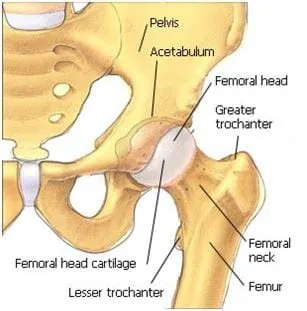
Your hip joint is a “ball and socket” - the ball sits atop your femur, or thigh-bone - this round portion is called the “head” of the femur. The head fits into the socket in your pelvis. The socket fits tightly around like a baseball glove, and the joint is surrounded by a joint capsule made of strong connective tissue. The joint capsule ensures the ball stays within the socket, while your muscles guide the rod of the femur around the socket smoothly to allow full range of movement of the hip.

At least, that is what is supposed to happen!

What can go wrong?

If you ever feel hip pain or catching deep in the front of your hip, you could have femoroacetabular impingement (FAI). Simply, a ‘pinchy hip’.

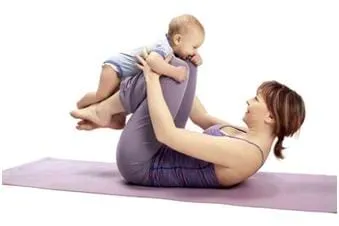
The movements most often associated with this condition are pulling your knee up, turning it inward or bringing it across your body - especially when all of these are combined at the same time, as seen by the picture below.

What does it feel like?

The pain typically occurs deep within your groin or the front of your hip, though it can affect your outer hip or buttock in rare cases. The joint usually feels stiff and sharply restricted in motion in the directions mentioned above. It may affect only one joint, so it could feel very different to your other hip by comparison. It may come on suddenly after an injury or build up over time with age and joint wear and tear.

Why does it happen? 

The deformation of the bones in the joint could be congenital (from birth) or build up over time in response to overuse or trauma. Some typically affect younger people, especially athletes. If the muscles surrounding the socket - typically the hip flexors and internal rotators - are overused and become tight, the ball is pulled forward in the socket, causing a shrinking of the back of the joint capsule. As the head of the femur is pushed toward the front of the hip and down, it grows larger and further down the bone.

These same factors can build up gradually over long periods of time, typically affecting older people.

Things that aggravate it: What makes it worse?

The movement(s) that cause the bones to knock together will result in a catching pain. If you have hip impingement, you will most likely notice it while:

-Sitting for a long period of time

-Walking, running

-Crossing your legs

-During or after leg exercise

How can physio/Pilates help?

If you think you may have this type of hip pain, see your Physiotherapist for a complete testing and diagnosis. If we suspect you have it, we can do the following such as:

  • applying pressure through your hip joint to stretch out your stiff joint capsule

  • massaging to loosen and release the tight muscles in the area of the hip, especially in the back of the hip and buttock area

  • provide you with a range of exercises to improve the range and control you have in your affected hip. These will help you to draw the ball back and down as you move into triggering positions thereby avoiding bone on bone catching as much as possible.

If necessary, you can consult a doctor to advise on pain and anti-inflammatory medicine, and in severe cases a surgical consult may be a necessary step to ensure best treatment and management of FAI. If surgery is required, your physio will play a vital role in your post-operative care to ensure you make a full recovery.

Exercises for hip impingement

Push the head of the femur back. Lie on your back and lift the knee of your affected leg directly above your hips. Clasp your hands over your knee and push directly down through the line of your thighbone towards the floor. Do two sets of ten, applying firm pressure.

Push the head down, socket out. Stand with your feet wide apart. While keeping your affected leg straight, bend your other knee and fold through the hips, pushing your bottom out as you go. Once you feel the inner thigh of your affected leg stretch, use your hand to firmly press down on your upper thigh - make sure your hand is as high up as possible, near the groin. Do two sets of ten.

Stretch the front of your hip. Kneel on the knee of your affected leg and bend your other leg up in front of you. Rest your hands on either side of your front foot and press your hips forward and down towards the ground. You should feel a stretch across the front of your affected hip, hold it for 30 seconds and repeat.

These mobilising and alignment exercises should be coupled with a precise exercise program of hip and pelvic stability strengthening exercises to optimally return good strength, support and movement control about the hip region.

Join an online class  from the comfort of your home - Katrina the principle physio at The Fix Program has designed a series of Pilates exercise programs that will help you immensely.


10 Mar 2014 BY Katrina Tarrant POSTED IN Back Pain

The truth about back pain

Pop your paracetamol and keep moving

paracetamol

 http://www.smh.com.au/lifestyle/life/the-truth-about-back-pain-20131010-2vah5.html

It appears that as our medical technology and knowledge advances, we may still not be getting the management of back pain right. Over-scanning, over-medicating, over-diagnosing. This seems to be the trend in the diagnosis and treatment of acute back pain in recent times.

Dr Chris Maher in this October 2013 Sydney Morning Herald article explains some of these inappropriate treatments and other interesting conclusions from recent research.

Did you know that 90% of all acute back attacks are ‘non-specific’?

This means they are due to altered postural loads on the back with no injury to back structures such as the joints, ligaments and discs. In other words, they are mostly muscular.

Did you know that over-complicating the care of someone with an acute back episode can actually lead to greater problems long term?

‘Catastrophising’ the diagnosis can have adverse affects on the attitudes to activity and therefore getting better in some. Over-medicating can cause drug dependence. Many unnecessary back surgeries are undertaken.

Did you know that MRI and CT scans will turn up a positive structural change in 33% of all people?

The interesting thing about this? Most will have no symptoms representative of these changes on film.

Did you know that it is now believed that there is a strong genetic component to suffering from back pain?

This is thought so as most other predictors of risk for back pain seem to be weak or inaccurate. This is seen with occupation, health and safety studies where there is little difference in the incidence of reported back injuries between control groups and those having received lifting education in the workplace.

Did you know that most people will suffer from more than one attack of back pain in their lives?

This is not unusual, and should therefore not come as a shock. If this does happen to you, stay calm, manage with mild pain killers and reassure yourself that this is the common trend.

What is the solution to this and also the international evidence-based clinical guidelines? Take mild pain killers such as paracetamol and stay as active as you can. In 90% of cases, this pain will pass within a few days to a week. If pain does linger, consult your physiotherapist for a lending hand.

And, of course, exercises to mobilise and strengthen the important pelvis and spinal postural muscles through Pilates.


10 Feb 2014 BY Katrina Tarrant POSTED IN Exercise

Progressive Relaxation

Learn to take 5 after that exercise session, heavy day at work, or stressful situation (like relocating!)

The Starting Position:

The focus:

  • Lie on your mat, or bolster with your legs out straight in front of you. If you have tight hamstrings, let your knees bend a little so that you are comfortable. Try a cushion under your knees for a truly relaxed leg and lower back.

  • Place your arms wide by your side with palms upward turned.

  • Keep your breathing deep, relaxed and consistent**.**

  • Your muscles and your mind deserve a rest. Rejuvenate and restore after working them hard.

  • This is all about being mindful of your tense spots and learning to let them go.

The Movement:


  • There are many ways to bring your mind and body into a relaxed state, but try this one.
  • Focus on your breathing, the coolness of the air as it passes into your body, making each breath that little deeper. Focus on the movement of your lower ribs and the way they expand wide into the side seams of your shirt. Imagine breathing into the back of your ribs.
  • Soften through your neck and shoulders and try to keep your abdominals relaxed when breathing.
  • Now start your progressive relaxation, starting from your face and working south. Soften through your brow, jaw and tongue, allow your neck to relax and shoulders to widen. Imaging all tension from your upper body running down your arms and out your fingers.
  • Move south to your pelvis and allow your pelvic floor muscle hammock to descend, widen and relax. Melt between your sit bones, letting them to widen. Relax your buttock muscles and through the front of your hips. All tension now from your lower body is trickling down your legs, past your knees and out of your toes.
  • Enjoy your relaxed state for a few minutes. Allow your mind to slow down and any thoughts that enter your consciousness are to be acknowledged and allowed to wash over you.


Tip:

Try adding visual cues such as melting ice cubes or icecream in the sun, or imagining breathing into a point of muscular tension to dissolve it away.


10 Feb 2014 BY Katrina Tarrant POSTED IN Sydney CBD

The new CBD studio on York St

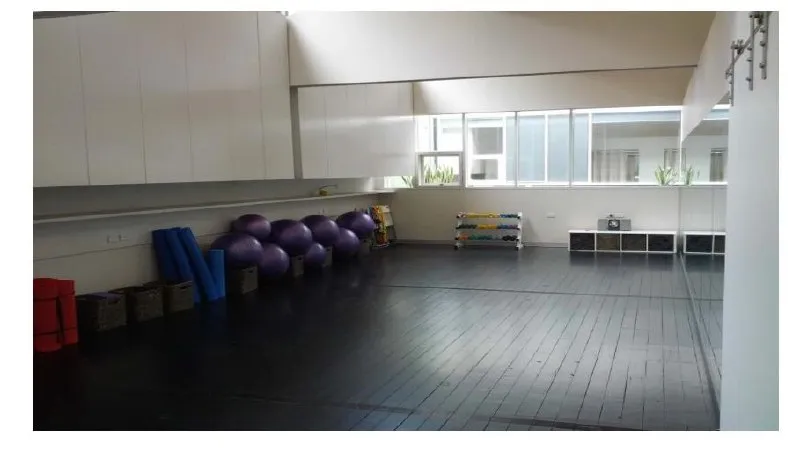
Here’s a couple of shots of our new studio

The Pilates studio is so bright and spacious, we’ve three new change rooms, and three physiotherapy rooms.

If you need physiotherapy, we are taking appointments now. Give us a call!

Physiotherapy rooms before and after:


Pilates studio before and after:


Deck:


26 Jan 2014 BY Katrina Tarrant POSTED IN Pregnancy

The 6 best ways to control your tummy separation in pregnancy

Are you worried about your tummy muscles separating? 66% of pregnant women will have it, so try these easy tips 

Abdominal separation or Rectus Diastasis (RD) is the separation of the most superficial of the abdominal muscles that can occur during pregnancy (or less frequently in anyone, men or women who overtrain their abdominals with too many sit ups). The separation will cause a bulge to occur when the pregnant woman attempts to move, especially visible when going from lying to sitting.

The rectus abdominus muscle is the muscle we typically associate with our bellies - we see them all oiled, sweaty and washboard-like on men’s health mags every time we are in the newsagent. Nearly all men would aspire to these ‘six-packs’, and most women too if to be perfectly honest. This muscle is divided into two, with a thin tissue or fascia which serves to separate and join the halves at the same time. This fascia is called the linea alba.

What does the research say out there about abdominal separation?

In pregnancy, the linea alba becomes overstretched to accommodate for the growing belly. This is a normal part of pregnancy. Research states that 66% of all pregnant women will have a degree of RD in their third trimester of pregnancy. In many women’s cases, this separation will improve without any intervention, and that this will be seen mostly from week 1-week 8 after having their baby. Any remaining separation is unlikely to make any further improvements after this time if left alone. Physiotherapy for thorough assessment of abdominal and pelvic floor control and pelvic, spine and rib alignment is highly recommended to assist in reducing the remaining gap. 

So, can I prevent abdominal separation from happening when I am pregnant?

The short answer is, no. Your body is adapting this way to handle your growing uterus and baby size. But here are a few tips to make good habits in pregnancy and in those first months post-natally to reduce the pressure on the linea alba fascia. ( I must also make the comment for you non-pregnant folk who have read this far on, that these are excellent habits to adopt when moving and exercising regardless of having had a baby or not).

  1. Move safely out of bed, through contraction of your pelvic floor and deep abdominal muscles, then rolling like a log and pushing up in a sidewards manner.
  2. Learn to appropriate hold your pelvic floor muscles. This means in short, the ‘lift’ of the pelvic floor hammock, not the ‘pushing down’.
  3. Move about through your day without holding your breath. Forgetting to breathe will increase the pressure from the abdomen pushing out into the linea alba. This includes the simple things like getting up out of your chair and bed, to walking up steps, or lifting loads such as little ones or grocery bags. Keep breathing and reduce the tendency to stretch the fascia more!
  4. Attend to gentle abdominal exercises (like the mat based deep abdominal exercises from The Fix Program) while being safe with your pelvic floor. This means not allowing the pelvic floor sling to bear down in a descending manner. This decreases the pulling or stretching forces of the fascia tissues within the pelvis that are all connected. Talk to our physios about appropriate pelvic floor and abdominal exercises for you.
  5. Learn ‘the knack’. This is another pelvic floor technique which supports the fascia within your pelvis and stops it from over stretching when coughing, sneezing or laughing. Try to contract or lift your pelvic floor before you feel any of coughs or sneezes coming on.
  6. Support your abdomen with pressure from your hands when you cough, sneeze or laugh. 

What problems can abdominal separation cause?

The linea alba fascia is required for good tissue strength and support within the abdominal and pelvic regions. It is known to have roles in back support and posture, continence, breathing and holding the organs in their place. Overstretching of this tissue can therefore potentially lead to:

Why not make the most of our women’s health physiotherapist, Heba? She is a specialist in pregnancy and post-natal. If you feel you have abdominal separation in your pregnancy or after having your baby, come in for a thorough assessment of pelvic alignment, strength and stability of the pelvis, pelvic floor control and strength, presence of vaginal prolapse or abdominal separation. We call this our Post natal checkup This is especially important before you start an exercise program.


5 Dec 2013 BY Katrina Tarrant POSTED IN Pilates

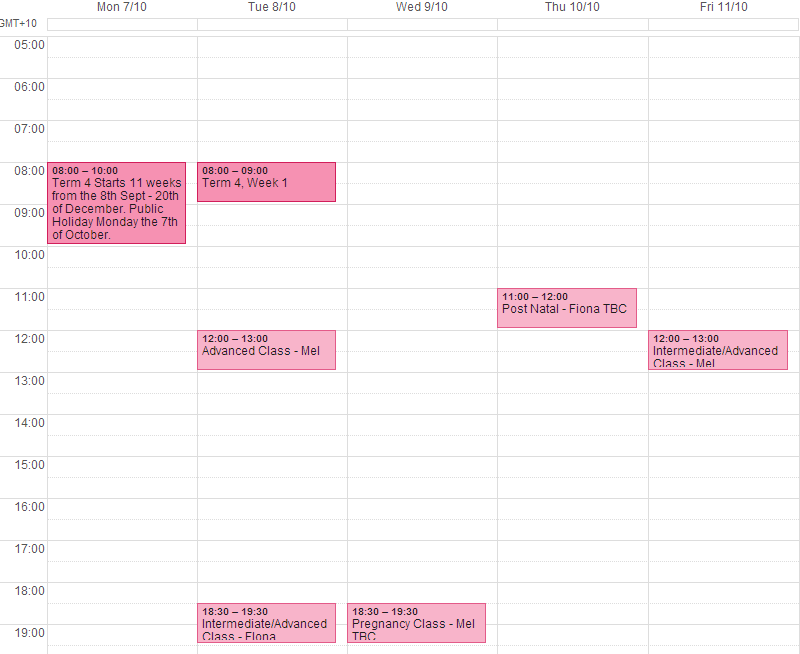
Draft Timetable Term 1 2014 - St Leonards

pilates st leonards timetable


5 Dec 2013 BY Katrina Tarrant POSTED IN Pilates, Sydney CBD

Draft Timetable Term 1 2014 - Sydney CBD

pilates sydney cbd


4 Dec 2013 BY Tabitha POSTED IN Physiotherapy

Can physiotherapy help treat tennis elbow?

What is tennis elbow?

Tennis elbow - in medical terms, lateral epicondylalgia - is an umbrella term for a range of injuries affecting the forearm and wrist extensor muscles along with their tendons and the radial nerve running through them. The action of tennis backhand is precisely the kind of movement that can cause it, meaning tennis players are easily affected, but in the vast majority of cases those suffering from tennis elbow have never even picked up a racquet!

How does tennis elbow feel?

Sufferers of tennis elbow describe an aching of your outer elbow, possibly tender to touch, sometimes with sharp pains with certain movements such as shaking hands or turning the tap. This is usually accompanied by a feeling of tightness or pulling in the muscles on the back of your forearm and hand.

How did I get tennis elbow?

For the tennis players out there, the name gives you a big hint! For everyone else, there are many actions that might be the culprit, from opening cans to lifting technique, opening doors, even deskwork or pouring drinks. The specific movements are:

  • Pulling your hand back towards your elbow (like a tennis backhand)
  • Bending your wrist sideways (left or right)
  • Turning your hand over (palm up or down)

Notice these are all wrist movements, but the pain occurs in your elbow. This is because the tendons connecting your wrist to your elbow are being aggravated. When the muscles are repeatedly overused the tendons get irritated, and a vicious cycle of tightening and aggravation takes over your entire forearm.

How can a physiotherapist help?

If you have elbow pain, the first thing a physiotherapist can do is determine whether or not it is this repetitive movement of the wrist that is causing your problems - the muscles, joints and nerves of the neck, shoulder, and upper back will also be tested as they may contribute, either wholly or in part, to the pain you are experiencing.

Once a diagnosis of tennis elbow is made, there are several treatment options.

  • Soft tissue massage can soothe your tight, overused muscles and unload your tendons, helping to break the irritation cycle
  • Support options compression stockings, sports tape, braces - that can be fitted to aid the affected area as you heal
  • Ice and ultrasound
  • Stretches and strengthening exercises that specifically target the affected areas can also be prescribed - these will involve strengthening the forearm muscles in a lengthened position, enabling them to withstand repeated loading without overly stressing your tendons.

An important step is working with the physiotherapist to identify the activities that cause the aggravation. Temporarily abstaining from these movements, allowing your muscles to rest, is part of any treatment plan. In many instances, the ergonomics of your environment - desk position, chair height, even the way you swing your racquet - are important contributors to the condition, and simple changes to your technique can be the key to helping those tendons recover.

You may also require strengthening programs for the shoulder and upper trunk about the shoulder blades to help to support the upper limb more efficiently and decrease the loads on the forearms, elbow and wrist. This can include Pilates based exercise, weights and theraband resisted training.

Early intervention is the best medicine, so if you start to feel dull aches or sharp pains, tell us - physiotherapy will prevent it from getting worse and ultimately manage your return to full, painless function.

If you are suffering from tennis elbow call us, we can help


4 Dec 2013 BY Tabitha POSTED IN Pilates

Explain the Pilates Cue – Sticky Feet

Imagine chewing gum under your feet and make your techniques on the mat better 

We are back with another instalment of Explain the Cue, and this month we are looking at the motivation for “sticky feet”. You will hear us use this cue whenever we are doing mat Pilates exercises in single or double float. 

The exercise

Start by lying on your back, knees bent. Use a towel to make sure your neck is well supported. Concentrate on your pelvis, feeling for the position where your tailbone feels flat on the mat – notice that this gives you a neutral, small curve in your lower back, away from the mat.

Take a breath in to prepare, deep and wide. As you breathe out, lift the pelvic floor, deepen the navel towards the spine, and lift one leg. Hold there for a deep and wide breath in and, as you breathe out, lift the pelvic floor, deepen the navel towards the spine, and lower the leg. Alternate legs and repeat 8-10 times.

 The goal of the exercise

Like many exercises in Pilates, this seemingly simple, easy movement is designed to activate your deep abdominal muscles (transversus abdominus) and the pelvic floor – your pelvic stabilisers or ‘core’. Once your core is properly activated, your lower back and pelvis will stabilize your entire body as you move your legs throughout the day.

To do the exercise correctly, the tailbone must stay flat on the mat, not digging in or peeling off, and the lower back curve must be maintained – no arching or flattening. If your pelvis and lower back don’t stay in this position, the target muscles will not be activated, and you will be moving your legs for nothing! 

So how does chewing gum fit into all of this?

This is where “sticky feet” can help. Each time you start to lift a foot off the mat, imagine that the mat is coated in a sticky substance – like chewing gum – preventing you from pulling it off quickly. In response, lift the heel first, rolling through the foot, so your big toe is the last thing to leave the ground. This allows for you to really prepare the muscles about the pelvis, turning them on and being mindful of your pelvis posture not changing.

Keep this ‘stickiness idea’ going throughout the exercise! As your leg lifts through the air, imagine it is moving through a thick fluid – like honey – so that the movement is slow and the leg feels heavy as it moves. As you lower the leg, again imagine pushing it through thick honey, touching the mat with your big toe very lightly and slowly, softly, reversing the lifting motion, rolling your foot down as if you are trying not to squash something soft and fluffy – like cotton wool.

These visualization cues slow down your movements and ensure you maintain full control. This will ensure your lower back and pelvis stay steady, stable and anchored, which will fully engage the deep core muscles both before, during and after you lift your leg. Imagining your sticky feet will also stop muscles about the hip and leg engaging and working in place of the real target- your pelvic stabiliser muscles.


4 Dec 2013 BY Katrina Tarrant POSTED IN Back Pain

Office chairs for good neck and back posture

Does your chair fit?

Chairs for home and the work place are designed for the average height and build. But what about for those who are at either end of the bell curve? Matching the right chair to the individual should really be as important as have the right fitting shoe, especially for the desk worker who sits all day.

In reality, in offices everywhere, this is not the case. Companies tend to buy chairs in bulk and all of the same make and size. Does one of these common scenarios sound like you?

  1. Tall people sit in standard seats with too much of their thigh unsupported and hanging in front of the chair.
  2. Short people sit in standard chairs that are too large and cannot get their bottoms to the back of the chair, or if do, have their feet swinging and not firmly on the ground.

office chairs

How do you know if a chair fits you properly?

There are 3 important dimensions to measuring a well fitted chair for any individual.

  1. Can you easily get your hips and bottom back into the seat with the backrest supporting your back?
  2. When you are seated back into the chair, do your feet sit firmly on the ground with your knees and hips at a right angle?
  3. Is there a 2-5cm gap between the front edge of the chair and the back of your knee when you are sitting well into the back of the seat?

If you answered ‘no’ to any of these questions, then your chair should be modified or changed altogether. Office chairs do offer great adjustability such as a seat slide, and gas compression chambers for lift and tilt. Seat depths, heights and tilts can therefore be altered up to a point for the average sized of us. However, for the petite and larger of us, there are chairs out there that would better suit you.

I would suggest that if you are one of our smaller or larger friends, speak to your HR department or physiotherapist about whether your chair is adjustable enough or whether another new chair is really the answer.

Just like Golidlocks and the three bears, there is a seat size best for everyone, no matter how big or small.


Fix News