The Fix Program Blog

27 Jun 2013 BY Katrina Tarrant POSTED IN Pilates

Will Pilates flatten my tummy?

Fat seems to be genetically pre-programmed to its final destination

I often get asked whether Pilates will help to lose abdominal fat. I usually answer ‘no’, as fat must be burned away through cardio-vascular exercise that really gets our hearts pumping. Pilates can, however, definitely tone the abdominal region, giving you a shapelier waist line.

Perhaps the true secret to a flatter tummy is all in our genes?

I recently stumbled across a short but very interesting article about fat cells. The article made frequent reference to ‘bad’ belly fat that causes cardiac disease. It compared this fat to the ‘heart-friendly’ less dangerous fat of the lower body, or thigh and hip fat.

As we would all be aware, men seem to deposit their fat stores around their middle, while women tend to be more pear-shaped, with higher fat deposits around their hips and thighs when compared to their tummies. Research also seems to point to the belly fat as a greater predictor of heart and cardiovascular disease and diabetes, when compared to thigh fat.

A recent study in 2012 published in the ‘Journal of Clinical Endocrinology and Metabolism’ concluded that fat cells are ‘pre-programmed’ genetically to land either in your belly or thighs. In this research, genes were expressed very differently in the same individual’s belly and thigh fat cell samples. This possibly dictated where each fat was to be deposited. These same fat cells (grown from the fat stem cells in a petri dish) showed the same differing gene expression, further supporting the thoughts that all fat cells are genetically destined to their final location, even when not in the body and grown in a laboratory.

Further research is needed, but it is thought that this will bring a shift in the thinking and management of obesity and its relationship to heart disease and diabetes. Perhaps finding a way to change the gene expression of our fat cells will allow for a redistribution of our fat away from the tummy and into the thighs.

We may one day all look very pear-shaped in our figures- both men and women alike. My advice? Low fat diet and exercise. All ‘fatty’ food and drink in moderation to lower your fat cell count and of course, Pilates to stay shapely and strong.


18 Jun 2013 BY Katrina Tarrant POSTED IN Sydney CBD

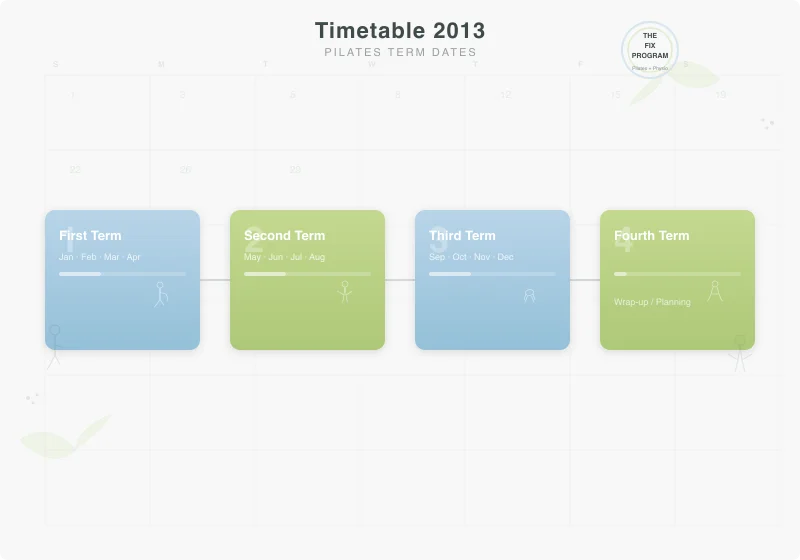
Draft timetable - Sydney CBD

Sydney CBD Timetable Term 3 2013


31 May 2013 BY Katrina Tarrant POSTED IN Pilates

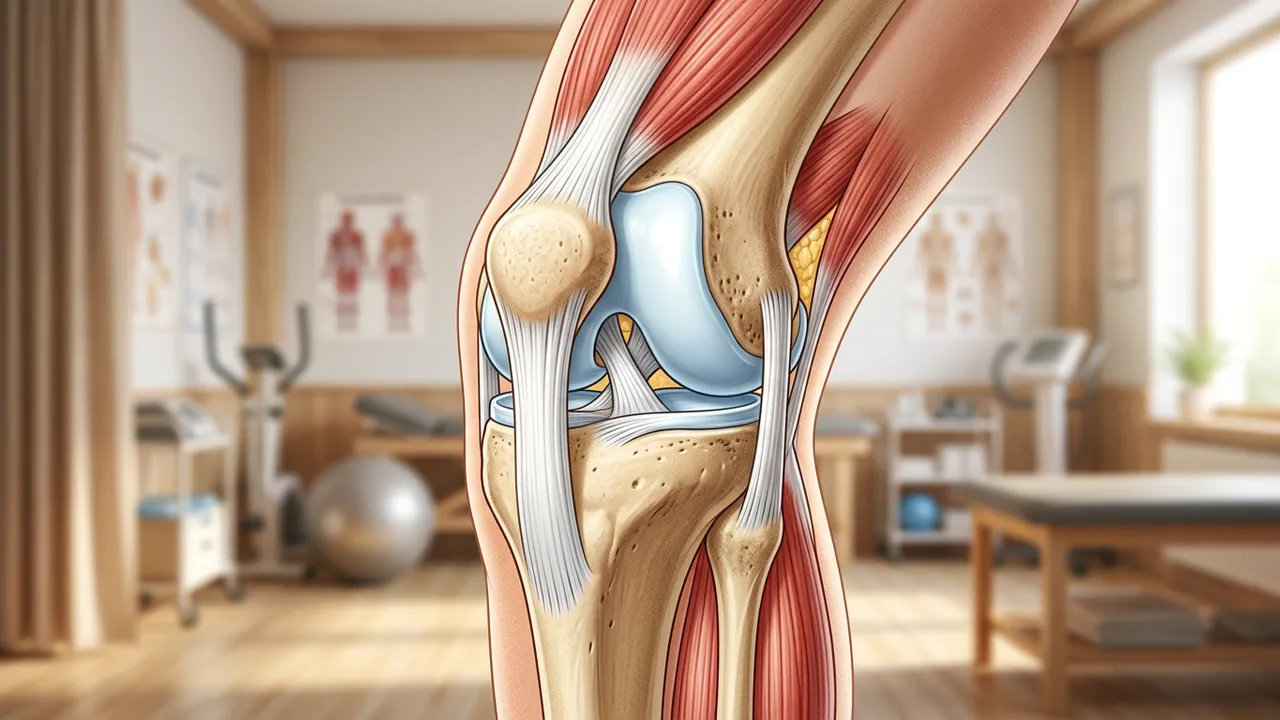
Can Pilates help with Knee Pain?

Common causes of knee pain

Knee pain is very common. In this short piece I will talk about a few most common causes. Next month we will discuss how Pilates and improving your pelvic stability can help.

Knee joint line pain

Due to ‘poor design’ of the angles of the femur (thigh bone) and the way our muscles work in the leg, weight passing through the knee joint is usually uneven, with more through the medial (inside) side. With the natural effects of aging, or with deconditioning of our leg muscles, this can cause more wear and tear in this part of the knee and joint irritation (see osteoarthritis). If there is minimal arthritic changes to the knee cartilage that lines and cushions the joint, then this type of pain can easily be rectified with re-alignment of the knee. This occurs with an exercise program to stretch tight inside muscles and strengthen the hip and thigh muscles. Footwear adaptations and orthotics can help here too.

Osteoarthritis

Osteoarthritis is a very normal adaptation of a joint to aging. Unfortunately however, it can be quite painful and debilitating. Knees, hips and lower spines, our big weight-bearing ‘busy’ joints tend to suffer most. Cartilage which lines each bony surface in our joints becomes brittle, with decreasing collagen as we get older. With constant movement and weight passing through the joint, this cartilage can start to erode, taking away the joint’s protective lining. In response to this, the bone cells in the immediate area begin to proliferate or multiply, causing uneven and rough joint surfaces and bone ‘spurring’. This is very common in the knee, particularly the inside of the joint (see knee joint line pain). Treatment here again will focus on an exercise program for the hip and knee to strengthen the muscular support for the joint. If really bad and quality of life comes into question, a partial or total knee replacement can be done by your friendly orthopaedic surgeon. This is followed by lots of the same exercises for rehabilitation after (with your friendly physiotherapist)!

Patello-femoral tracking problems

The knee cap or patella floats about on the front of your knee joint and is a major cause of knee pain. It does so through falling into poor alignment due to muscular imbalance in those muscles attaching onto it. This usually happens insidiously, or gradually. Typically, muscles to the inside of the patella are weak and the ones to the outside too strong, pulling the knee cap off centre. This creates much pain, noise and sometimes swelling under and around the knee cap. There are other factors typically involved too, such as weak hip muscles and/or poor mechanics at the foot and ankle such as over-pronation (flat feet). Fixing all of these factors are necessary again here with a big emphasis on strengthening exercises to re-align the patella back to its happy place. Sports taping and braces can help early on to assist facilitation of the correct muscular activations.

Meniscal tears

Menisci are the disc like structures inside the knee that give this hard working joint more shock absorption. There are 2 in your knee – a medial and lateral meniscus. These types of injuries are typically thought of as a sportsman’s injury with twisting and falling – football, soccer, skiing, basketball. However menisci can become torn gradually over time due to poor joint alignment or mechanics (see knee joint line pain). Pain felt with these injuries can be quite short, sharp and irritating, and often sporadic with absolutely no pain between episodes. The knee can sometimes ‘lock’ or feel stuck. Management of meniscal tears is usually key hole (arthroscopic) surgery to trim and vacuum out the flapping piece (much like a trimming a finger nail). Recovery is fast and outcomes good.

Ligament strains

Under this heading fall the big ones, again often associated with the sportsmen and women, and of course, the ski season! Cruciate ligament tears, medial ligament tears. These are very dramatic, with instantaneous pain and swelling. They occur when the knee goes one way (with the foot usually fixed firmly on the ground) while the weight of your body goes the other. After consultation with your friendly physiotherapist or orthopaedic surgeon, and with consideration of your desire to return to sport, surgery is typically the only option. Some will forego the surgery to reconstruct the knee and also therefore forego the ability to return to sport. The knee may feel OK for walking, but would not like a sudden change of direction. This is due to the knee’s instability with usually 2 of the 4 ligaments holding the joint gone. After a total knee reconstruction, there is a very long and difficult rehabilitation process for regaining movement, balance and muscular strength about the knee and hip.

As a masseur friend recently said to me, the knee is the poor child left in the middle of its parents’ messy divorce. I couldn’t agree more. By this she meant that the knee cops a lot of wear and tear and unfavourable biomechanical stresses from an unstable or weak hip/pelvic region above and poor foot mechanics below (such as over-pronation, stiff foot and ankle joints).

Pilates, core stability and hip stability exercise such as at The Fix Program can build the strength and stability at the knee to better support its structures. Manual therapy and a podiatrist visit for orthotics may also be treatment options alongside your exercises to optimise the mechanics of the knee.

Next month we will talk about the top 5 exercises for knees and knee pain.


29 May 2013 BY Katrina Tarrant POSTED IN Back Pain

Exploring Pain: The Virtual Body

Phantom Pain 

Have you ever really thought about phantom limb pain? Perhaps you have not even heard of it? It is defined as pain that is still felt even without the existence of that body part, such as after amputation. Seventy percent of all people who lose a limb experience phantom pain.


How can pain exist in a part of the body that does not? This is quite a thing to get your head around!

In the past months as we have looked more at the brain and its critical role in the pain experience for all humans. Perhaps from your readings, you may have an idea of how phantom limb pain can exist?

As we are discovering, the pain response in us all comes from the brain’s split-second decision in deciding whether you are in pain or not- and then to act. On weighing up all information at that exact moment of time, for that individual for that experience, the brain can decide this. You may remember that this information comes from multiple sources – sensory input from the body tissues, memory and mood centres and can depend on your gender, age, and beliefs about pain, etc etc.

So how does this relate to phantom limb pain?

Phantom limb pain can become worse when the person is stressed or anxious. It can be worse when another person comes too near to where the body part once existed. People can still feel rings on fingers that have been lost to an accident. And others report feeling that a leg missing still feels like it is there and carries on walking!

This can all be explained by the existence of the ‘virtual body’- maps in the brain’s hardware (nerves) that represent the real physical body. The virtual body allows for us to know where our bodies are in space – the feeling, the movement and the ‘muscle memory’ of our body. If you close your eyes and imaging turning on a tap, you can remember, visualise and almost feel yourself doing it. You can still do this because your brain uses the virtual body to know where the physical body is. (This is like the ‘brain movies’ we have discussed in earlier months).

With phantom limbs, although the physical limb has been lost, the virtual representation of it still exists in the brain. This is why the limb is still felt as if it were still there and attached.

So how does this illustration of phantom limb pain help us in understanding affect the way we experience pain?

The science and explanations behind phantom limb pain have allowed a clearer understanding of the virtual representation of the real body. We know that the brain is forever adapting and that this can be seen in the virtual body maps too. The virtual body can alter and does so to stimulus. If you have pain in your toe that lingers for days or weeks, the virtual representation or map of the toe in your brain enlarges. It’s like your brain has opened up the flood gates for all information to flood from the toe- like an over-sensitivity. This can make the pain experience of your toe ‘switch on’ very easily.

The good news is that these changes to the virtual body can be reversed too. Maps representing your toe in the brain (as in the above example) can be made smaller as the toe gets better, stronger with normal movement returning. The flood gates can close and the heightened awareness of sensation and pain of your toe disappear.

More on this later…


29 May 2013 BY Katrina Tarrant POSTED IN Back Pain, Exercise

Top 5 exercises to beat back pain at your desk

Tabitha shares her top tips on exercising at your desk without getting off your bum

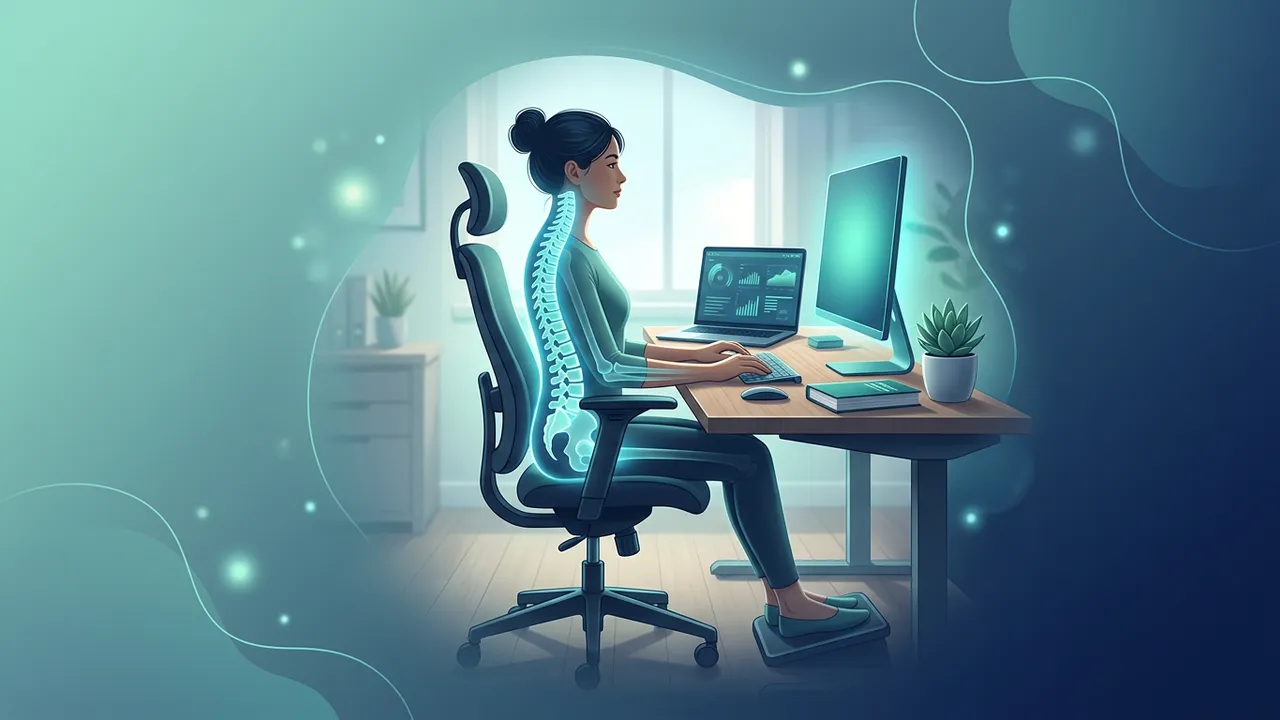
Working in an office chair can cause all sorts of pains – or irritate existing ones. You may find that your lower back becomes stiffer, sorer and more tired as the day progresses, and opportunities to move about are hard to find. Instead of enduring the pain or abandoning your post, try these gentle, easy and fast exercises – each of them targets lower back pain, and all can be done without leaving your chair!

Active Sitting

Place your feet flat on the ground, hip width apart, with your knees and hips bent at 90 degrees (adjust your chair height if necessary).

Rock your pelvis forwards and backwards to find where your pelvis becomes level – check that you have a small curve in your lower back and that you’re sitting up on your sit bones.

Grow tall from there, gently drawing the shoulders back and down a fraction and imagine you’re holding a mango between your chin and your chest.

Hold that posture for 30 seconds, adding 30s each subsequent day to wake up your core postural muscles which support your spine. Try linking it to an activity you have to do regularly, like answering emails!

Seated slow march

Set yourself up in the active sitting posture (see above). Take a deep, wide breath in to prepare. As you breathe out, lift your pelvic floor, deepen your naval to your spine and maintain that posture as you slowly lift one leg up just enough to lift your knee from the seat. Do not rock your pelvis!

Hold there for a deep, wide breath in. As you breathe out, lift your pelvic floor, deepen your navel to your spine and lower your foot (in a controlled way) to the ground.

Do the same on the other side and repeat for a total of four on each leg. The exercise will challenge your core muscles so that they continue to support your back throughout the work day.

Hug knees

Push your chair away from your desk and lean right forward over your legs, hugging around your knees. Hold this stretch for 30 seconds and then come back up gradually. You should feel a gentle stretch in your lower back.

Reverse the car

Set yourself up in the active sitting posture (see above). Place your right hand on your left knee, and reach your left arm around to hold the back of the chair, turning through your spine as if you’re reversing your car.

Stay there for 20 seconds, growing tall through the spine and breathing deep and wide. Repeat on the other side. You may feel this stretch in your back, chest or shoulders.

Buttock Stretch

Set yourself up in the active sitting posture (see above). Rest your right foot on top of your left knee. Push the right knee down gently with your right hand as you lean forward through your trunk. Hold for 30 seconds then repeat on the left. You should feel this stretch in your buttock muscles.

You can do these in any combination, and try out what works best for you. When you activate your core muscles like this then you will relieve pain both now and in the future!


8 May 2013 BY Katrina Tarrant POSTED IN Back Pain

The role of education in reducing back pain

A study: Rewiring the Brain

In the past 3 issues of fixnews, we have been chatting about pain and how it is a response of the brain. We’ve started to explore the amazing way in which pain is our body’s way of protecting itself and that the brain is capable of constantly weighing up all information in each and every moment of time to produce a pain experience, or not. We can start to visualise all of that grey matter with its trillions of nerve connections, pulsing, surging and deciding. The brain is very busy indeed.

Through education and a better understanding of these processes (and I have only really just begun!), we can actually change the brain’s nerve connections and wiring to bypass pain experiences that may be entrenched within its grey matter. We’ve started to explore the plasticity (or ability to change and adapt) of the human nervous system and we can increasingly see with real time scanning, this adaptation before our eyes.

This is all very promising news and should give new hope to sufferers of persistent or chronic pain. Same can be said for suffered of chronic fatigue, mental illness and other afflictions.

Today I’m going to share with you the findings of a study by Dr Lorimer Mosely, a physiotherapist and Doctor of Pain Management. He has researched pain extensively and has published many papers. He is interested in the interface between physiotherapy, psychology and physiology in those that suffer from chronic pain.

This simple study published in 2005 demonstrates amazing well the role of education and the immediate effect it has on the brain wiring. As physiotherapists, we see every day that pain beliefs, attitudes and physiology can alter movement performance. Pain can change what muscles we activate, movement control, good movement patterns or habits and postural support. The best example here is the ‘switching off’ of the deep abdominal muscles that support the spine when amidst a painful lower back episode.

In this single subject study, the 36 year old woman had a 5 year history of lower back pain (LBP) after a fall at work. She had not returned to work because of the injury and was reliant on pain medication for relief. She underwent real time ‘functional MRI’ (fMRI) scans at 3 occasions to see brain activity for her particular ‘pain movie’ or wiring in the brain for pain.

The woman was taught to contract her deep abdominal muscle and scanned while performing these contractions. She was sent away to practice her abdominal exercise for a week and rescanned again performing the contraction one week later. She then underwent a 2.5 hour highly detailed education session with a physiotherapist talking about the physiology of the nervous system, the brain and pain physiology. Diagrams were drawn, metaphors used and pictures looked at to help with the information delivery. She was scanned for a final time once again performing the same abdominal exercise to compare activation patterns in the brain to her earlier scans.

The scans showed that brain areas that were activated when performing the abdominal exercise reflected this woman’s ‘pain movie’ and involved multiple areas of her brain, including some that are known areas involved in human pain. The first 2 scans reflected a very similar activation pattern or ‘movie’. However the third scan immediately following the education session showed significantly reduced brain activity when performing the same abdominal contraction.

It seems likely that the reduced brain activity in this woman at this final scan reflected a change in her beliefs or attitudes to her pain after hearing about how pain works in the body. Perhaps the new information had allowed for her to feel less threatened or anxious about her pain and the abdominal exercises that she had been asked to perform? Perhaps in some way she had begun to overcome the fear of her own pain, the barrier which she possessed that was preventing her from getting better? Could this education session be a catalyst to ‘unravel’ her ‘pain movie’, reduce her pain levels to allow for exercise, to gain strength and better support for her spine?

Perhaps she has turned the corner in her pain levels and function? New hope.


8 May 2013 BY Katrina Tarrant POSTED IN Pregnancy

Top 6 tips for your ‘core’ in pregnancy

6 ways to care for your pelvic floor muscles and spine when you are pregnant.

From your experiences at your Fix Program classes, I hope you all have a new awareness of your pelvic floors, pelvis and spine. But with your changing body shapes and levels of that relaxin hormone rising as the weeks of pregnancy tick by, these areas of your body really are under strain. Here’s my top 6 ways to incorporate your ‘core’ into your everyday, both now and for after baby arrives.

1. Think tall and long. By gently lengthening through your waists, you will be using your ‘core’ and supporting your spines well. Pelvic floor muscles work at that low level we require for everyday when you are tall. Try this sitting, standing and walking.

2. Make time to attend to your pelvic floor muscle exercises. Remember to pop our red dots about the house to remind you – behind the kitchen doors, on the dishwasher, on your computer monitor. Or associate drinking water with the time to lift our pelvic floor a few times.

3. Use your legs. When bending, lifting, or needing to generally get down low, remember your folding hips. Try to keep your trunk long and fold your trunk over the hips. This will keep your spine supported (see tip 1) and safely aligned.

4. Become familiar with ‘the knack’. This is a strong lift of your pelvic floor whenever you feel a sneeze or cough coming on, or just prior to a bend or lift of the groceries or baby capsule. This supports the pelvic organs, strengthens your pelvic floor muscles and prevents any embarrassing leakage when the bladder is under pressure with baby in utero. (All very normal in pregnancy and early months post-natally.)

5. Keep your legs together (like a lady!). Pelvic girdle pain is very common in later stages of pregnancy. It can involve the joints of the pelvis in your buttock region (sacro-iliac joints), or the pubic joint at the front of the pelvis. Try to keep your legs together, avoiding separation at the pubic region when you get in and out of the car, or as you roll out of bed.

6. Keep up a high fibre diet. With your pelvic floor muscles already under immense pressure from baby, the last thing you want to do is to strain on the toilet. A diet high in vegies and fruit will stop this and any other associated rectal problems such as haemorrhoids and anal fissures, other common joys of pregnancy that no one tells you about!


6 May 2013 BY Katrina Tarrant POSTED IN Women's Health

How to beat Urinary Urge Incontinence

What are ‘urgency triggers’?

It is well known that the terms women’s health and pelvic floor go hand in hand together. A huge emphasis is place on this group of muscles in reducing the symptoms of incontinence among both women and men with either large improvements or complete cessation of symptoms. There have been countless studies conducted on the association between the two which is why we- your physiotherapists- sound like a broken record sometimes when we say “lift your pelvic floor”.

But what about the times when you feel a sudden urge to urinate and you feel that your pelvic floor muscle control alone just won’t be enough?

Urgency refers to the sudden desire to void or pass urine with the inability to defer or wait for longer than 5 minutes.

Urge ‘triggers’ refer to certain activities, places, or times that may bring on an urgency episode. For example, driving home from work every day you have absolutely no desire to pass urine and then as soon as you put your keys in the front door, you feel you have to run to the toilet. Or when you turn the tap on when brushing your teeth, or when you are in the cold section in the supermarket. These are just a few of the many triggers that may bring about an urgency episode. Urgency can happen without leaking.

The great news is that urgency can be cured, and if not, greatly improved. We already know how to contract the pelvic floor muscles so I am not going to talk about that in detail but that does play a large part in fixing these triggers.

There are a few other things that you need to do to manage an urgency episode.

The most effective technique is perineum pressure. This is placing your hands over your front passage and applying pressure. You will often see children doing this when they need to wee. I understand that this might not be seen as the most appropriate thing to do while searching for cheese in the supermarket! With that in mind, the corner of a table or the edge of chair can be great at applying the pressure while it looks to others that you are just resting your legs or have a little rest.

Technique two is raising your heels off the floor and coming up on to your toes. Again you will often see children doing this. The reason this movement may help is linked to the neural pathways from your pelvis to the brain. Keeping it simple, by lifting your heels, the message to your brain shifts from your bladder to the muscles contracting in your calf and lower leg.

The next technique is distraction. I will often suggest to my female patients to count backwards from 100 by 7’s. This shifts your brain to thinking about something other than your bladder and while you’re busy subtracting 7 from 72 your urgency has passed or reduced.

Breathing and walking slowly is the last important technique. Breathing and walking slowly will keep your muscles relaxed (remember your bladder is a muscle, after all). If you think about when you get a cramp in your leg, you would normally find staying still and breathing is more effective in stopping the cramp. Racing to the bathroom will contract the muscles more, including the bladder muscle, making it harder for you to control. Holding your breath will make it harder for you pelvic floor muscles to contract to help stop leaking and to help you pass the urge.

Contracting the pelvic floor is the final step in reducing and controlling an urgency episode.

When you feel a sudden urge to pass urine, try any or all of the above steps. I am absolutely certain that your urgency will improve with the above techniques. It might work better on some occasions compared to others and that is very normal. You just need to give it a go. Good Luck.


4 Apr 2013 BY Katrina Tarrant POSTED IN Pilates

Pilates and Imagery

Heba explores The Franklin Method

In the Fix classes we often include imagery in our exercises to help us achieve better posture. When I say ‘imagine the string at the top of your head pulling you up, lengthening you through your spine’, you automatically feel yourself growing taller. When I call on you to imagine or visualise ‘your pelvis as a deep salad bowl filled with water and tipping the bowl forwards and backwards’, you are using your mind to form images to help bring different parts of your body into more neutral alignments. This helps your brain to connect its nerve pathways better, so the new alignment or movement comes freely.

Imagery and the mind-body connection is one of the principles in The Franklin Method. The Franklin Method teaches us how to use our minds to control our body’s movements. It works on the principle that movement starts in the brain. So if you want to change your body, you need to change your mind first. The images and words you form in your mind will influence the way your body moves and exercises.

For instance, if you have negative feelings or images of doing an exercise such as the abdominal curl or sit up – for it brings on your neck pain or tightness or it’s too hard- then even before you have started the exercise, you have set yourself up for poor form. You may lift shoulders towards your ears and create tension and stress in that area. However, if you take a few moments to prepare the exercise in your mind with positive imagery, you can achieve great results without stressing your body. Next time you attempt sit ups, try visualising the exercise in your mind without pain or tightness. Imagine soft shoulders melting away from your ears like ice cream, or imagine a buoyant balloon lifting and supporting the base of your skull as if it is weightless.

The Franklin Balls

Have you ever used a tennis ball to help massage out your aches and pains? The Franklin Method is all about this- using balls and imagery to roll and release away tension. Franklin Balls and the Franklin Mini Roll, mouldable plastic filled with air, are soft and efficient in releasing muscle tension. Did you know that if you apply imagery exercises with the Franklin Balls can help release out tensions in your muscles more easily?

There are many different imagery exercises that work well with the ball exercises. Here are a few that you can practice at home for your tension areas. Try with a tennis ball. Choose the one that works best for you.

  • Place the ball under a tension spot. Focus your mind on the centre of that spot and imagine the area spreading out like rays of sunshine or imagine the area unravelling like a ball of wool.
  • Use your breathing to help relieve the tension spot. Imagine yourself breathing into the area and as you breathe out, imagine blowing away all of the tension.
  • Focus on the tension area and just keep imagining it melting like butter or cream. Imagine the tension point dissolving like a sugar cube in a cup of hot tea.
  • Imagine your muscles flowing in a certain direction like a waterfall or river out of your body taking the tension away with them.

You can also add movement or “Ball Rolling” for even more release of your muscles and joints, but still keeping in mind these mental images. Here are 2 exercises you can try to help relieve and relax your muscles.

  • Place the Franklin Mini Roll under the base of your skull at your neck. Slowly nod your head forward and back. Imagine the Mini Roll massaging away all the tension in your neck muscles. Imagine it reaching deep into your neck. Imagine the Mini Roll as a rolling pin creating smooth soft dough. Rest and repeat and notice how free and relaxed your neck feels.
  • Place the Franklin Balls under your lower back, each one either side of your spine. Have your knees bent with feet on the floor and knees together. Do gentle spine rolls by letting the knees fall together to the right then to the left. Imagine the Franklin balls massaging out any tension in your back muscles using some of the imagery above. Move the Franklin balls higher to other areas of your back and repeat.

I’ll leave off with a few words of Eric Franklin.

“First see in your mind what you want to experience in your life.”

http://www.franklinmethod.com.au/

http://www.ozbergs.com.au/categories/Franklin-Method/


4 Apr 2013 BY Katrina Tarrant POSTED IN Back Pain

What is Pain?

Pain: It’s the Brain’s Thing

Last issue of Fixnews, we started to talk about pain with reference to shark bites and war injuries. This was illustrating the point that pain does not always match the extent of body damage or injury. And that at the end of the day, the body’s damage at the tissues is only one part of the ‘pain puzzle’ for the brain to weigh up. Pain that we feel is therefore not proportionate to tissue, muscle or joint injury. Yet when we still experience pain, how can this be so if the tissues are not necessarily causing the pain. The answer is that there are many other pieces of the ‘pain puzzle’ in your brain pathways, and we will explore these further today.

Let’s discover our brains: Brain physiology 101!

Your brain has about ten billion tiny nerve cells called neurones. Each neurone is like an octopus with many tentacles, which can connect with other neurones. The brain wires itself by creating these connections between neurons (called synapses). There are an almost infinite number of possible connections between neurones in your brain. The number is so large, it’s said to be more than the number of all the particles in the universe!

The tentacles on the neurones wriggle around a bit to make contact, and once that happens they pump out a few chemicals, which trigger the adjoining neurone. The more connections, the more you can do with your brain. For example, a skill like riding a bike requires lots of connections, perhaps several trillion. Once a neurone makes contact with another one, the connection will hold if the link is used repeatedly. Think of it as like a river – the more water that flows through the river, the deeper the gorge in the rocks. This in turn makes it easier for more water to flow through the same channel. This is involved with practicing a skill or movement over and over. The more you practice, the more entrenched the connection and nerve pathway will be.

This mass of connections relating to an activity is called a Neurotag. Your bike riding Neurotag will use neurones from many different parts of your brain; for example neurones related to vision, balance, coordination, and even emotions and bike-riding memories such as how it felt the first time you rode, or perhaps when you saw the Tour de France. It’s like a bike-riding ‘movie’ that plays in your brain every time you ride, or think about riding a bike. These connections will often involve many parts of the brain. There is not just one ‘bike-riding’ centre in the brain. If we were to scan your brain as you rode your bike, we would see many many areas of the brain alight, indicating connections that are firing or igniting for that skill.

We all have millions of these little ‘movies’, and just like bike riding, your pain has a Neurotag. It can be ignited when you think of your pain, when you move in ways your brain finds threatening – even if you watch someone else do that movement you think might hurt! Areas of the brain that ignite may include your memory centres, your sensory centres, your movement centres, centres that house your beliefs and values, your ethnicity, your values about exercise or activity, centres that control mood.

Can you see how with all of these pieces of the ‘pain puzzle’, every single person’s experience of pain is unique? Even for the one individual, the pain experience may be unique from one time of their life to another.

The messages from the nerves from your tissues, muscles and joints are only one piece of the pain experience. Yes, this information will still ignite the brain in one small area, but the brain will ignite all other areas that make up YOUR unique pain ‘movie’ to let you know that you are in pain. Even after your joint or muscle strain has healed (6-12 weeks) and the nerve messages from this have reduced, your ongoing pain can be still be a problem as your pain ‘movie’ continues to play. Your pain ‘movie’ can ignite from any one of these areas, so you feel the pain as usual. Remember the brain has entrenched these nerve connections from the early days of your injury, but now you must unravel this Neurotag to feel less or no pain at all.

So, what does all of this mean when it comes to trying to reduce or control your pain? If we can unravel this entrenched pain ‘movie’ or Neurotag, you will feel less pain. We can rewire the brain.

How? Again each person will be different, but improving your body’s strength and posture, bettering movement patterns and habits, distraction techniques, nerve gliding exercises, pacing up activity gradually, happy hormones, laughing, listening to music, singing and psychology can all help.

Remember, pain is a ‘brain movie’ that can be rewired to feel less pain.


Fix News