Katrina Tarrant Articles

Set your exercise goals and go for it!

Tabitha shares her personal feelings about taking on the running challenge

Until four months ago, I could not have conceived of calling myself ‘a runner’ – I was sure that it was something obviously, even inherently impossible. I’m not sure what made me so sure, since I’ve led a fairly active life and have exercised in many different ways. Yet for some reason the thought of jogging for 30mins straight seemed insurmountably difficult.

Somehow, the idea of learning to jog began circulating amongst my friends and family. Many were total beginners, and enthusiasm occurred across the whole spectrum of age, shape and size. I was intrigued, and discovered a quiet envy for the joy and achievement that runners reported. I was also looking for a way to increase my overall fitness to combat the pain I feel from old sporting injuries – the relationship between increased fitness and decreased pain experience has been a valuable lesson I have learned from The Fix Program.

Soon afterwards, a friend recommended the book Running like a Girl by Alexandra Heminsley. Initially it reads like a runner’s memoir, telling the tale of Heminsley’s own journey in becoming a runner – from the first agonizing jog to her marathon peaks and troughs. She demonstrates that while running requires some commitment, its rewards are many, particularly for your self-confidence. She encourages the reader to tie up their laces, give it a go, and keep running regularly. Ideal for novice runners, this book’s heartfelt, conversational and hilarious style guides you through your concerns and assures you that they are both common and unfounded. It also includes very helpful practical pointers about running, debunking ineffective practices and thoughts that beginners (such as myself!) could fall into and offering positive advice in its place. I took her advice and resolved to start running.

To help me along the way was the popular smart phone app called Couch 2 5K. This isa complete jogging program that aims to turn a beginner into a 5km runner – about 30mins of continuous running – in just nine weeks. The app directs you through audio cues, easily heard over music, to alternate between walking and jogging in prescribed intervals over half an hour. The lengths of the jogging intervals are slowly increased throughout the sessions, and the change felt gradual and entirely manageable to me. This handy, practical tool uses the principles of goal setting and pacing (as discussed in many Fix Program classes). With this you can slowly and steadily achieve your jogging goals while giving the body time to recuperate between sessions. This helps in avoiding the boom-bust cycle of yoyo exercisers and the associated injuries and discouragement I had both experienced and been warned about in Heminsley’s book. By the end of nine weeks I had read the book twice and could jog without stopping for a full half hour – I was completely transformed, both mentally and physically, and feel fitter and more confident than my pessimistic past self would have believed possible.

Maybe you too can become a runner?

Read More

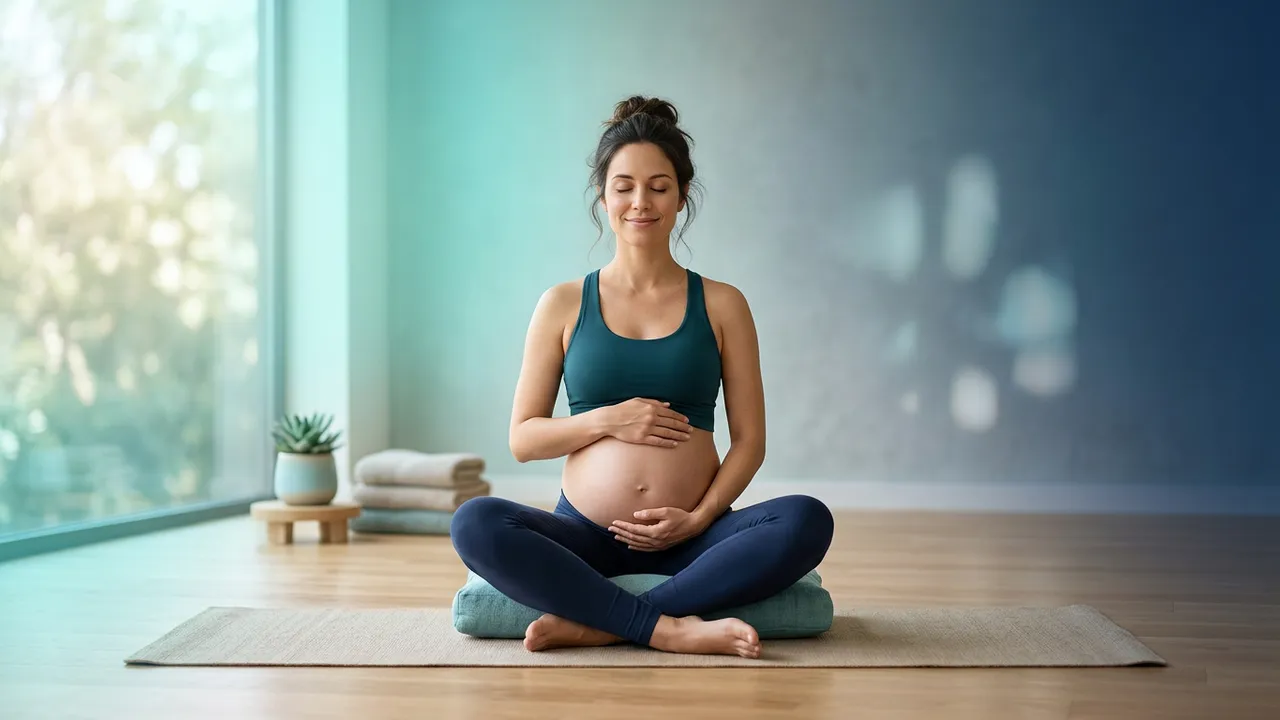
Why is relaxation essential in pregnancy and as a new mother?

Make time for yourself

In pregnancy and after the arrival of your baby, even a short relaxation time each day will make a big difference to your stress levels and feelings of tiredness that can seem overwhelming. This time spent relaxing can also increase your ability to cope and aid in a better overall hea_l_th and mental wellbeing. If you are still to give birth, these techniques can be used within labour to aid in pain relief.

What makes me stressed?

We’ve all heard the expression ‘fight or flight’. This is how the body has evolved to respond to any threatening situation. In times of stress the body uses a hormone called cortisol. Cortisol turns on processes we need for survival and switches off processes that are not needed for survival. This is great in an emergency, but if you are stressed all of the time, prolonged elevated cortisol levels have been linked to depression, mood swings, memory changes, poor healing, weight gain and immune problems.

On the flip side, when you’re relaxed and feeling good, your body produces ‘happy hormones’ such as opioids and serotonin.

How do I de-stress?

For a start, try to stop worrying. Yoga, relaxation, meditation and breathing techniques have also been proven to reduce the level of circulating stress hormones and increase your level of happy hormones.

Try going for a walk, listening to relaxing music, or just clearing your mind for twenty minutes every day.

Try to set aside ‘worry time’. Rather than worrying about things constantly (and keeping your cortisol levels elevated), make a specific time every week when you think about your worries.

Try this relaxation technique when lying down or sitting comfortably. Close your eyes and focus on your deep breathing. Focus on the cool air as you breathe in through your nose and the warm air and you breathe out through your mouth. Focus on one body part at a time starting from your head all the way to your toes imagining all your muscles releasing and feeling heavy.

Try to take time to practice the Buddhist practice of mindfulness throughout your day. Even a minute here and there to become mindful of your breath, the comings and goings of your body sensations, tensions and your surroundings can help to de-clutter your brain and provide energy and calmness.

Read More

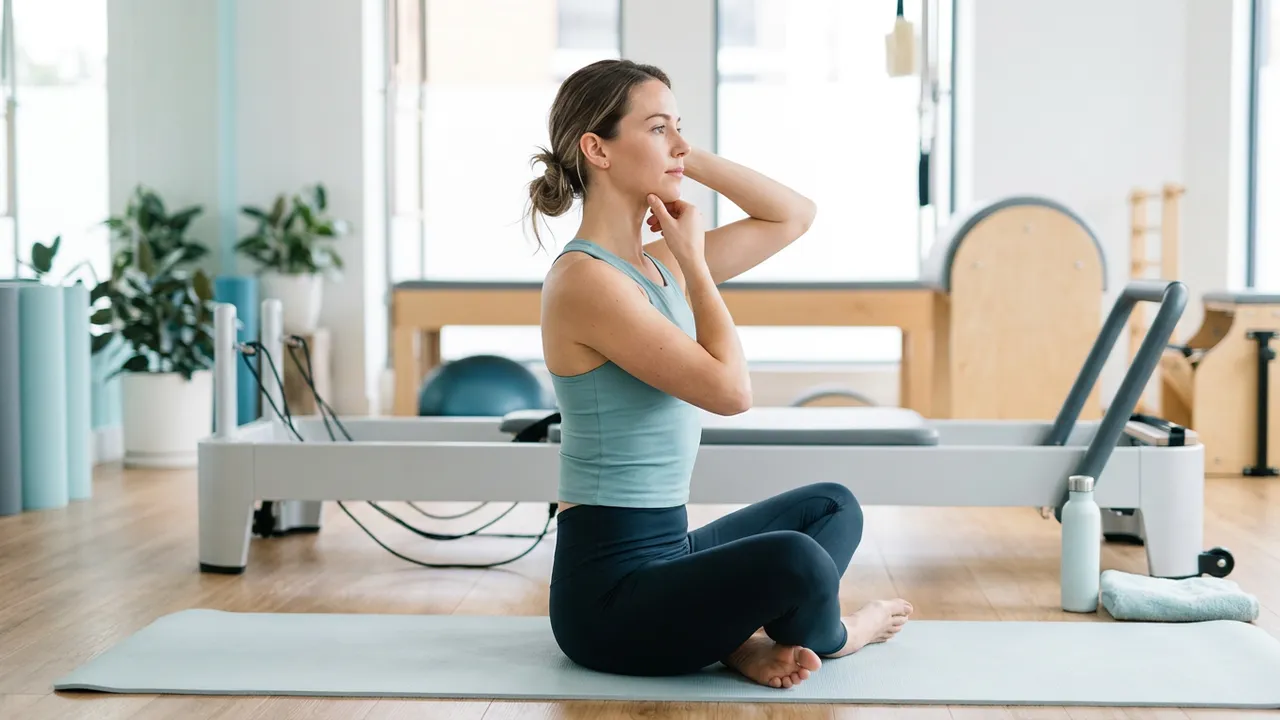
Exercise of the Month: The neck stabilisers

Discover the ‘core’ muscles of your neck – the deep neck flexors

We are all aware of the role of the deep abdominals, pelvic floor and diaphragm as postural support muscles for the lower trunk and pelvis. These act together and in balance to support and stabilise the gentle curves of the lumbar spine and the alignments of pelvic joints.

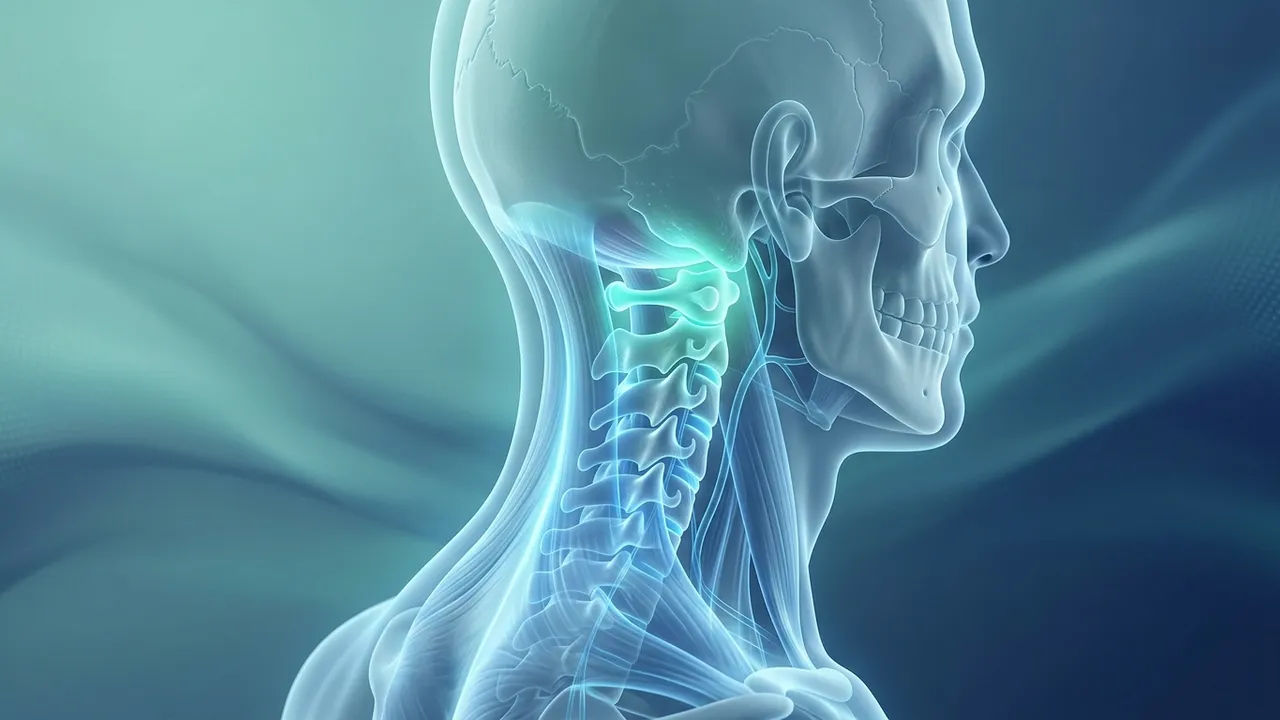
Just as we have this deep and balanced support in our lower trunk, we have a similar set up and about the neck. The neck or cervical spine, like the lumbar spine, has a gentle concave curve to it and there are many muscles attaching to these vertebrae. It is again the relative activity or balance between these muscles that can help support our curve well and release tension from the larger superficial muscles at the back of our neck. We probably all know of these after too much time spent in a poor posture at the computer or after a long drive.

The neck flexors sit at the front of your neck (near your throat) and the extensors behind our neck from the base of the skull to across the upper shoulders. Postures with our chin poked forward or with a head that tilts back too much (such as reading though bifocals at the computer screen), cause a relative imbalance between these 2 sets of muscles with too much activity, tiredness and tension in the extensors and not enough activity from the front at the flexors. How often have you had the painful tense neck and shoulder region, possibly stretching to the shoulder blade region, or up to the head as a headache?

Gentle lengthening through the back of your neck from the base of your skull and remembering to hold your mango gently under your chin is a great start to achieve muscular balance around the neck. Try this when you next sit at your desk, drive or read the newspaper at the breakfast table.

Here is another deep neck strengthening exercise to try on your mat on the floor. All movements here are extremely subtle, so learn to take it easy and feel for slight contractions in your neck muscles near your throat.

The Starting Position:

The focus:

  • Lie on your back in the basic relaxed position, pelvis neutral and with your head resting on a folded towel of approximately 9 layers.

  • Make sure your towel is pulled to the base of your neck for support.

  • Focus on your wide shoulder blade placement and feel their heaviness on the mat.

  • Allow your neck to melt, release your jaw and feel your shoulder melting away from your ears. Imagine a mango held delicately under your chin.

  • You could picture the clowns with wide open mouths for pingpong balls here at the Easter show – turn with a lovely long neck on a pure central axis.

  • Keep breathing

  • Focus on subtle contractions and slow movements

  • Try to maintain a soft length to the back of your neck.

The Movement:


  • Gently lengthen the back of your neck as if your skull is moving away from your shoulders.
  • Now gently push your tongue to the roof of your mouth. Become aware of the subtle muscle activity at the front of your neck near your ‘voice box’.
  • While keeping this tongue position, gently roll your head to one side. Imagine the front of the neck melting, shoulder melting away from the ears and the neck feeling long at the back. Repeat rolling side to side 8-10 times.
  • Finish by gently pushing the back of your head down into the towel. Focus on your long neck, soft jaw, tongue pushing upwards and not squashing your mango


Tip: Try this every night before you go to bed. It will take you 2 minutes and will help alleviate neck tension from the day and support your neck in the balanced way as it were meant.

Read More

Nerves, danger messages and pain

Ion channels, receptors and action potentials

Last month we began to explore the role of nerves in the pain experience. We talked about ‘nociception’ – danger messages that a nerve or nerves will send to the brain. You may recall that these electrical impulses themselves are not a ‘pain message’ and that the pain experience is a brain based construct using all relevant information for that time, place and experience.

Let’s look at nerves in more detail. Nerves from the tissues (muscles, skin etc) to the brain will only send quantitative data and not qualitative. The nerves do this via receptors or ion channels which are positioned at the end of the nerve and ‘open and shut’ in response to stimuli. They are made of proteins and respond to 3 differing stimuli:

  • Temperature changes, such as hot and cold
  • Mechanical changes or stresses, such as stretching and vibration
  • Chemical changes in the tissues, such as inflammatory by-products, histamine, adrenalin, stress hormones like cortisol.

Opening ion channels allow for enough positive charges to flow into the nerve, thereby ‘exciting it’. At a critical level of ‘excitement’, the nerve will ‘fire off’ an electrical impulse to the brain via the spinal cord. This is called an action potential. It is this message (and the intensity of it) that the brain uses to decide whether a pain experience will result from it. Can you see that the ion channels and therefore the messages to the brain will revolve around the stimuli of temperature, chemical or mechanical?

Another amazing fact about receptors is that they are in a constant state of change or remodelling (like the rest of our body eg skin cells). Receptors close, move and open every few days and will do so in response to these 3 stimuli. When a nerve is under greater levels of stimulation, more receptors will form and open. We can call this an ‘over-excited’ or ‘over-sensitive’ nerve. Here are some common examples we see all of the time:

  • poor postures of the neck and upper back, increasing the pulling stresses in shoulder and upper back nerves
  • anxiety and stress can increase the number of open chemical ion channels in all nerves
  • inflammatory products such as histamine in a newly sprained ankle will increase the opening of the chemical ion channels.

An ‘over-sensitive’ nerve will send increased intensities of danger messages and your brain will need to sit up and take more notice of this. The brain is more than likely to say “hey, this is enough of a danger message to decide I am in pain.”

And there is always a more hopeful and positive side to these facts! Receptors and ion channels can close by decreasing the levels of these 3 stimuli. And less ion channels opening will mean less danger messages to the brain. Sound great?

How do we do this? By reducing the chemical and mechanical loads on the nerves. There are many many ways, but here are a few:

  • unload the nerve mechanically such as through movement, changes in posture, better muscle strength and endurance to get you through your days, better work place ergonomics
  • improve the health of your nerve tissues such as through nerve gliding exercises to improve the blood flow to the nerves and their protective sheaths
  • de-stressing and reducing anxieties, such as through education, psychology, relaxation techniques, drugs such as anti-depressants.

So as you continue to work on your good postures, build ‘core’ and trunk strength and slide your nerves in all those fancy ways, remember that you are not only having a positive impact on your muscles and joints, but also your nerves. You are helping to ‘dampen them’, making them less sensitive and reducing the levels of nociceptive danger messages to your brain.

Read More

What is a cause of pelvic pain?

Pelvic Floor and Pelvic Wall Overactivity

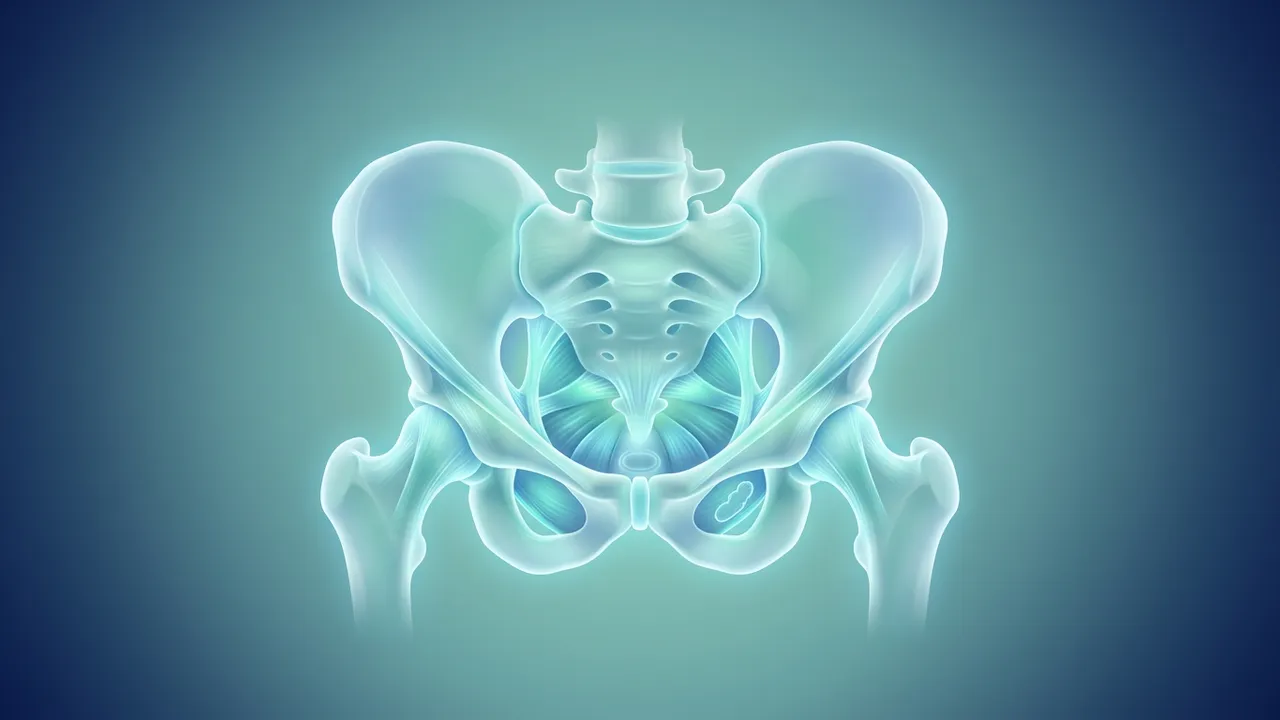
We know that the pelvic floor muscles are a hammock-like group of muscles within our pelvis that extend from our tailbone to our pubic bone and fan out to our sit bones. These pelvic floor muscles exist to support our pelvic organs as well as to provide pelvic stability and support for our spine.

Another group of muscles exist within the pelvis and are referred to as the pelvic wall muscles. These include muscles named coccygeus and obturator internus. The pelvic floor muscles stick onto these two pelvic wall muscles.

  • Coccygeus attaches from the tailbone and spreads out towards the sit bones. It is one of the muscles that tightens in those of us called ‘butt grippers’. It is the muscle we are trying to relax when we say “widen your sit bones”.
  • Obturator internus attaches from within the pelvis (inside the base of your pelvic bowl) and heads down toward the top of the leg bone at the hip. This makes it an outward rotator of the hip. This muscle switches on when we are rolling the leg out in exercises like the ‘Leg roll out and in’ and ‘the clam’.

If someone has pelvic pain or a long-standing hip pain, there is often a dysfunction within the pelvic floor muscles and/or the pelvic wall muscles. Sometimes the strength of these muscles is not the main issue, but rather that they are already switched on or are contracting even when we are relaxed or at rest. If these muscles stay switched on for long periods of time and especially during episodes of pain, they can start to spasm and develop trigger points and tightness, which can continue the cycle of pain.

Because the obturator internus muscle has nerves that pass by it, you may develop pain or numbness in the front thigh when the muscle is in spasm. Some people may have bladder pain or strong urges to empty their bladder. Increased frequency to empty their bladder is another common side effect of this muscle over-activity. It can often produce a burning sensation in the inner areas of your pelvis if it is in spasm.

Sometimes if these pelvic wall muscles spasm, the pelvic floor muscles can also spasm because all these muscles are joined together. So even though you may have weakness in your pelvic floor muscles, you can also have spasm and trigger points along them. This is no different to muscle ‘knots’ or trigger points in the large neck and shoulder muscles that we can all feel after long bouts sitting at the computer.

Managing this type of pain and over activity is therefore no different to seeking treatment from your physio or masseur for your neck pain and tightness. Just like having treatment to release tight muscles in the neck, these pelvic floor and pelvic wall muscles need to be released.

This is best done by seeing a Women’s Health or Men’s Health Physiotherapist.

Read More

What is causing your headache?

Did you know that it is thought that headaches are the most common complaint of mankind? 

There is much confusion about the cause of headaches and therefore the best way to manage them. I am often asked ‘how do I treat my headache?’ and in my opinion, the correct and most helpful answer cannot be given without thorough assessment.

The majority of headaches do not actually require medical management, as you would know with almost all of us having had several in our lifetimes. A few paracetamol does the trick. However, persistent or acute headaches, accompanied by any of the following symptoms really should be checked out:

  • Headaches with a stiff neck
  • Headaches with neurological signs such as drowsiness, dizziness, numbness of the limbs, weakness
  • Headaches that increase over a few days
  • Sudden and abrupt headache onset
  • Headaches that wake the sufferer from sleep

Headaches can have many a varied cause, from dehydration to common ailments and viruses, to sinusitis, drug or medicine-induced and injury or trauma such as concussion. Today I will explain the difference between the often confused vascular headaches (migraines) and cervical headaches (originating and referring from the neck). Both types present to physios and doctors with similar presenting symptoms, so confusion regarding the actual cause can sometimes be quite common. 

Vascular headaches.

Migraines usually occur episodically and are often associated with a warning sign such as visual or sensory symptoms (the ‘aura’). Nausea and vomiting are common also and often follow the headache onset. Migraines have a finite duration, when cervical headaches last for days or more. Migraines can have any associated neck tenderness, pain or stiffness, but neck movements do not typically make the headache worse. Migraines ‘throb’ and the pain is often felt at the front or temporal sides of the head. Sleep and anti- migrainous drugs are the only things that relieve the pain.

Migraines are generally not understood that well and are also under-diagnosed. They first afflict people from 10-40 years in age and 75% of all diagnosed migraine sufferers are women. It is thought that migraines occur from a complex reaction in the brain between the nerve pathways and the blood vessels, causing a change in the brain’s chemical balance. Neural pathways in some parts of the nervous system and brain are over sensitised, causing the associated visual disturbances, nausea and sensitivity to light and noise.

Physiotherapy, massage, postural exercise, correction and awareness such as with Pilates don’t really make a difference to these kinds of headaches. 

Cervical headaches.

These headaches can be just as severe as vascular headaches but there are a few differing definers. These headaches are usually slow in onset, building over days. They can last for days to weeks and neck movements or tender points on the neck can really irritate the headache. There is rarely any associated visual or sensory disturbances and infrequently any vomiting. Any or all of dizziness, neck stiffness and symptoms such as numbness, tingling or pain down the arms can be present. The headaches are usually felt on one side of the head – the same side as the neck stiffness and tenderness.

Cervical headaches are caused by pain that is referred to the head from the neck region. This can include from one or more muscular, nerve, bony, upper spinal joint, or vascular structures in the neck. Common causes for these headaches are accidents such as falls, head knocks, whiplash injuries, or postural causes such as poke chinned and slumped postures.

Physiotherapy, massage and exercises to strengthen and support the spinal posture work amazing well for both treatment and prevention of these types of headaches. 

Headaches at a glance.

Features

Vascular headaches

Cervical headaches

Onset

Fast

Slow

Site

Frontal or temporal

Occipital

Type of pain

Throbbing

Dull aching

Frequency

Episodic

Constant

Time course

Hours

Days to weeks

Triggers

Food, drugs, stress

Posture, accidents

Treatment

Avoid triggers, stress reduction

Physio, massage, posture correction

Remember that your physio or doctor know how best to diagnose your headache and its cause. And diagnosing the correct cause will allow for the best treatment.

Read More

The role of nerves in the pain experience

Nerves as a part of the danger alarm system

Pain is a highly sophisticated alarm system that is designed to warn the body of danger. We all need it to keep ourselves and our tissues safe.

/content/images/blog/undefined-img-2jpg

Nerves conducting messages from our muscles, skin and joints are only a part of the system. Today we will explore why there is no such thing as ‘muscle or joint pain’.

Take the example of a paper cut on the end of your thumb. Sensors on the end of the nerves that supply the skin of that thumb will detect some damage to the skin. Alarm bells will ‘ring’ at these sensors and an electrical impulse travelling at 150km per hour will tell the brain “there’s something going on at my thumb.” The brain will take this message and will use that with other pieces of information to produce (or not) an experience of pain. Such other information could include the intensity of the alarm signal, visual inputs of the sight of the blood, visual impact of realising the deepness of the cut, memories of this happening before and really hurting etc.

This alarm system from the tissues (skin, muscle, joint) to the spinal cord and brain is called ‘nociception’, which means ‘danger message’. From the example above, it can be seen that nociceptive messages along the nerves does not always result in pain. You may have experience this yourself when noticing much later that you have a little cut on your thumb with the presence of dried blood, but can’t recall when you had cut yourself.

Nociception is only one small part of the pain experience.

We all have nociception going on all of the time- quite often beyond our consciousness. However most of us do not feel pain all the time. The brain has not thought there needed to be any concern to worry or alert you that you are or your tissues are actually in danger.

Even more interesting is that pain can be experienced without any nociception at all. Take emotional pain. Or strange tales of husbands experiencing ‘labour like’ pains when their wives are giving birth, or twins who feel the pain of the other.

So it can be said that pain does not ‘live’ in your muscles, skin or joints. It is nerve sensors that do - alerting the brain and consciousness that danger is about. Pain is the complex construction as your brain evaluates these danger messages with other information relevant.

You can impress your dinner party guests that what you hear about targeting ‘muscle and joint pain on the Panadol and Voltaren ads on TV is not entirely true from a physiological view!

More on nerves, their sensors and nociception next time.

Read More

SRC recovery shorts for pregnancy and after birth

Want your pre-baby bodies back sooner?

Fix now stock the famous SRC Recovery Shorts for our post-natal mums.

SRC Recovery shorts offer compression and support around the pelvis an abdominal area after you have your baby. The benefits include:

- reducing caesarean and episiotomy pain

- supporting the abdominal muscles while healing after separation of pregnancy

- assisting in supporting your back and pelvis as you go about looking after your new little family addition

- giving you confidence when lifting, bathing an carrying your baby

- providing support to your pelvic floor region to support and speed wound recovery

- helping with the loss of your ‘jelly belly’.

Measure for your correct size at 36 weeks pregnant and have them ready to go as soon as you have baby.

RRP $189 and attract a private health fund rebate from most insurers. Call CBD or St Leonards branches to purchase.

Read More

Strong for the snow season

Are you hitting the slopes this winter?

Then you better start getting your body prepared for the burning thighs, cold noses and adrenalin hits!

Melanie shares her favourite exercises to get your legs and buttock strong so you aren’t in pain and ice baths after your skiing adventure.

Lunge. Another great leg exercise to strengthen the thighs and buttocks. Using a Swiss ball against a wall put the ball in the small of your back. Have your feet hip width apart and take your left foot behind you so when you lower yourself down on your left leg your knee is in line with your hip and shoulder. The trunk and neck should stay tall. The front or right knee should be over your ankle. Take your left leg slowly down towards the ground without touching the ground then slowly back to the start position. This is one. Try 10 on each side, you should feel the quads muscle in the back leg working. Use the mirror to help you stay in the correct alignment.

Lunge

Sustained Wall Squat. Put a Swiss ball in the small of your back lean up against a wall. Have your feet hip width apart, take your feet away from the wall and squatting down so your knees are over your ankles and your hips make a right angle. Your trunk should be tall and your ribs tucked in. Hold here for one minute. If you don’t have a Swiss ball you can lean up against a wall keeping a neutral pelvis and spine.

Sustained Wall Squat

Single Leg Squat. A great exercise for targeting your buttock and your VMO (the small stabilising muscle of the knee and knee cap on your inner thigh near your knee). Standing on your right leg hold onto something with your left hand. Make sure your right knee is in line with your 2nd/3rd toe, your hip and your shoulder. Feel your right buttock activate as you slowly bend your right knee to about 45 deg keeping your trunk tall and your pelvis aligned. Your waist band should stay level on each side so there is no dropping or hitching of your left hip. Try 10 on each side. You should be feeling it in your buttock and your inner knee.

Single Leg Squat

To make all of the above exercises harder add some weights to your hands and do a small bicep curl.

Remember to stretch your quads and buttock after your skiing day and use ice if you are in pain or see your Physiotherapist.

Read More

Will Pilates flatten my tummy?

Fat seems to be genetically pre-programmed to its final destination

I often get asked whether Pilates will help to lose abdominal fat. I usually answer ‘no’, as fat must be burned away through cardio-vascular exercise that really gets our hearts pumping. Pilates can, however, definitely tone the abdominal region, giving you a shapelier waist line.

Perhaps the true secret to a flatter tummy is all in our genes?

I recently stumbled across a short but very interesting article about fat cells. The article made frequent reference to ‘bad’ belly fat that causes cardiac disease. It compared this fat to the ‘heart-friendly’ less dangerous fat of the lower body, or thigh and hip fat.

As we would all be aware, men seem to deposit their fat stores around their middle, while women tend to be more pear-shaped, with higher fat deposits around their hips and thighs when compared to their tummies. Research also seems to point to the belly fat as a greater predictor of heart and cardiovascular disease and diabetes, when compared to thigh fat.

A recent study in 2012 published in the ‘Journal of Clinical Endocrinology and Metabolism’ concluded that fat cells are ‘pre-programmed’ genetically to land either in your belly or thighs. In this research, genes were expressed very differently in the same individual’s belly and thigh fat cell samples. This possibly dictated where each fat was to be deposited. These same fat cells (grown from the fat stem cells in a petri dish) showed the same differing gene expression, further supporting the thoughts that all fat cells are genetically destined to their final location, even when not in the body and grown in a laboratory.

Further research is needed, but it is thought that this will bring a shift in the thinking and management of obesity and its relationship to heart disease and diabetes. Perhaps finding a way to change the gene expression of our fat cells will allow for a redistribution of our fat away from the tummy and into the thighs.

We may one day all look very pear-shaped in our figures- both men and women alike. My advice? Low fat diet and exercise. All ‘fatty’ food and drink in moderation to lower your fat cell count and of course, Pilates to stay shapely and strong.

Read More

Showing 10 of 293 articles by Katrina Tarrant

Fix News