Katrina Tarrant Articles

The 6 best ways to control your tummy separation in pregnancy

Are you worried about your tummy muscles separating? 66% of pregnant women will have it, so try these easy tips 

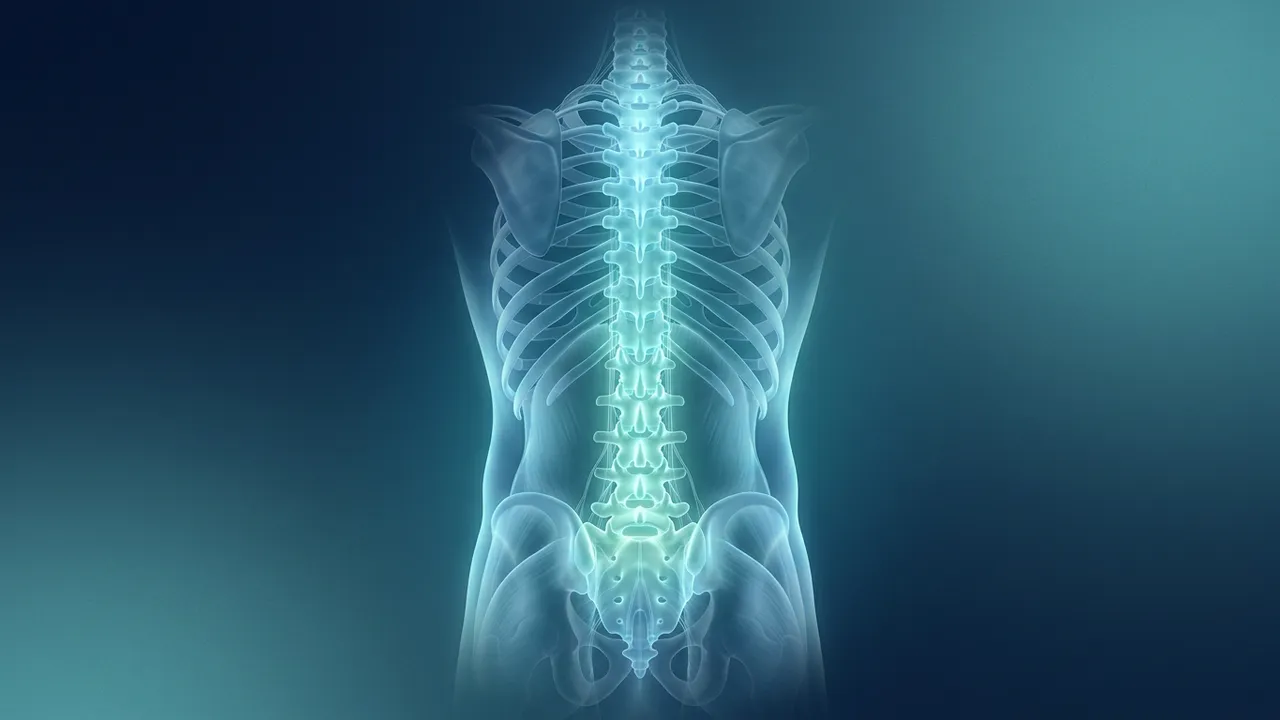
Abdominal separation or Rectus Diastasis (RD) is the separation of the most superficial of the abdominal muscles that can occur during pregnancy (or less frequently in anyone, men or women who overtrain their abdominals with too many sit ups). The separation will cause a bulge to occur when the pregnant woman attempts to move, especially visible when going from lying to sitting.

The rectus abdominus muscle is the muscle we typically associate with our bellies - we see them all oiled, sweaty and washboard-like on men’s health mags every time we are in the newsagent. Nearly all men would aspire to these ‘six-packs’, and most women too if to be perfectly honest. This muscle is divided into two, with a thin tissue or fascia which serves to separate and join the halves at the same time. This fascia is called the linea alba.

What does the research say out there about abdominal separation?

In pregnancy, the linea alba becomes overstretched to accommodate for the growing belly. This is a normal part of pregnancy. Research states that 66% of all pregnant women will have a degree of RD in their third trimester of pregnancy. In many women’s cases, this separation will improve without any intervention, and that this will be seen mostly from week 1-week 8 after having their baby. Any remaining separation is unlikely to make any further improvements after this time if left alone. Physiotherapy for thorough assessment of abdominal and pelvic floor control and pelvic, spine and rib alignment is highly recommended to assist in reducing the remaining gap. 

So, can I prevent abdominal separation from happening when I am pregnant?

The short answer is, no. Your body is adapting this way to handle your growing uterus and baby size. But here are a few tips to make good habits in pregnancy and in those first months post-natally to reduce the pressure on the linea alba fascia. ( I must also make the comment for you non-pregnant folk who have read this far on, that these are excellent habits to adopt when moving and exercising regardless of having had a baby or not).

  1. Move safely out of bed, through contraction of your pelvic floor and deep abdominal muscles, then rolling like a log and pushing up in a sidewards manner.
  2. Learn to appropriate hold your pelvic floor muscles. This means in short, the ‘lift’ of the pelvic floor hammock, not the ‘pushing down’.
  3. Move about through your day without holding your breath. Forgetting to breathe will increase the pressure from the abdomen pushing out into the linea alba. This includes the simple things like getting up out of your chair and bed, to walking up steps, or lifting loads such as little ones or grocery bags. Keep breathing and reduce the tendency to stretch the fascia more!
  4. Attend to gentle abdominal exercises (like the mat based deep abdominal exercises from The Fix Program) while being safe with your pelvic floor. This means not allowing the pelvic floor sling to bear down in a descending manner. This decreases the pulling or stretching forces of the fascia tissues within the pelvis that are all connected. Talk to our physios about appropriate pelvic floor and abdominal exercises for you.
  5. Learn ‘the knack’. This is another pelvic floor technique which supports the fascia within your pelvis and stops it from over stretching when coughing, sneezing or laughing. Try to contract or lift your pelvic floor before you feel any of coughs or sneezes coming on.
  6. Support your abdomen with pressure from your hands when you cough, sneeze or laugh. 

What problems can abdominal separation cause?

The linea alba fascia is required for good tissue strength and support within the abdominal and pelvic regions. It is known to have roles in back support and posture, continence, breathing and holding the organs in their place. Overstretching of this tissue can therefore potentially lead to:

Why not make the most of our women’s health physiotherapist, Heba? She is a specialist in pregnancy and post-natal. If you feel you have abdominal separation in your pregnancy or after having your baby, come in for a thorough assessment of pelvic alignment, strength and stability of the pelvis, pelvic floor control and strength, presence of vaginal prolapse or abdominal separation. We call this our Post natal checkup This is especially important before you start an exercise program.

Read More

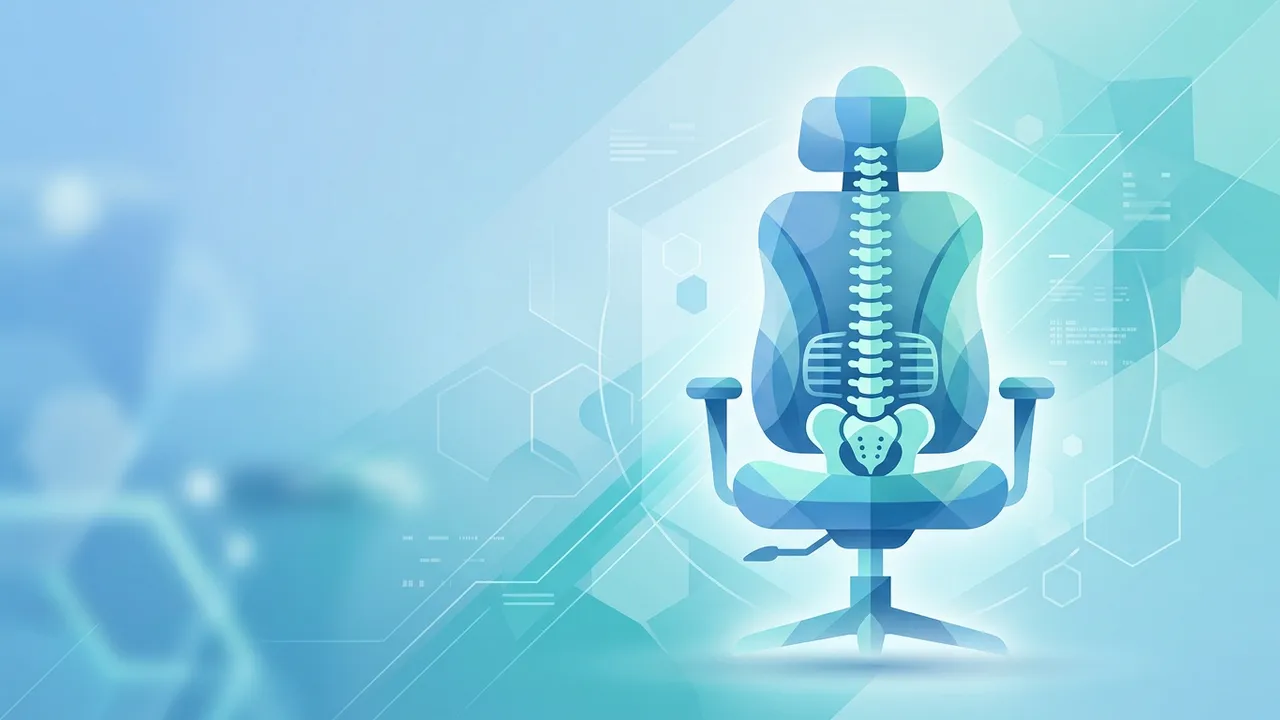
Office chairs for good neck and back posture

Does your chair fit?

Chairs for home and the work place are designed for the average height and build. But what about for those who are at either end of the bell curve? Matching the right chair to the individual should really be as important as have the right fitting shoe, especially for the desk worker who sits all day.

In reality, in offices everywhere, this is not the case. Companies tend to buy chairs in bulk and all of the same make and size. Does one of these common scenarios sound like you?

  1. Tall people sit in standard seats with too much of their thigh unsupported and hanging in front of the chair.
  2. Short people sit in standard chairs that are too large and cannot get their bottoms to the back of the chair, or if do, have their feet swinging and not firmly on the ground.

office chairs

How do you know if a chair fits you properly?

There are 3 important dimensions to measuring a well fitted chair for any individual.

  1. Can you easily get your hips and bottom back into the seat with the backrest supporting your back?
  2. When you are seated back into the chair, do your feet sit firmly on the ground with your knees and hips at a right angle?
  3. Is there a 2-5cm gap between the front edge of the chair and the back of your knee when you are sitting well into the back of the seat?

If you answered ‘no’ to any of these questions, then your chair should be modified or changed altogether. Office chairs do offer great adjustability such as a seat slide, and gas compression chambers for lift and tilt. Seat depths, heights and tilts can therefore be altered up to a point for the average sized of us. However, for the petite and larger of us, there are chairs out there that would better suit you.

I would suggest that if you are one of our smaller or larger friends, speak to your HR department or physiotherapist about whether your chair is adjustable enough or whether another new chair is really the answer.

Just like Golidlocks and the three bears, there is a seat size best for everyone, no matter how big or small.

Read More

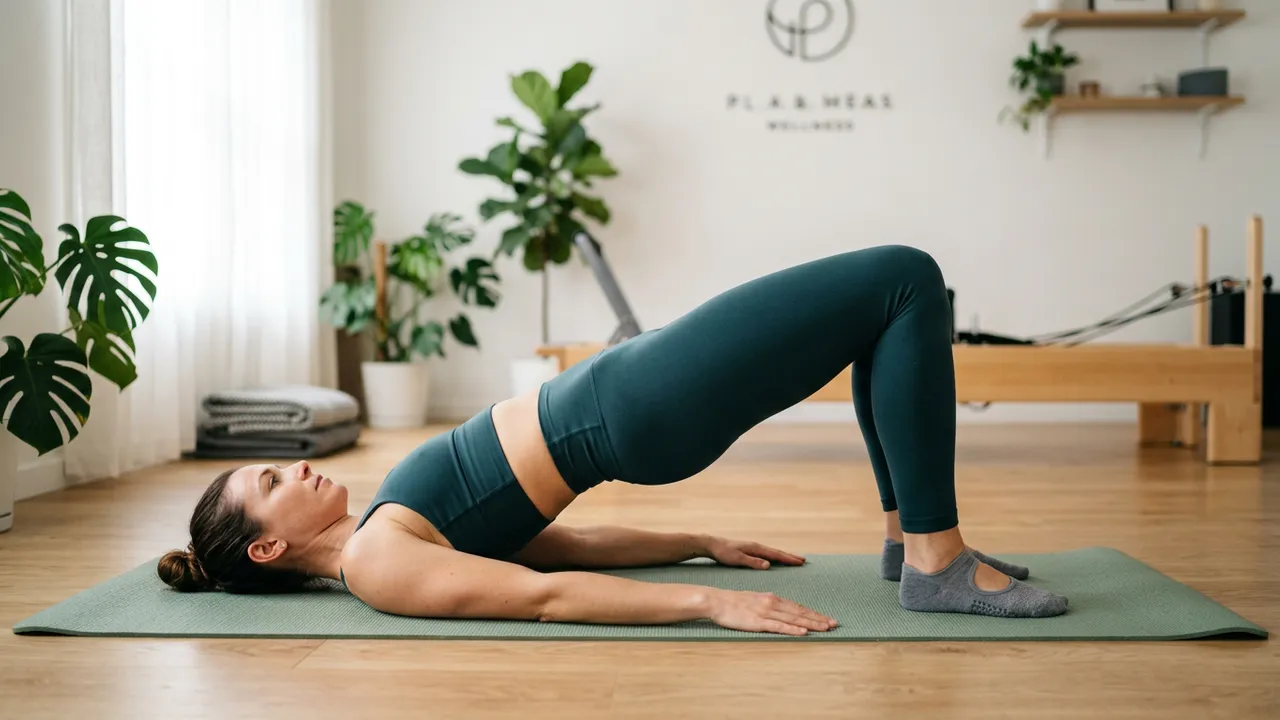
Katrina’s Top 3 Pilates exercises for rediscovering your buttock muscles

Do you suffer from ‘gluteal amnesia’? Pilates can help 

Thanks to a lovely Fix Program regular, I had such a laugh reading this article about men over 40 losing their buttocks. Girls, don’t laugh - we tend to lose them too. Men’s tend to disappear around to the front to their bellies and we women seem to have them slide down the backs of our legs. 

http://www.afr.com/Page/Uuid/033a59e0-39fb-11e3-a334-c26c4e617206 

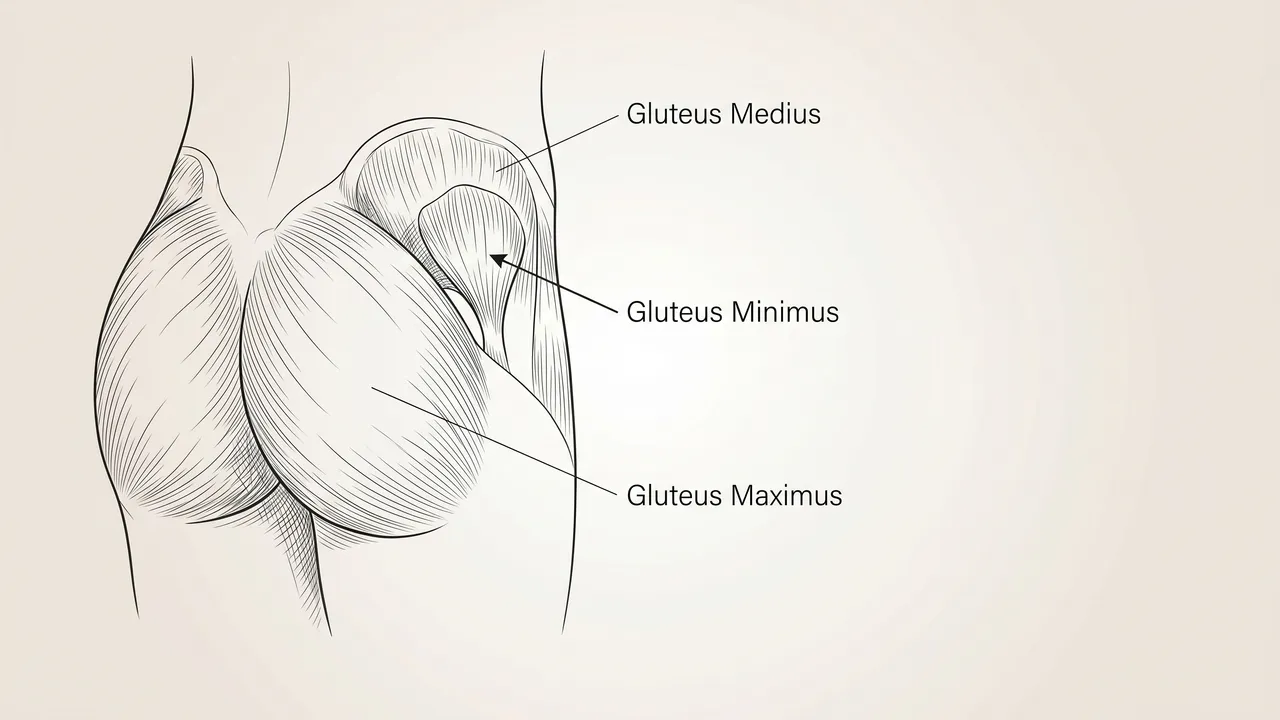
But is all seriousness, the buttock muscles are terribly important in supporting our pelvis and back, holding our hips in a good alignment in our pelvis and in providing us with the power to get up out of seats or to walk and run. Underactive and weakened gluts will result in a greater instability about the hip and pelvic regions. This can result in an increased load transferred to the lower back above and to the hamstring muscles below.

Some of us can feel that our hamstring muscles seem to become tighter as we get older. The hamstrings are a powerful and often over worked group of muscles running from your sit bones of your pelvis to the backs of your knee. If you once had quite flexible stretchy legs and hamstrings and now notice they are becoming tighter and stiffer, then perhaps your buttock muscles are weakened? Perhaps you are reliant on these hamstrings for more power and stability about the pelvis in your day than previously? Is there an imbalance about the muscles of your hip and leg?

Has your brain developed ‘gluteal amnesia’?

So how do you ‘find’ your buttocks again? The solution is often a simple one, but also quite a challenge for some brains! Often you need the kind and expert assistance with appropriate cues from your favourite physiotherapist to discover these muscles again. Here are my top 3 Pilates exercises to firstly find, awaken and then challenge your buttocks.

Step 1: Let’s find our buttock muscles again with ‘Virtual reality leg lifts’

Leg lifts to strength buttock

Lie on your tummy with your knee bent to 90 degrees. Imagine your thigh is stuck to the mat and unable to lift off.

Gently lift your pelvic floor muscles and deepen your navel, becoming aware of the subtle tightening between your hip bones and lower belly coming off the mat. Try holding these muscles on while you breathe. Next, imagine you are lifting the foot of your bent leg towards the sky. But remember, you can’t as it is stuck to the mat.

Where do you notice the muscle activating? Is it in your buttock region or down the back of your leg?

If you feel that your buttock is not engaging, try placing your hand on the buttock and imagine very gently holding a piece of paper between your buttock cheeks. Feel it now?

So, try again. Lift your pelvic floor, gently deepen your navel, imagine the paper held gently between you cheeks and then an imaginary lift on your foot towards the sky. Any luck?

Practice, practice again- it is really a brain challenge! This is the hardest step – rewiring your brain to habitually activate your buttock. If all else fails, practice on the other side and see if you can activate your buttock on this side before returning to the other.

You really must master this before progressing to step 2.

Step 2: Awaken your buttocks with great squat technique and side stepping squats

squat with theraband front squat with theraband side

squat with theraband lunge left squat with theraband lunge right

We should all know how to squat safely but here’s a quick recap.

Standing with your feet hip width apart, find your pelvis neutral posture. Become aware of your pelvic floor muscles lifting and abdominals deepening as you lift through your waists gently. Fold your trunk over your hips as if you were aiming to sit onto a chair, your knees bending and your weight shifting into your heels. Remember your tall waist posture and unchanging spinal curves. AS you push up to a standing posture, push through your heels and be aware of your buttock muscles activating.

You can make this more challenging with your theraband tied around your knees, or with sidestepping squats across the room. Remember your sinking hips, folding trunk, tall waists and pushing up through your heels. When sidestepping, feel your leading leg doing most of the work.

Wake up those buttocks.

Step 3: Challenge your buttocks and build endurance with single leg squats, step-ups and jumps

single leg squat - up single leg squat - down

So now you have found your buttocks and your brain knows what it’s like to use and feel them, you can really go for it. Single leg squats, with or without weights, lunges, step ups onto a step or parkbench. All of these will build endurance in your new found gluteals and give you a shapely derriere.

Remember the basics – good pelvic posture (‘neutral’ and no tipping sideways), tall waists, pelvic floor and deep abdominal engagement and pushing through your heels. Even a cupped hand over the buttock cheek will help to reinforce to your brain that you are activating well and feeling that lovely bulky butt!

Good luck rediscovering a shapely behind and giving your back, posture and tight leg muscles a lending hand too.

Read More

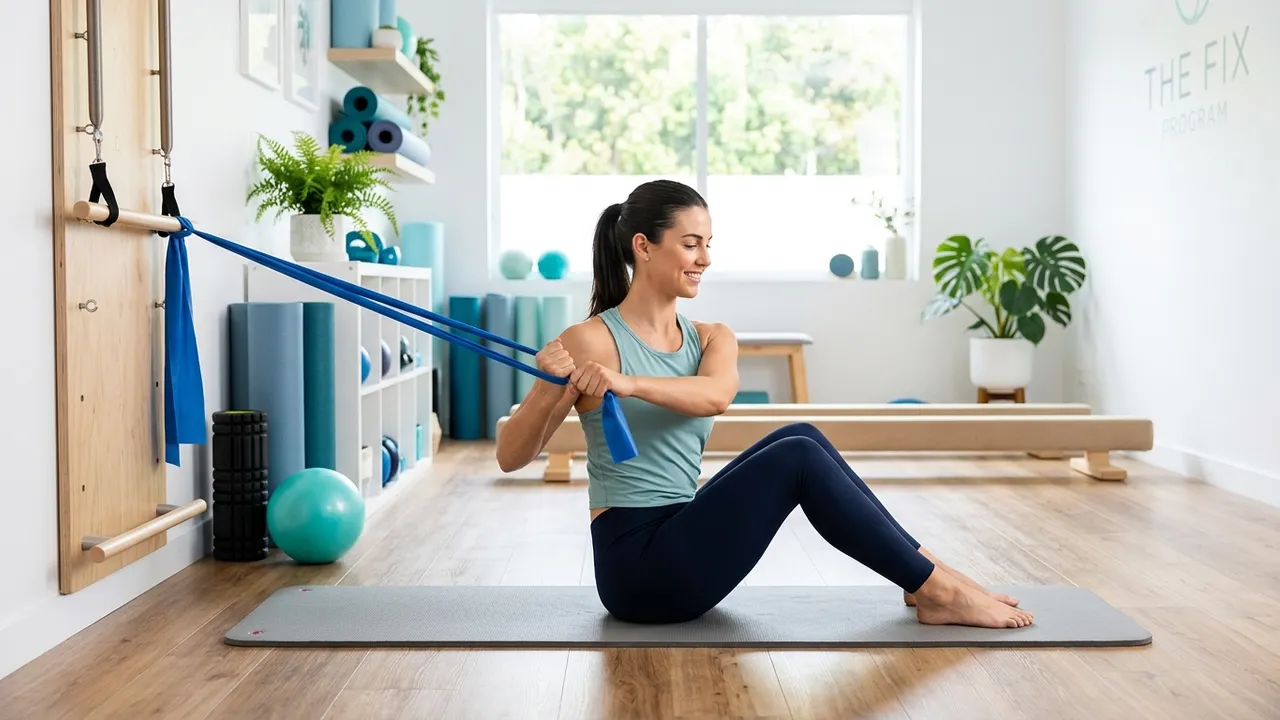
Exercise of the Month: Theraband trunk twists

Think of your ‘tall ribs’ and get twisting

This exercise at a good slow and controlled pace really gets those oblique abdominals and upper trunk muscles going. Remember that these muscles are needed every day for any movement involving a turn of the body. Add to that your great shoulder stability and pelvic control and this exercise is a challenge for the whole trunk. This version has you in sitting, but you could also try it in a static wall squat or deep lunge position.

The Starting Position:

The focus:

  • Sit on a chair or Swiss ball in ‘active sitting’. Active sitting starts with legs hip width apart to your feet, a neutral pelvis posture, long waists and a lifted breastbone.

  • With a partner or your theraband fixed at one end, hold your theraband with clasped hands out in front of your chest.

  • Set your shoulder blades softly and widely into their ‘pockets’ in the upper back and melt the tension away from your neck and shoulders.

  • Imagine you are on a skewer, turning with a beautifully tall and centred axis.

  • Twist with long waists and tallness between all of your ribs each side of your trunk. Think of the rib rack and thick meat between each and every rib.

  • Keep melting through your shoulders and neck and keep stable and neutral on your pelvis.

The Movement:


  • Breathe in deep and wide to prepare. As you breathe out, gently lift your pelvic floor muscles and imagine your hip bones drawing together at the front as your navel deepens.
  • As you next breathe in, turn your trunk against your theraband resistance, keeping your hands in front of your chest at all times.
  • As you exhale, slowly return your trunk to the middle.
  • Repeat to the same side 8-10 times, before changing your set up to turn to the opposite direction.


Tip:

Try this same movement with a partner as you squat against a wall to really challenge your legs and pelvis more so for that complete body workout.


Read More

Pain tales – the over sensitive nerve

sitting at desk

In July’s version of ‘pain tales’ we looked into nerves and how they send messages to the brain (and back again). Nerves conduct messages from our muscles, skin and joints as electrical impulses to and from our brain. Even the brain itself is made up of trillions of nerves and connections, and then there are the nerves that supply to our vital organs.

So what can happen when all of this goes amiss? When nerves become hyper sensitive due to injury, pressure or in chronic pain?

We have all probably heard about brain plasticity. This ability for the brain to change, adapt, ‘be plastic’ in reaction to stimuli can also be demonstrated in the peripheral nervous system. This peripheral nervous system includes all nerves outside of the brain (or central nervous system).

Lets explore…

Nerves are able to conduct electrical impulses or messages via their conductivity. Positive and negative ions pass over the nerve ‘walls’, charging them until the point that an impulse fires along the nerve. This is called an ‘action potential’. Charged ions can rush into the nerve via sensors, also known as receptors or ‘ion channels’. These are made of protein and ‘listen out’ or measure different stimuli. They are specific and specialised for just that stimulus. For example, light receptors in your eyes, or sound wave sensors in your ears.

There are only 3 types of sensors in your nerves for your muscle, skin and bones – one to detect the stimulus of temperature, one for mechanical changes (such as stretching, vibration, pulling) and one for chemical changes (such as adrenaline, acids, endorphins).

Changes detected by these 3 types of sensors will create the influx of ions to create a message that rushes along your nerve pathway to your brain, or back again. You may remember from previous discussions that these messages are NOT pain messages. Pain is the construct from the brain after weighing up all the information that the nerves have delivered for that time and that place.

The most amazing thing about these sensors is that their life is short- only living for a few days. They are always being replaced by new sensors and the type of sensor may change depending on what your brain decides is needed for your best survival. The brain does this by producing sensors proportionate to the stimuli around.

So, for example, if your posture is poor and you have rounded shoulders when you sit all day, the mechanical sensor numbers will be higher than the temperature or chemical ones in the nerves of this area of our body. This is because of the constant pulling loads on the nerves about your neck and upper back through your rounded shoulder and chin poked out. This makes for a very over sensitive area in your body, detecting lots of mechanical changes and forces and producing a higher rate of impulses from these nerves to the brain. Your brain may choose to ignore these, but will be more likely to feel more pain. And this makes for a tired painful neck and upper back. Sound familiar?

So back to ‘plasticity’ (and the good news if you suffer from pain)! The same can happen in reverse. The number of a particular sensor type in a nerve will reduce if the stimulus is less. And a return to a relatively balanced and stable number of each receptor type in all of your nerves. Using the same example of poor posture and rounded shoulders in our neck pain sufferers, better your posture –‘mangoes under the chin’, ‘long tall neck’, ‘lifted breastbones’ – move more, be stronger. This will decrease the mechanical pulling on your nerves up there, reduce the mechanical sensors about and therefore the number of impulses to your brain. The result – less pain!

So remember that nerve sensors are dying and being replaced every few days. Pain and sensitivity is always changing and that the pain you are in now is not fixed.

Read More

Pilates and ‘mindful’ movement

Pilates, Yoga and Feldenkrais can really capitalise on the practice of mindfulness

Mindfulness is originally a Buddhist term and is used a lot in clinical psychology for reducing stress, anxiety and depression. It is all about being in the present moment and allowing your thoughts, feelings and sensations to just be, without judgement. It is about being aware of the you without evaluation. 

Exercise disciplines such as Pilates, Yoga and Feldenkrais can really capitalise on the practice of mindfulness to enhance practice and results. Making contact with what is as you move, breathe or relax can better help you learn the movement, improve your strength, mobility and reduce pain levels. 

Mindful movement can be done through becoming aware of how you move. This can be done in the most simplest of ways, including:

Visualising the movement with closed eyes as you move

Visual representations and cues for your movement

Focusing on the sensations associated with the movement, such as muscles contracting or shortening, lengthening, stretching, or bones feeling heavy

Focusing on symmetry of movement across your body

Smooth and controlled movement

Mindfulness in movement allows for improved motor learning, or skill acquisition. By definition, human learning is any permanent change in behaviour, knowledge, skill or ability that cannot be ascribed to development or inherited growths. Motor learning is the process of learning a movement – from acquisition to practice. It requires the brain to ‘write’ motor programs amongst your nerve pathways using information about the movement, knowledge and experience. This includes the correct muscles to be used, the correct nerve pathways talking to the muscles, movement sequencing, timing and automation. To be more aware of your movement, you can ‘write’ your motor programs better to develop new movement habits and for them occur automatically. This is just like the preparatory activation of the deep pelvic stabilising muscles before your body moves to protect the spine and pelvis. Through thoughtful practice, your deep muscles can do just this! 

Pain management for those with all sorts of pain associated with movement or postures benefit hugely from thoughtful movement. Pain is ‘wired up’ in the brain as ‘pain movies” (as we’ve spoken about several times in our ‘Pain Tales’ posts). We know that subjective feelings about movement and pain can ‘fire off’ the pain experience in someone with persistent pain. Remembering that particular movements have always been painful, have caused pain before, evaluating movement experiences as ‘good’, ‘bad’ or fear that movement or exercise will make the pain worse – this can all get in the way of beating the pain cycle. By minimising these subjective describing words and judgements when exercising mindfully, it is often possible to move through the pain. This can establish new nerve pathways, movements that are no longer as threatening, less pain with activity and a potential breaking down of the pain cycle. 

At The Fix Program, as physiotherapists, we truly believe and place a huge emphasis on mindful movement. Within our classes, we use a mix of strategies to bring you ‘into the moment’ with your exercise, to forget what’s going on outside the studio, become more aware of your own movement patterns and to make change. And we see wonderful results in doing this.

Why not try practicing mindfulness in everything you do? From your exercise routines, to your work and home life. Live in the moment without judgemental thoughts getting in the way.

Read More

Pain tales – How relaxation brings pain relief

We’ve discussed how the brain can produce a pain experience when it perceives a threat. Threatening inputs, memories and circumstances can also lead to a stress response, which many in turn worsen your pain. Today we’ll talk about how relaxation brings pain relief – but first, what is stress?

tiger

We’ve all heard the expression ‘fight or flight’. This is how the body has evolved to respond to any threatening situation. In times of stress the body uses a hormone called cortisol. Cortisol turns on process we need for survival and switches off process that are not needed for survival. What do you need if a tiger is chasing you? Muscles – to fight or run away and your brain – for quick thinking! What don’t you need if a tiger is chasing you? Reproduction and digestion. Healing can probably also be put on hold.

So as you can see, this stress response is great in an emergency, but what if that tiger follows you around for a year and you’re stressed all the time? Prolonged elevated cortisol levels have been linked to depression, mood swings, memory changes, poor healing, weight gain and immune problems.

So you can see that if your pain is making you stressed, your stress can make things much worse, including the pain itself.

On the flip side, when you’re relaxed and feeling good, your body produces ‘happy hormones’ such as such as opioids and serotonin that block danger messages travelling up the nerves to your brain. We know that they’re 60 times more powerful than the strongest pain-relieving drug on the market. A lovely ‘soup’ for your brain and nerves to float around in.

So how do you de-stress. For a start, stop worrying about the pain. This makes a lot of sense now you know that worrying about your pain is scientifically proven to make it worse. Yoga, relaxation, meditation and breathing techniques have also been proven to reduce the level of circulating stress hormones and increase your level of happy hormones. Try going for a walk, listening to relaxing music, or just clearing your mind for twenty minutes every day.

Another technique is to set aside ‘worry time’. Rather than worrying about things constantly (and keeping your Cortisol levels elevated) make a specific time every week when you think about your worries. If a worry enters your head at another time, like when you’re trying to fall asleep, set it aside for your ‘worry time’.

So remember - relax and feel less pain.

Read More

Showing 10 of 293 articles by Katrina Tarrant

Fix News