The Fix Program Blog

29 Mar 2018 BY Katrina Tarrant POSTED IN Pilates, Sydney CBD

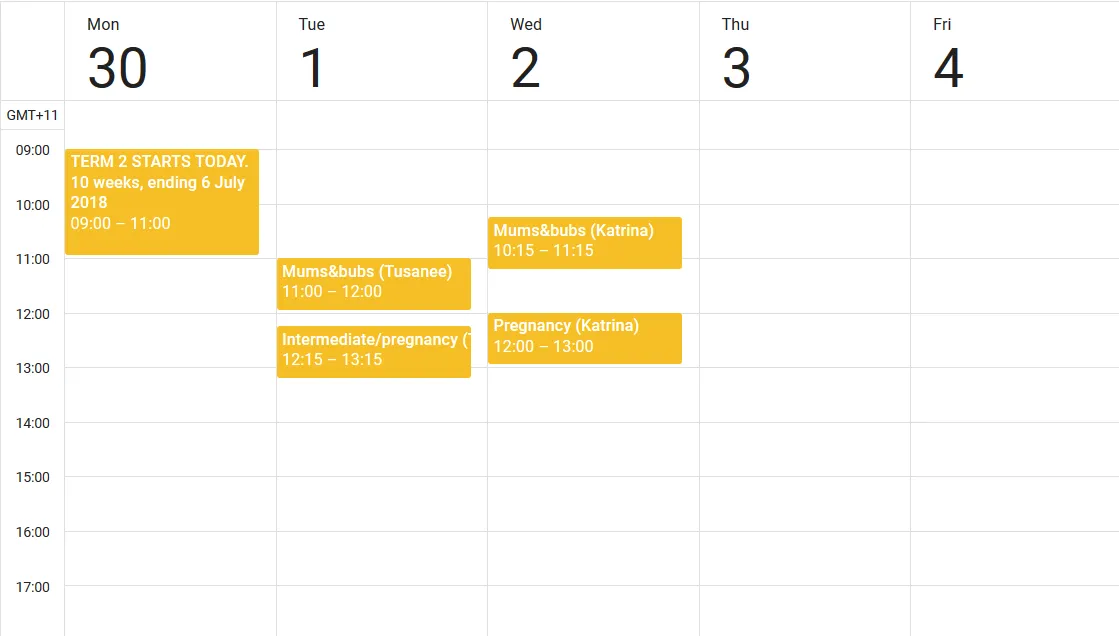
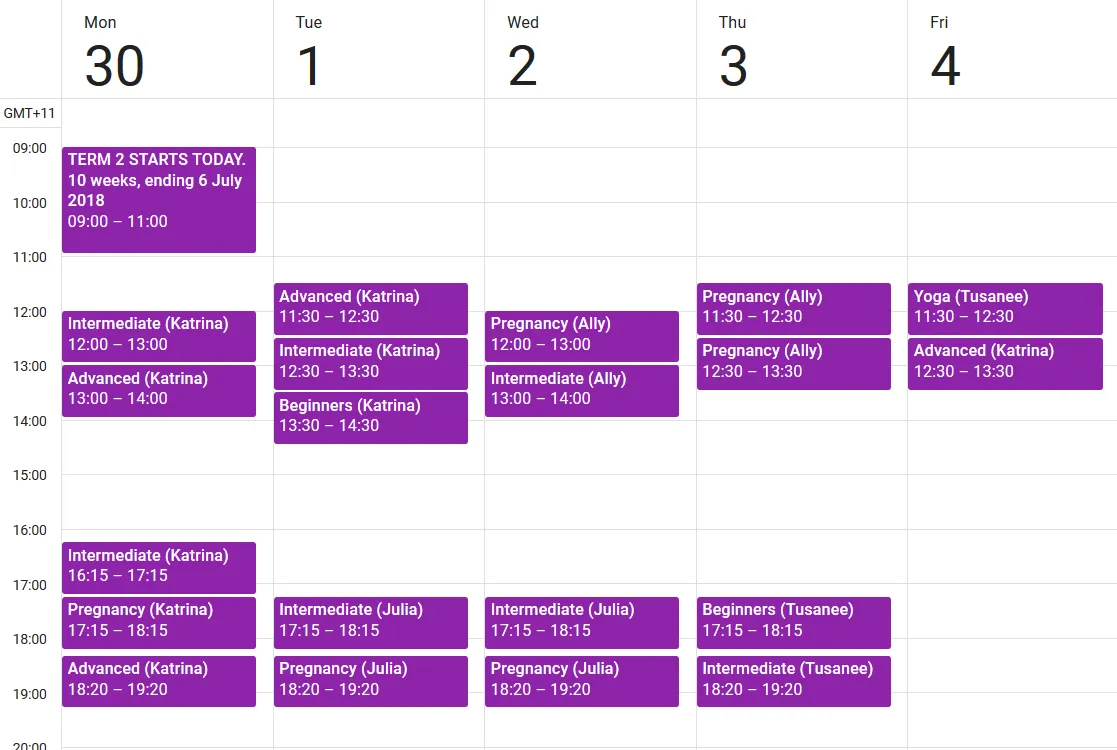
Draft Term 2 2018 CBD Pilates timetable

Your draft ‘term 2 2018’ Pilates and Yoga timetable is subject to change. These classes will run for 10 WEEKS in our York St, CBD clinic. Classes will commence from Monday 30 April and end Friday 6 July 2018.

We note that the Queen’s birthday public holiday falls on Monday 11 June, and therefore, Monday classes will run for a 9 week term only ( this class will be removed from fees for these attendees).

Classes for this term are recommended and scheduled for:

  • Beginners Pilates for those new to postural strength and awareness, or want to get back into safe and mindful exercise after a break or injury.

  • Intermediate/advanced level Pilates for challenging and functional postural control for those having completed our Beginners program.

  • Pregnancy specific Pilates

  • Mums&Bubs post natal Pilates. Safe and fun with baby when you really want to be sure your exercise is safe as a brand new mum 


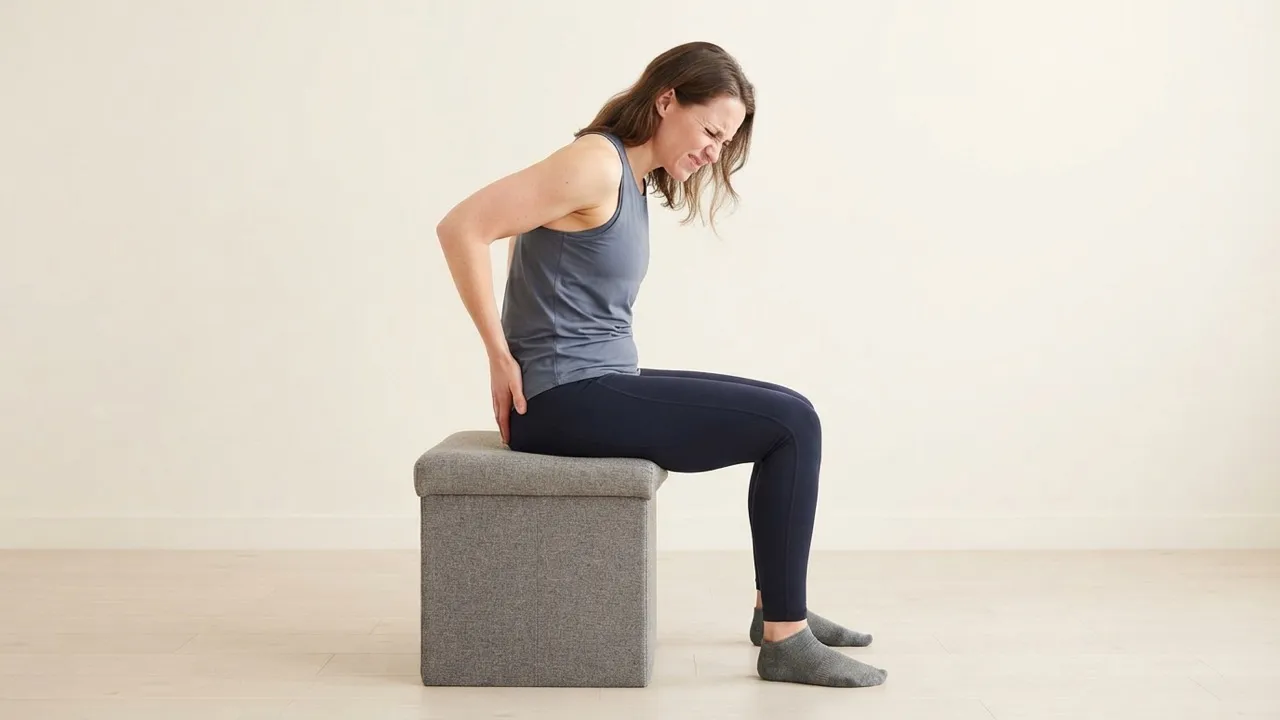
'Actively sit' and untuck your tailbone

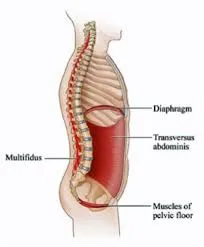
I recently read a great article by a little unknown movement coach in the US. She was speaking about the need for us humans to ‘untuck our tails.’ This resonated loudly with my role as a physio, posture and movement coach.  She explored the many positive reasons we should sit better than we all do. Sitting with a great pelvic foundation not only improves posture, but also decreases the risk of poor pelvic floor muscle health, cell health and even biochemistry!

You can read her article here, but here are a few of her wonderful points worth pondering as we go about our days sitting in such poor postures.

  • It is very apparent that we are living in a world where tucking the tailbone under is highly encouraged. You only need to think of our furniture and the increasing time we spend sitting these days. You know the type- the comfy sofa that allows you to sink in low and promote a slump in the spine. This is the same as having the ‘pelvic bowl tipped backwards’, or the tailbone tucked under. We were never designed to be seated as much as we are in these modern times.

  • The purpose of the tailbone is to allow the pelvic outlet in our pelvis to be open or closed. The coccyx in a human is the very small remnant of our predecessors and their mammalian tail. When this coccyx is untucked such as with correct posture or in standing, it lengthens and opens the bottom of our pelvis where the pelvic floor muscles live. When the coccyx is tucked, it shortens or closes this same outlet region.

  • Here is the amazing and often overlooked impact of this on the pelvic floor strength and function. When the pelvic outlet is shortened, so too will be the pelvic floor sling of muscles that suspends from the pubic bone at the front of the pelvis to the tailbone.
    This shortened position of the pelvic floor, day in, day out from poor sitting postures will cause the muscles here to become short, tight and weak. Weak, you say? YES. A short and tight muscle cannot contract efficiently or optimally. This creates a weakness and possible pelvic floor dysfunction. This could include incontinence, prolapse, pain, or sexual pain. There is also the more subtle but significant knock-on effect to the workings of the ‘core muscle system’ for spinal and postural support and alignment.

  • A shortened and tight pelvic floor loses its elastic trampoline like support for the pelvic organs. Simply standing and spending more time untucking your tailbone can allow for your pelvic floor to lengthen to relax and to not be so tense. To act as it is intended.

  • Aging, menopause, pregnancy and childbirth are too readily blamed for pelvic floor dysfunction and the symptoms that come with that. They certainly do play a part, but the long term effect of poor posture on the pelvic region is not to be overlooked.

The take home message

  • Simple postural day to day changes can have a long lasting positive effect on pelvic health.
  • Stand more. When there is a choice between sitting or standing, choose to stand. When sitting, choose a better chair.
  • When in your sitting posture, sit on your sit bones and not your tailbone. Think of the level pelvic foundation position whenever you can.
  • Believe that a tense muscle is NOT a strong muscle. Learn to let go of your pelvic floor
    tension like you would let go of your tight shoulders and neck.
  • Squat more rather than bending over.
  • Move more.
  • Vary your movements day to day so you are not always in the same patterns of movement and muscle activation.

14 Dec 2017 BY Katrina Tarrant POSTED IN Pilates, Sydney CBD

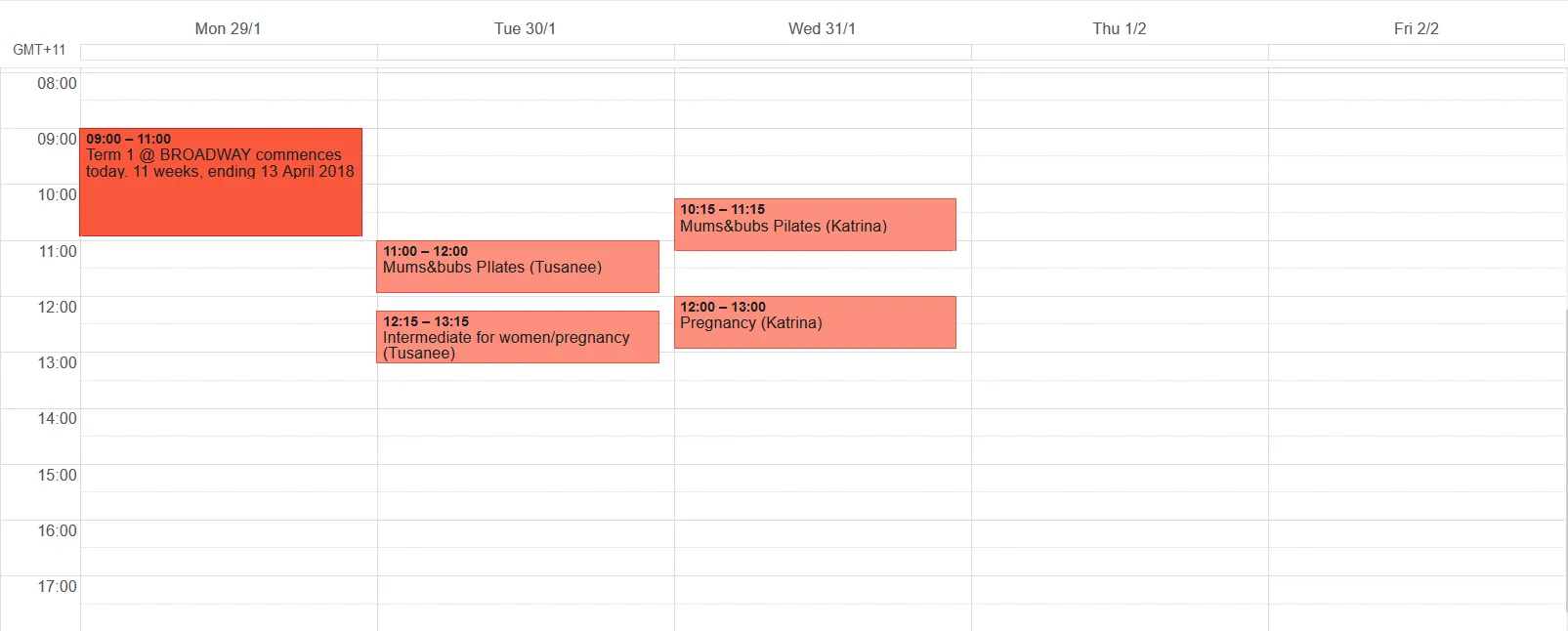
Draft Term 1 2018 Broadway Pilates timetable

Your draft ‘term 1 2018’ Broadway Pilates timetable is subject to change. These classes will run for 11 WEEKS in our Broadway clinic, within the Fernwood Ladies Gym. Classes will commence from Monday 29th January and end Friday 13th April 2018.

 Classes for this term are recommended and scheduled for:


14 Dec 2017 BY Katrina Tarrant POSTED IN Pilates, Sydney CBD

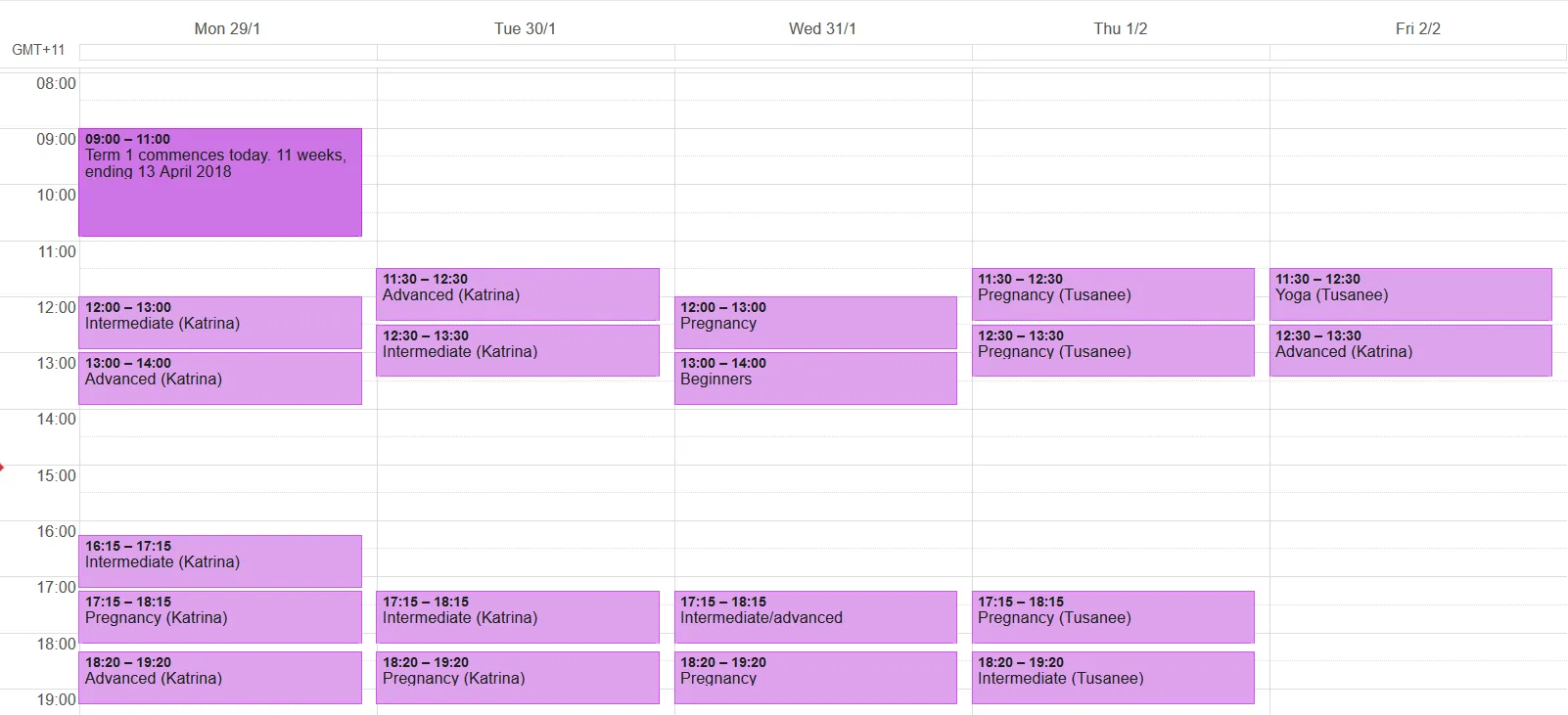
Draft Term 1 2018 CBD Pilates timetable

Your draft ‘term 1 2018’ Pilates and Yoga timetable is subject to change. These classes will run for 11 WEEKS in our York St, CBD clinic. Classes will commence from Monday 29th January and end Friday 13th April 2018.

Don’t forget our increasingly popular Yoga with physiotherapist Tusanee. Word about town is that she has the magic touch of a yogi with the knowledge of a physio! Why not treat yourself?

Classes for this term are recommended and scheduled for:


4 Dec 2017 BY Katrina Tarrant POSTED IN Pilates, Sydney CBD

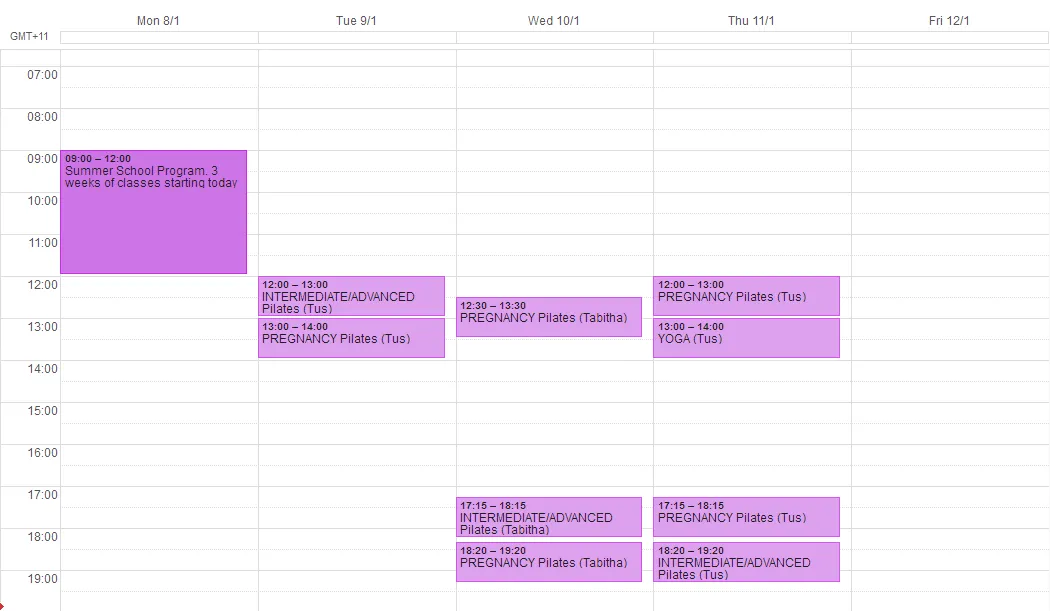
Draft Summer School timetable for January 2018

Draft ‘Summer School 2018’ timetable is subject to change.

These classes will run for 3 WEEKS in our CBD clinic only. Classes will commence from Monday 8th January, 2018. 

Classes are recommended and scheduled for:

  • Intermediate/advanced  mixed level Pilates for challenging and functional postural control. These classes are suitable for our existing Pilates clientele currently attending our beginners, intermediate or advanced classes in 2017.
  • Pregnancy specific Pilates. These classes are suitable for our existing pregnancy Pilates clientele currently attending our classes in 2017, or have been assessed to be ready for these classes.


11 Sept 2017 BY Katrina Tarrant POSTED IN Pilates, Sydney CBD

Draft Broadway Term 4 2017 Timetable

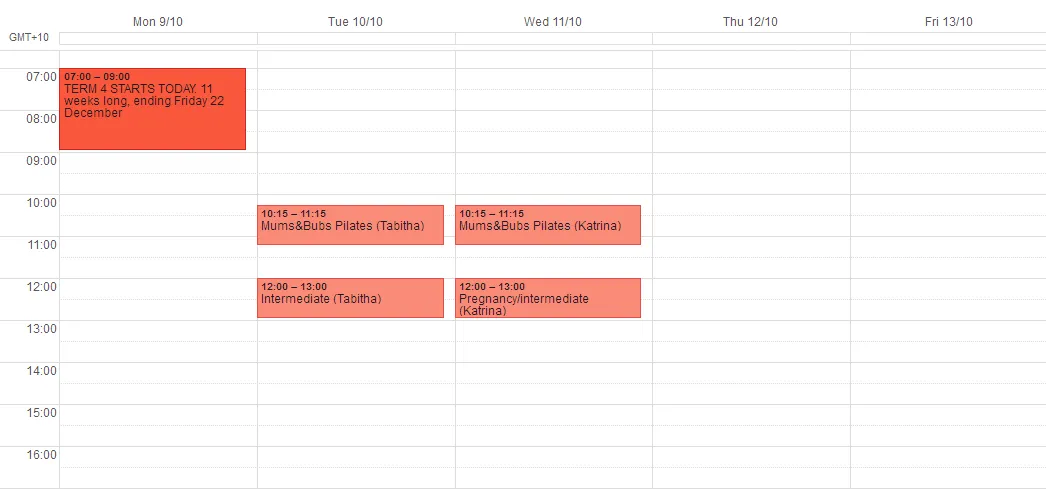
Draft ‘term 4 2017’ timetable is subject to change. These classes will run for 11 WEEKS in our Broadway clinic. Classes will commence from Monday 9th October and end Friday 22nd December 2017.

Classes are recommended and scheduled for:


11 Sept 2017 BY Katrina Tarrant POSTED IN Pilates, Sydney CBD

Draft CBD Term 4 2017 Timetable

Draft ‘term 4 2017’ timetable is subject to change. These classes will run for 11 WEEKS in our York St, CBD clinic. Classes will commence from Monday 9th October and end Friday 22nd December 2017.

We are excited to announce the return to the warmer months and our before work classes from 7am!

And don’t forget our Yoga with physiotherapist Tusanee. Why not treat yourself to a before work or lunch hour in stretch heaven? Or if you have been thinking about a second class per week at our studio, this could be the one to keep you balanced, relaxed and focused more in body and mind. (These classes will be invoiced and receipted no differently to our Pilates classes. Classes will be classified as a “group physiotherapy consultation” for health fund rebates. Ask your provider regarding your eligibility)

Classes are recommended and scheduled for:

  • Beginners Pilates for those new to postural strength and awareness

  • Intermediate/advanced level Pilates for challenging and functional postural control

  • Pregnancy specific Pilates

  • Mums&Bubs post natal Pilates. Safe and fun with baby when you really want to be sure your exercise is safe as a new mum 

  • Stretch&Relax classes with a lean towards stretching and learning to relax around the pelvis, spine and hips

  • Yoga.


4 Sept 2017 BY Katrina Tarrant POSTED IN Pilates, Sydney CBD

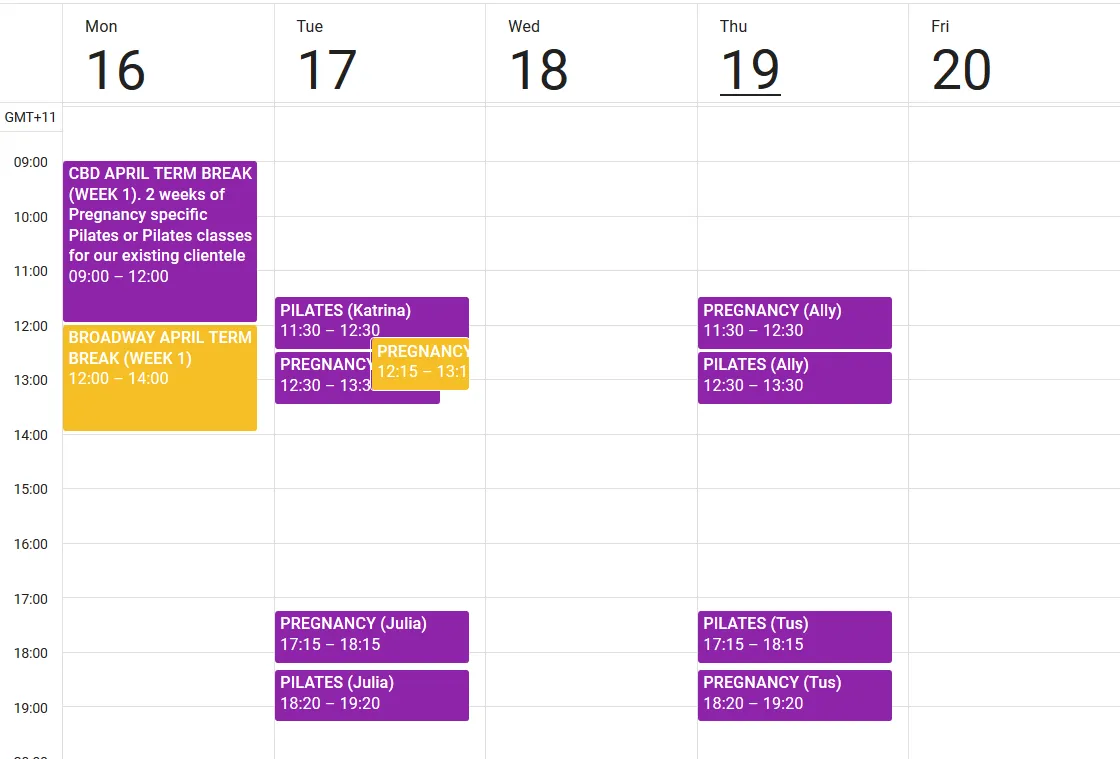
Draft October 2017 Termbreak timetable

Draft ‘October term break 2017’ timetable is subject to change.

These classes will run for 2 WEEKS in our CBD clinic, falling on

Tuesdays 26th September and 3rd October 

and

Thursdays 28th September and 5th October, 2017.

Classes are on offer only for our existing Fix Pilates clients. We have a mixed class scheduled for

  • combined beginners/intermediate/advanced classes (called PILATES), and
  • pregnancy-specific Pilates (called PREGNANCY PILATES).

Classes are $41 each and must be paid for upfront for the 2 classes, total $82. Receipts will be issued for these 2 weeks for use when claiming with your private health fund provider. Check yours for eligibility.


10 Aug 2017 BY Katrina Tarrant POSTED IN Exercise, Physiotherapy, Pilates

Getting more from your squats at Pilates

Find your ‘hip hinge ’

pilates squats

If you’ve had anything to do with a personal trainer, a physio or a gym, you’d certainly have found yourself squatting in some capacity. It is an amazing way to get great bang for your buck when it comes to an all body strengthening exercise.

An excellent squatting technique is essential in so many ways:

  • Safe squatting can become a valuable everyday movement pattern for each and everytime the body needs to lower itself towards the ground. Think lifting, sitting and bending required in everyday.
  • Squatting is amazing to waken and strengthen important muscles about the pelvic girdle and hip regions. This can include the big powerhouse muscles of the butt and thigh and the deep stabilising muscles about the deep trunk, including deep hip and spinal postural muscle systems.
  • Strong legs can strongly underpin the trunk and give your back all the support it needs in everyday activity.
  • Good squat technique allows you to be more efficient within the movement, allowing for bigger weights, bigger strength gain and less injury risk.
  • Squatting gives your knees great muscular support when done correctly. Perfect you runners and cyclists needing good support and balance about the knees.

This amazing tip borrowed from US physio Zach Long will have you learning the best way to squat. I love it. Making the drill this simple makes you understand the importance of the hip in a safe and effective squat. As we say in class, ‘focus on how far the hips shift back relative to your heels’, or ‘feel the weight in the heels’ or ‘make sure you can see all of your toes over your knees.’

katrina squatting

Give this a try:

  • Grab a long foam roller, placing it on its long end, just in front of your toes.
  • Drop into a squat without your knees translating forward and knocking over the roller.
  • Feel and focus on the hip hinge, rather than the knees coming forward.
  • Remember all of your safe ‘Pilates cues’ such as maintaining pelvis and spinal neutral, tracking your knees straight towards the third toe, widening through the sit bones, exhaling on the effort or movement.
  • Easy!
  • Brilliant!

For further reading and training ideas on squatting and the ‘hip hinge’, check out this great blog. Zach has HEAPS of other really cool tips for those of you into your gym and weights.

Read more: www.thebarbellphysio.com/best-hip-hinge-fixes


7 Aug 2017 BY Katrina Tarrant POSTED IN Pregnancy, Women's Health

Obstetric Fistula: Unimaginable Complications during Childbirth

Raising awareness for women in Africa and the work of doctors Reg and Catherine Hamlin by Tus Jierasak

Prof Hamlin in Ethiopia

For most of us, we have most likely never heard of, won’t need to worry about, and definitely won’t experience an obstetric fistula during childbirth. In countries like Australia, it is almost non-existent. Unfortunately, this is not the case everywhere.

Predominantly in countries of sub-Saharan Africa and Asia, unimaginable complications during childbirth still frequently occur. These are called obstetric fistulas. A fistula is an abnormal connection between two organs. An obstetric fistula is an abnormal hole that forms a passageway between the vagina and bladder or rectum, which occurs during childbirth. If a woman has an obstructed labor, or a prolonged labor that lasts days, her contractions continue to push the baby’s head against the pubic bone, which causes the soft tissues to become compressed, and not receive any blood flow. This lack of blood flow causes the tissues to die, creating a fistula between her pelvic organs. This is a complication seen only in societies where birthing is done at home, without medical assistance and in very young mothers.

Physically, the obstetric fistula forms a hole, which acts as a passageway between the mother’s vagina and bladder or rectum, leaving her permanently incontinent of urine, faeces, or both, through the vagina. This can further lead to skin infections, kidney disorders, or if left untreated, death. 93% of survivors give birth to a stillborn baby.

Socially, the consequences are devastating. In countries where a woman’s social status and self-esteem depend on her marriage and ability to have children, women are abandoned by their husbands, rejected and forced out of their villages, and left to live marginalised in isolation and shame.

Around 2 million young women live with untreated obstetric fistula in Asia and Africa, and each year between 50 000 and 100 000 women worldwide develop obstetric fistula. In developing countries, living in rural areas means limited access to healthcare. Poverty and lack of money for obstetric care puts women further at risk. Obstetric fistulas develop when emergency obstetric care is not available to women who develop complications during labor. It is preventable, and treatable. Obstetric fistulas can be prevented if a woman has access to quality obstetric care including a trained midwife, and an emergency cesarean section. If an obstetric fistula has occurred, it can be closed with reconstructive intra vaginal surgery. This operation is life-restoring, the cost of a single surgery around $600.

Hamlin Fistula

Holistic rehabilitation includes physiotherapy, and counseling and support, which is essential to help restoring the woman’s dignity and social reintegration. No woman should have to live with this debilitating condition which can be prevented and treated. Prevention is key to ending obstetric fistula. Through increased global public awareness, and providing increased services to obstetric healthcare, there is hope.

To find out more, or how you can offer a life changing gift, visit https://hamlin.org.au/


Fix News