The Fix Program Blog

Posture cheats : Are you a 'back gripper'?

Holding our posture up all day can be quite a tiring feat. Our bodies are so terribly good at adapting for the needs we place on it. Often these adaptations are great strategies, but often, they are not. We ‘cheat’ and often begin to use muscles and strategies not quite ideal and often a cause of tension, poor alignment and pain. 

Every single one of us has our little ‘strategies’ to cope and respond with the loads and stresses we put on our body all day, no matter how small. You would be lying if you didn’t fall into some non-ideal postures and habits in your day. Young children are possibly the only ones who can boast good posture. This is at least before long days sitting at school and carrying big backpacks begin to change things.

Awareness is half the battle here when it comes to posture cheats. When you begin to recognise your daily postures more, it is easy to then make small changes to ‘unlearn’ or to find other ways to hold your posture all day. Back gripping is a very common one of these. Perhaps these below are you?

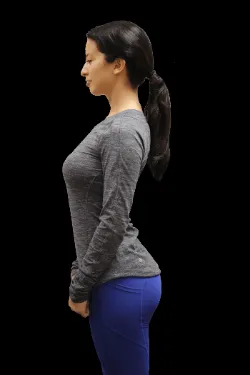
😮Do you stand and sit with an overly lifted chest, or ribs sprung forward?

😮Does your waistband always sit higher at your back and low at your front?

😮Are you pregnant or a new mother?

😮Do you feel back stiffness when trying to reach or bend forward through your trunk?

😮Do you force your shoulders ‘back and down’ when lifting weights at the gym?

😮Have you a background in gymnastics, dance or the military?

Constant back gripping can create high compressive forces in the joints of the back, and limit your general trunk flexibility. On top of this, an overly lengthened or stretched trunk at your front with these postures makes the abdominal weak and unable to support you efficiently.

Does this posture sound like you? Here are some simple awareness tips for small changes.

✅ Try to think of your posture ‘from behind’, gently imagining a taller spine at the back of your trunk. This will emphasise tallness without over arching the trunk and gripping from your back.

✅ Can you also ‘soften’ your posture, gently ‘zipping up’ the ribs at your front so they do not spring forward so much?

✅ Visit your physio for more great tips and manual therapy if your back muscles are always stiff and tight.

Did you know that there are other cheats and non-ideal posture strategies? These include butt gripping and chest gripping. Intrigued? Check out our other posts and make the change to your posture!

#posture #posturalawareness #backgripping #dianeleephysio #neckpain #backpain #pregnancypain #pregnancybackpain #postnatalpain #postnatalbackpain #physiotherapy #thefixprogram #thefixprogramonline #thefixprogramsydney


The pelvis and the lower back

✅ “Find your neutral pelvic foundation.” Why do we ask you in posture and Pilates classes to do this before and throughout every single exercise?

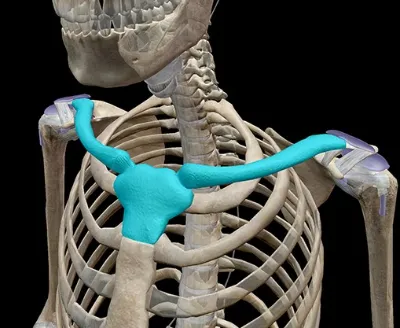
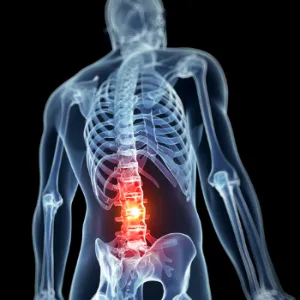
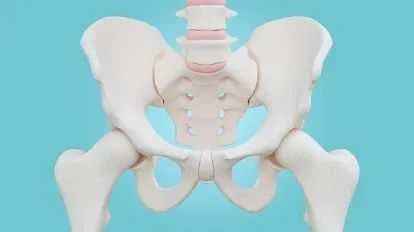
The lumbar spine or lower back sits above your pelvis. It comprises of 5 large vertebra, and as you can see, not much else! It is very mobile when compared to the stiffness of the upper back and ribs above. It needs much support of the muscles that support it and a strong well aligned base. The pelvis should form a strong foundation for the lower back to stack on.

✅ The beginnings of good support for the lumbar spine start with learning to find your ‘neutral’ pelvic foundation when standing, sitting and strengthening. This will in turn awaken your deep abdominal corset and other supporting muscles in the region.

✅ Imagine your pelvis as a bowl of water. Your ‘neutral’ pelvic foundation for the spine above would have your bowl sitting level, without spilling, or twisting.

✅ A healthy relationship between the alignment of your pelvic bowl and your lower back will prevent pain and injury, make you feel in better control of your posture and improve the efficiency in the way that you move and exercise! Win!

How is your bowl sitting at the moment?

Pilates-based exercise and postural strengthening are the best ways to build not only awareness, but also strength and endurance in the muscles used to keep your pelvic bowl ‘neutral’. A healthy pelvic foundation will prevent back and neck pain further up the chain.


Graduated exposure

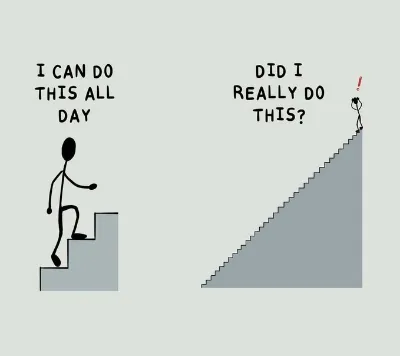
This notion of graduated exposure can be applied to many a scenario, but I am talking about it with reference to exercise and activity levels. Pacing slowly, with small increments of change, will usually prevent failure. From the beginnings of exercise, to the highly tuned athlete, training programs will always follow the paradigm of graduated exposure to allow the body to adapt and to prevent injury. 

What is the opposite of graduated exposure?  Being a “boom and buster.” Intrigued? Could this be you when it comes to exercise or activity levels?

Here is the scenario. You set out on a new activity - say, jogging. Perhaps you’ve been injured, or unfit and want a new challenge. Sydney’s City to Surf or another of your favourite fun runs has come around again and you are keen to get involved. It’s hard at first to get training, but you get a hang of it after a few weeks. Perhaps you start like a bull at a gate. You jump up considerably in your running volumes because you’re feeling so damn good - but, uh oh. You’ve boomëd ( hooray!)…but also busted (uh oh). You find yourself back at the “I’m unable to exercise because I’m now injured/too tired and fatigued/in pain” stage.

And so the ‘boom or bust’ cycle begins.

The solution?

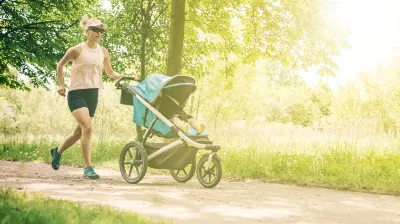
✅ Slow and steady. Pace up sensibly with no huge jumps. Your fitness and the way your tissues ( muscles, tendons) adapt will do so without the crash and burn! Just like our little man above in the image. Small steps will lead you to your goal, and often that goal surprises you.

✅ You will need more time than you think to reach this. If you have a end date as the goal, start your training program at least 12 weeks before the run and not the month before.

✅ If you have no end date, enjoy the small steps to reach your goal! And if these are no steps up for a week or so, it is not the end of the world. Start where you left off and keep on building!

Easy! Find yourself a good physio or exercise physiologist (EP) to set the baselines and progressions in your exercise build.

#boomandbust #exercise #paceit #safeexercise


Pelvic girdle pain

Yes! The research shows that nearly all pregnancy related pelvic girdle pain resolves after labour. Every woman is different.

It may take a few weeks to months.

It may disappear immediately you walk out of the birthing rooms.

You may require the expert guidance of a physio to get everything well aligned in your hips and pelvic region after the pregnancy changes, and muscles working again in the appropriate way to support the pelvis.

You may need short term activity modification or taping around the pelvis as you return to gentle exercise.

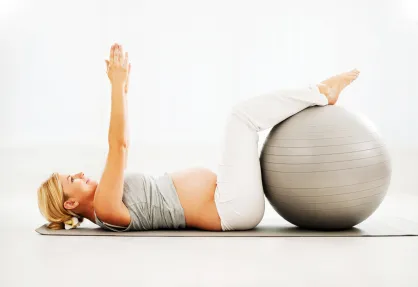
You will need to start your exercise journey post bub by reconnecting with your deep abdominals, pelvic floor and breath.

You will need to find this inner strength before adding impact like running, jumping, or loads such as weight lifting.

But do know that your pelvis will be alright after the miracle of pregnancy and birth!

#pelvicgirldepain #pelvicpain #pregnancypain #pregnancypelvicpain #pregnancybackpain #sijpain #spd #psd #pubicsymphysis #postnatalbackpain #postnatalpelvicpain #thefixprogram #thefixprogramonline #pregnancyphysio


Life after pregnancy back and pelvic pain

Pelvic girdle pain is as common as 7 out of every 10 pregnancies. That’s a whopping 70% of pregnant women going about their day with anything from mild intermittent troubles, to barely being able to walk.

Pelvic girdle pain is often confused as back pain in pregnancy. If your pain is located more across your buttocks or over your tailbone/sacrum, or at the front of your pubic area, you are one of the stats. Pelvic girdle pain refers to the changes that occur in the 3 large pelvic joints due to pregnant postures, weaker support muscles for the pelvis in pregnancy, changing hormones and increasing weights in the pelvis that come with growing a little human.

Here are the facts:

👉 The sacro-iliac joints (SIJs) and pubic symphysis (PS) are the 3 joints of the pelvis. None, 1, 2 or all 3 of these joints can give a woman problem during her pregnancy. Yes, all at the same time!

👉 Most pelvic girdle pain experienced in pregnancy resolves after birth and the early weeks of the postpartum period. Hooray! YO will not be left with this pain for your whole life.

👉 If you are unlucky with 2 or more pelvic joints painful in your pregnancy, you are more likely to need physio and a longer time to recover after having your baby from pelvic pain. Never fear, things will settle with the right exercises and targeted physio treatments.

👉 Simple strategies when you’re pregnant can make a huge difference to your pain levels if you feel you have pelvic girdle pain. These include targeted safe exercise in your pregnancy to build muscle support about the pelvic region. This is balanced with rest, avoiding standing on one leg, sleeping with a pillow between your legs and using 2 legs to get out of your car.

👉 Pelvic support or compression belts and tights work for almost all women suffering from pelvic girdle pain. For a few, belts can make the pain worse. So, see your pregnancy physio as she knows all the tricks and can prescribe the right exercise, belts and advice for you!

👉 So, yes! Your pelvis can feel the same after your pregnancy and labour.

#pelvicgirldepain #pelvicpain #pregnancypain #pregnancypelvicpain #pregnancybackpain #sijpain #spd #psd #pubicsymphysis #postnatalbackpain #postnatalpelvicpain #thefixprogram #thefixprogramonline #pregnancyphysio


Pelvic compression wear in pregnancy

We love the way our compression shorts feel, but do they ease pregnancy back and pelvic pain?

Our physio team are often asked about the benefits of external compression garments for pregnancy and post-natal wear. Usually a lovely bike-short or legging with compression panels  around the belly and perineum - easy to wear under your normal clothes, much like the ‘skins’ range of sportswear you see about.

As physios, we know the importance of a balanced strength of muscles about the pelvis and spine for optimal postural support. And this is the case even more so in pregnancy and in early post natal days. After all, your bodies are facing their greatest ever biomechanical challenge in movement and posture. These shorts offer a subtle compression about the pelvis, lower back and pelvic floor areas of our body, increasing the stability of your pelvic joints. They also are claimed to increase the activity of the all important muscles about the pelvic floor and abdomen

So what evidence is out there that they even work? I thought I would take a look to see what research there is out there, combined with the anecdotal evidence about how terrific and supportive these shorts are.

What is pelvic girdle pain?

Not all women will suffer from pelvic girdle pain (PGP) in pregnancy and early motherhood, but those that do, more than 70% will return to a pain-free lifestyle within a few months of delivery. Hormone changes to joint laxity, an inefficient network of supporting muscles and carrying heavier weight within the pelvis can create sensitive and painful pelvic joints. These pelvic joints are the pubic symphysis (PS) and the sacro-iliac joints (SIJs), at both the front and back of the pelvic ring.

Compression garments do work well for most women with mild to moderate PGP, but it is best to seek advice from your physiotherapist, because for some women, pelvic compression can actually make their pain worse.

A quick review of the research.

I reviewed a paper published 2008 in the European Journal of Spine* and found some interesting comments and conclusions on the diagnoses and management of PGP in both pregnant and non-pregnant populations. Here is what I found most interesting about the treatment of PGP in pregnancy:

  • Individualised exercises in pregnancy are recommended, based on pelvic stabilising muscles – the pelvic floor, the deep abdominals and deep spinal muscles. These act like am internal compression belt, much like a corset to support your pelvic ring and the 3 joints involved.

  • Specific focus on movement control and stability about the pelvis needs to be an integral part of a the management of PGP in pregnancy.

  • There is no evidence to recommend the use of a pelvic belt as a single ‘stand alone’ treatment for PGP. A pelvic belt may be fitted to test for symptomatic relief, but should only be applied for short periods.

  • It has been shown that transfer of weight through the pelvic joints ( often the source of pain here) is better by application of a pelvic belt (in most women).

  • One pilot study showed a positive effect in pain scores and on daily activities after using a maternity support binder for relief of pregnancy-related back pain^

So, how does the compression of a belt or garment work?

Muscles in the body will work their best in a particular alignment or position. As muscles become over stretched (like your tummy muscles over your growing baby belly), or too tight, muscles can’t contract and activate optimally. They need to work harder and for all their extra effort, they still don’t support or move you as well. The optimal and most efficient contraction for a muscle is with the muscle somewhere in the middle of its stretch – not too tight or not too loose.

The compression garments offer a subtle compression force about the abdominal, back and pelvic floor muscles, bringing them into more of a ‘middle supportive range’ ( OK still not the best over your baby belly, but much better than when not wearing them). This ‘better position’ for the muscles means that they can contract better to support and hold your pelvic joints, thereby reducing your discomfort.

Anecdotally, wearing a compression garment around your belly is also a gentle reminder about posture, and I believe this is a further reason for their success in controlling pain. Other research shows that working gently on keeping your waists tall and your ribs stacked automatically keeps your ‘core ’ activated. And in doing so, your internal compression belt is humming away in there too to support your changing pelvis.

*Andry Vleeming, Hanne B. Albert, Hans Christian Östgaard, Bengt Sturesson, and Britt Stuge. European guidelines for the diagnosis and treatment of pelvic girdle pain (Eur Spine J. Jun 2008; 17(6): 794–819.)

^Carr CA. Use of a maternity support binder for relief of pregnancy-related back pain. J Obstet Gynecol Neonatal Nurs. 2003;32:495–502


Posture cheats : Are you a 'butt gripper'?

Holding our posture up all day can be quite a tiring feat. Our bodies are so terribly good at adapting for the needs we place on it. Often these adaptations are great strategies, but often, they are not. We ‘cheat’ and often begin to use muscles and strategies not quite ideal and often a cause of tension, poor alignment and pain. 

Every single one of us has our little ‘strategies’ to cope and respond with the loads and stresses we put on our body all day, no matter how small. You would be lying if you didn’t fall into some non-ideal postures and habits in your day. Young children are possibly the only ones who can boast good posture. This is at least before long days sitting at school and carrying big backpacks begin to change things.

Awareness is half the battle here when it comes to posture cheats. When you begin to recognise your daily postures more, it is easy to then make small changes to ‘unlearn’ or to find other ways to hold your posture all day. Butt gripping is a very common one of these. Perhaps these below are you?

😮 Can you sense your self holding your buttocks clenched?

😮 Do you sit on clenched buttocks when you are at work all day?

😮 Do you butt ‘wink’ or tuck when you squat, or go to sit down on a chair?

😮 Do you clench your buttocks actively on squat to stand?

😮 Do you often ‘lose’ or dig out your knickers or pants that have found their way up your bottom?

Butt gripping as a long term ‘strategy’ that can cause your hip joint to be more compressed in the pelvis, preventing freedom of movement in the hip socket. Hip pain can develop. Butt gripping can also cause pelvic pain, a tight pelvic floor, and even back pain. Hips and butts are often a part of a well rounded back pain rehab program of exercises. 

Are you a ‘butt gripper’? Begin by determining if you are and see if you can soften across your buttocks whenever you feel the tension.

Visit a physio (at The Fix Program even) who can use manual techniques and awareness exercises to help you learn to let that butt gripping go!

 Did you know that there are other posture cheats? Perhaps you tend to back grip or chest grip too? Intrigued? Check out our other posts and make a healthy change to your posture habits.

#posture #posturalawareness #buttgripping #buttwink #squatting #hippain #backpain #pelvicpain #dianeleephysio #thefixprogram #thefixprogramonline #thefixprogramsydney


24 Feb 2022 BY Tabitha POSTED IN Exercise, Physiotherapy, Pilates, Pregnancy

Pregnancy and rib pain

Understanding and managing sore ribs in pregnancy

Are you pregnant, and suffering from pain in and around your rib cage? Well you are definitely not alone – it is probably the second most common pregnancy-related complaint that we receive in our clinic, The Fix Program. If you’re wondering what the most common is, it is pelvic girdle pain.

Why do my ribs hurt in pregnancy?

During your pregnancy your body produces high levels of the hormone relaxin. This makes your ligaments stretchy, flexible, and pliable, and this very important to help allow your body to expand with the growth of your baby and get ready for the stretching required for giving birth in your pelvis. However, unfortunately there is increased laxity in ALL your ligaments, including those between each rib, and between your spine and breast bones. The ribs can easily be pushed into extreme and uncomfortable postures as the ligaments and tissues surrounding them stretch out and become painful.

Once you enter your third trimester, and as your baby becomes ever larger, the uterus expands right up beneath your rib cage. The lowest few ribs expand and flare out in response to your growing baby, putting them into a position they have never been before, dragging your soft tissues with them. This can definitely be a recipe for discomfort! This added stretching can place stress in between the ribs, or at their attachments to the spine at your back or breastbone at your front.


What does pregnancy rib pain feel like?

  • Pain in the ribs on one side more than the other
  • Tenderness to the touch
  • Pain in sitting, bending forward, or slouching
  • A deep ache or burn around the rib or upper back that makes sustained sitting difficult.
  • Painful coughing, sneezing, laughing, or deep breathing

How can I manage the pain and discomfort associated with pregnancy rib pain?

Often in pregnancy, many aches are short term as the resilient body adjusts and gets used to its new postures and physical stresses. This is also the case with rib pain. If you do suffer from rib pain, consider trying any or the following common treatment strategies.

  • Keep your posture straight and tall as often as you can – avoid sitting for long periods, especially in a slouched posture pulling on those ribs and ligaments even more.
  • Use heat or cold packs for 20mins at a time, whatever eases your pain more.
  • Move and stretch regularly! Remind yourself with a half hourly alarm, or even use the red dot postural reminders to make sure you do it often.
  • In some cases some gentle sports taping of the ribs may be helpful.
  • When sleeping, support yourself with pillows to get as comfortable as possible.
  • When stretching, target your thoracic spine, shoulders, and rib cage – just like we do in our pre-natal Pilates classes. Try the standing wall twist, or the Feldenkrais ‘bow and arrow’ for gentle free flowing movement of the upper trunk.
  • In a physiotherapy appointment we can provide massage that can relieve the pain from tight muscles while realigning your ribs and spinal joints as needed. Book in to see us, and we will also tailor an effective home exercise plan just for you.
  • Join an online class from the comfort of your home - Katrina the principle physio at The Fix Program has designed a series of pregnancy exercise programs that will help you immensely.  


When am I likely to feel better?

Each of the above measures should provide some relief almost straight away – the more you do, and the more often you do them, the better. However, some women may find that the pain will continue or return very quickly, especially in the third trimester. The good news is that this won’t last forever! At the 36-week mark the baby will start to drop lower into your pelvis, meaning some of the pressure will ease and often the rib discomfort along with it. For the minority who feel pain all the way through to delivery, it should completely disappear soon afterwards as your relaxin levels return to normal and your body doesn’t have to make room for a whole new person any longer!

For those who experience it, this rib pain is all part and parcel of growing your new child. We always want to know if you are struggling with this all too common pregnancy symptom, so please do not hesitate to call and book in with one of our Physios here at The Fix Program.


30 Aug 2021 BY Katrina Tarrant POSTED IN Pregnancy

A conscious role model

by Mariam Middleton,  Founder of Sydney City Mums and social worker

Mothers, know that you are your daughters very first female role model. What is important for you to show your daughter about motherhood? Are you a mother who does everything for everyone else and does not prioritise herself. Or, a mother who values herself, she is an individual with her own needs, values, and interests.

Children observe what we say and what we do, even when it’s not directed at them. They pick up on a lot more than what we as adults may give them credit for, especially emotions. According to a 2008 study, by Shannon and Shaw, daughters “learn about leisure, leisure values and attitudes, and make leisure choices based on the behaviours they observed in their mothers.”  Daughters are learning from their mothers that having some “me-time” and taking part in fulfilling activities is great and terribly important.

However we all know that there are hurdles often in the way here to being a great role model for our children.  Probably the biggest hurdle with self-care or fitting in “me-time” for mums is time. However, self-care is not always about major life changes, it can also be little things. Self-care is not always about doing something; it could mean practicing self-compassion. Self-compassion involves acknowledging the struggle and being kind to oneself.

How can we be a better conscious role model?  Try the following easily applied behaviours to demonstrate healthy self-care, mindset and attitudes to your young women ( and boys too!) in training.

  • Tip 1. Demonstrate that you value yourself by prioritising your needs, the messy house can be wait.

  • Tip 2. Demonstrate that you are an individual with your own hobbies and interests, in addition to your caring role. If your interests are in fitness, involve the kids and exercise together.

  • Tip 3. Deliberately use language that demonstrates you value yourself.

  • Tip 4. Role model positive self-talk.

  • Tip 5. Share the mother-load by asking for help. You are modelling to your children that asking for help is not a weakness but an insightful strength.

Reference: Shannon, C. S., & Shaw, S. M. (2008). Mothers and daughters: Teaching and learning about leisure. Leisure Sciences, 30(1), 1–16


Draft CBD Pilates timetable Term 2 2021

Draft ‘Term 2 2021’ Pilates timetable is subject to change.

These classes will run for 10 WEEKS in our BRAND NEW Dymocks Building studio.

Classes will commence from **Tuesday 13th April 2021.
**

Classes for this term are recommended and scheduled for:

Classes will be mixed for all client types as listed above, and kept to a maximum of 4 per class.

Contact us for further information.


Fix News